
Unlock Creativity: The Best Building Block Sets for 4-Year-Olds
As children approach their fourth birthday, their world expands dramatically. They become more curious, imaginative, and adept at using their hands to interact with their environment. At this pivotal stage of development, play transitions from simple exploration to purposeful creation. Among the myriad of toys available, building block sets stand out as an indispensable tool for fostering crucial skills. Finding the best building block sets for 4 year olds can empower young minds, encouraging them to think critically, build creatively, and develop essential motor skills that will serve them throughout their lives.
Choosing the right set, however, can be overwhelming given the vast array of options. This comprehensive guide will delve into the developmental benefits of block play for four-year-olds, highlight key features to consider, and present our top recommendations. Whether you’re in the US or Europe, our insights will help you select the perfect building blocks that combine safety, durability, and endless opportunities for educational fun for your little one. Our commitment at modelbuilderus is to provide resources that help parents make informed decisions about toys that truly enhance childhood development.
Why Building Blocks Are Essential for 4-Year-Olds
At age four, children are not just playing; they are learning at an astonishing pace. Building blocks, in particular, offer a multi-faceted approach to development, touching upon various cognitive, physical, and emotional domains. They are far more than just simple toys; they are powerful learning instruments disguised as fun.
Cognitive Development
Block play is a powerful catalyst for cognitive growth. When a four-year-old stacks blocks, they are engaging in early physics, understanding concepts like balance, gravity, and stability. They learn about shapes, sizes, and colors, often without even realizing it. Constructing a tower requires planning, foresight, and the ability to visualize a structure before it’s complete. This spatial reasoning is a fundamental skill that underpins future mathematical and scientific understanding.
Furthermore, block play encourages problem-solving. What happens when the tower keeps falling? How can they make it taller or wider? These questions lead to experimentation and hypothesis testing, core elements of scientific inquiry. They learn cause and effect, adapting their methods based on outcomes. This iterative process of building, observing, and adjusting is invaluable for developing flexible thinking and resilience.
Fine and Gross Motor Skills
Handling and manipulating building blocks directly contributes to the refinement of both fine and gross motor skills. Fine motor skills, which involve the coordination of small muscles in the hands and fingers, are crucial for tasks like writing, drawing, and dressing oneself. Gripping, placing, and connecting blocks—especially smaller interlocking pieces—strengthens these muscles and improves hand-eye coordination. This precision is vital for school readiness.
Gross motor skills also benefit as children reach for blocks, move around their creations, and sometimes even transport larger blocks across a room. This physical engagement promotes balance, coordination, and strength, contributing to overall physical development. Whether it’s building a massive fort or carefully stacking delicate pieces, block play offers a full-body workout for developing toddlers.
Creativity and Imagination
One of the most celebrated aspects of building blocks is their ability to spark boundless creativity and imagination. Unlike toys with a single function, blocks are open-ended. A block can be anything: a car, a house, a robot, an animal, or an abstract sculpture. Four-year-olds, with their blossoming imaginative capabilities, can transform a pile of blocks into an entire narrative world.
This creative freedom allows children to express themselves, explore ideas without judgment, and develop storytelling abilities. They might build a castle for a princess, a garage for their toy cars, or a spaceship for an imaginary journey. This imaginative play is crucial for emotional development, as it allows children to process experiences, experiment with different roles, and develop empathy.
Problem-Solving and Persistence
Every construction project, big or small, presents a series of problems to solve. How do I make this wall sturdy? What shape do I need to bridge this gap? These challenges, though simple, build essential problem-solving skills. Four-year-olds learn to analyze a situation, devise a plan, execute it, and then evaluate the results. If a structure collapses, they learn about persistence and resilience, trying different approaches until they succeed.
This process teaches them valuable lessons about effort, patience, and the satisfaction of overcoming obstacles. The ability to persevere when faced with difficulty is a cornerstone of future academic and life success, and block play provides a safe, low-stakes environment for developing this crucial trait.
Social and Emotional Development
Building blocks also offer rich opportunities for social and emotional growth. When children play with blocks together, they learn to share, negotiate, and collaborate. They might work together to build a grand structure, learning to communicate their ideas and compromise on design choices. This cooperative play fosters social skills and teaches them the value of teamwork.
Individually, block play can be a calming and meditative activity, allowing children to focus and engage deeply. Completing a challenging build can boost self-esteem and provide a sense of accomplishment. It also allows for independent play, an important skill for self-reliance and focus.
Key Features to Look for in Building Blocks for 4-Year-Olds
When selecting the best building block sets for 4 year olds, several factors come into play beyond just the fun factor. Safety, durability, and developmental appropriateness are paramount. Considering these aspects will ensure your investment provides lasting educational value and enjoyment.
Size and Safety
Safety is always the top priority. For four-year-olds, who may still occasionally put objects in their mouths, it’s crucial to choose blocks that are large enough not to pose a choking hazard. This means avoiding small pieces that can fit entirely into a child’s mouth. Look for blocks with smooth edges, free from splinters or sharp points. Material safety is also key; ensure blocks are made from non-toxic, child-safe materials, especially if they are painted or have colored finishes. Look for certifications like CE (for European markets) or ASTM F963 (for the US market).
Durability
Four-year-olds can be quite energetic, and their toys need to withstand enthusiastic play. Blocks should be sturdy and well-constructed to endure repeated stacking, knocking over, and sometimes even being thrown. Durable blocks last longer, offering better value and ensuring they can be passed down or enjoyed by younger siblings. High-quality plastic or solid wood are generally good indicators of durability.
Ease of Use and Connection
For a four-year-old, the ability to connect and disconnect blocks easily is vital to prevent frustration and encourage independent play. Some interlocking systems are designed for younger children, featuring larger studs and less rigid connections, making them easier for small hands to manipulate. Magnetic blocks offer effortless connection, which can be highly satisfying and encourage more complex structures without the fine motor challenges of traditional interlocking systems. The goal is to find a balance between challenge and accessibility.
Thematic Versatility and Open-Ended Play
The best block sets are those that offer versatility, allowing children to build a wide range of structures and engage in various types of imaginative play. While themed sets (e.g., specific vehicle parts or house elements) can be appealing, a truly open-ended set encourages more creative thinking. Look for sets that include a variety of shapes, sizes, and colors, enabling the child to build whatever they can imagine. Blocks that can be combined with other sets, or used in conjunction with other toys like toy figures or vehicles, will extend playtime and imaginative possibilities.
Compatibility and Expandability
Consider whether the block set is compatible with other sets your child already owns or with future purchases. Many popular brands offer systems that are compatible across different lines, allowing for expansion and increasingly complex builds as your child grows. This can be a cost-effective way to keep block play fresh and engaging over several years, rather than buying completely new systems as they age. Explore comprehensive resources like the best building block sets for 4 year olds blog for more insights into expanding your child’s building collection.
Top Picks: The Best Building Block Sets for 4-Year-Olds
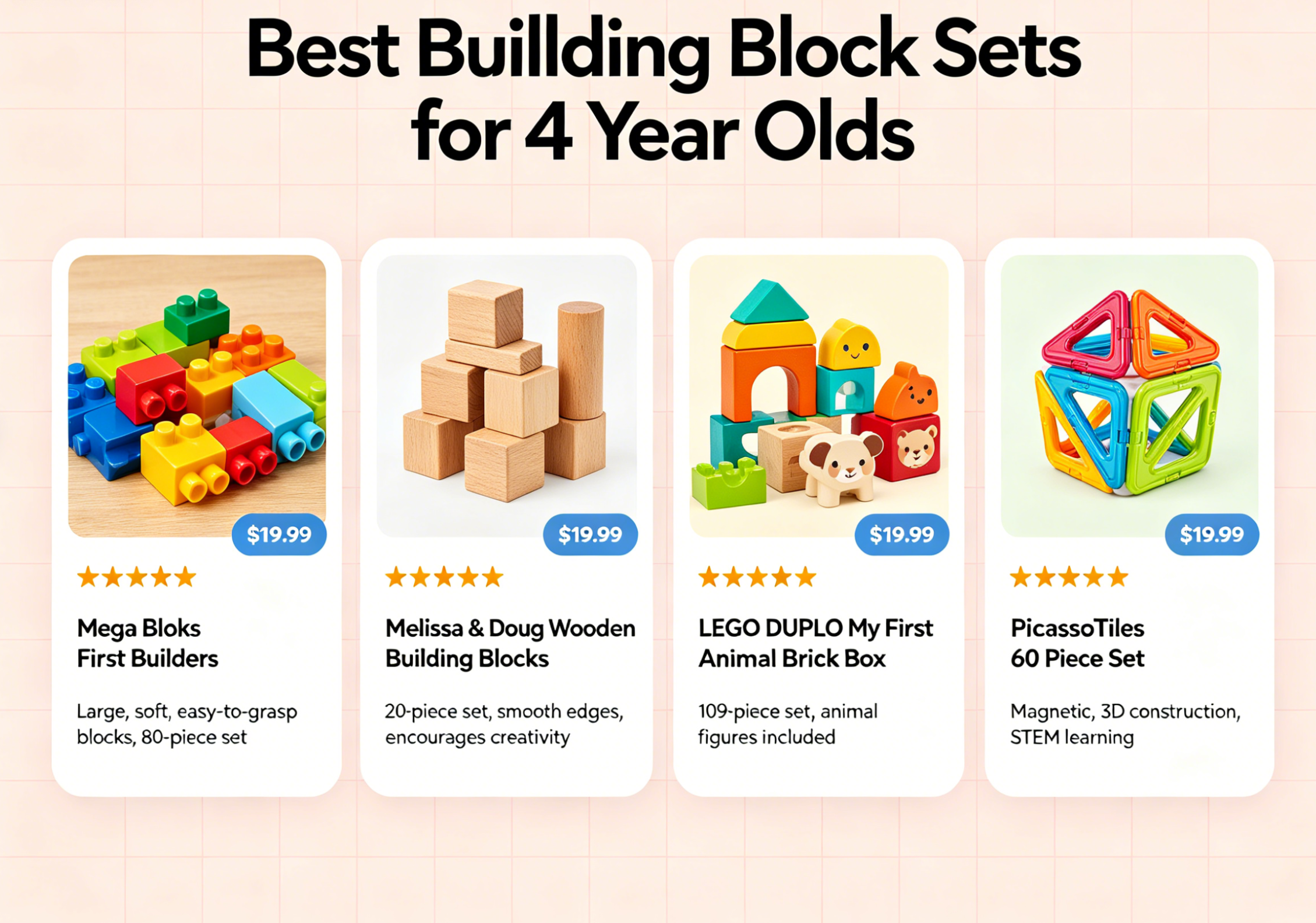
Given the diverse needs and interests of four-year-olds, there isn’t a single “best” set for everyone. However, certain types of building blocks consistently offer excellent developmental benefits and high play value. Here are our top recommendations, categorized by type, that are ideal for this age group.
Large, Easy-to-Handle Interlocking Blocks (e.g., DUPLO-style)
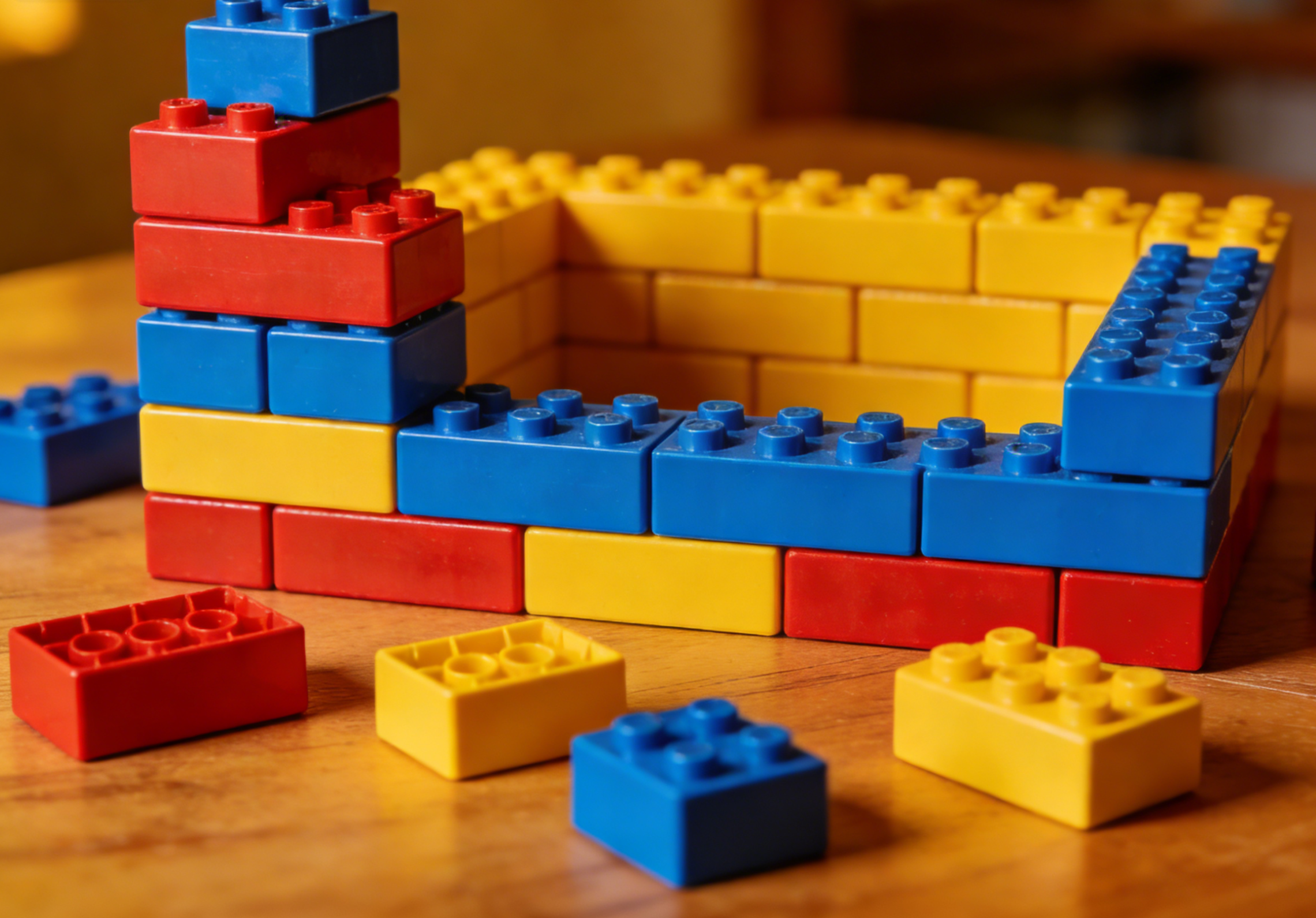
These blocks are often the first introduction to interlocking construction for many children. Characterized by their large size, vibrant colors, and easy-to-connect studs, they are perfect for developing early construction skills. They are typically too big to be a choking hazard and are designed for little hands that are still refining their fine motor control.
- Benefits for 4-Year-Olds: Excellent for developing gross motor skills, color recognition, and basic spatial reasoning. The larger pieces reduce frustration and allow for quick building of stable structures, fostering a sense of accomplishment. Many sets come with themed characters, vehicles, or animals that encourage imaginative role-play and storytelling.
- What to Look For: Sets with a good variety of block shapes (bricks, slopes, arches), baseplates for stable building, and perhaps some themed elements (people, animals, wheels) to spark creative scenarios.
- Why They’re Great: They bridge the gap between simpler infant blocks and more complex construction sets. They’re robust, washable, and can withstand years of active play.
Magnetic Building Blocks (e.g., Magnetic Tiles)
Magnetic tiles have exploded in popularity, and for good reason. These colorful, translucent geometric shapes (squares, triangles, pentagons, etc.) connect effortlessly via embedded magnets along their edges. This allows for the creation of intricate 2D patterns and impressive 3D structures with ease.
- Benefits for 4-Year-Olds: Exceptional for developing spatial reasoning, geometry concepts (shapes, symmetry), and creativity. The instant gratification of magnetic connection encourages continuous experimentation and the building of more complex forms like castles, rockets, and houses. They also offer a unique visual experience when light shines through them.
- What to Look For: Strong magnets that hold structures together well, durable plastic that won’t crack easily, and a good assortment of shapes. Larger sets offer more creative potential.
- Why They’re Great: They offer a different building experience, focusing less on fine motor precision and more on imaginative spatial construction. They’re often highly engaging and can hold a child’s attention for extended periods.
Classic Wooden Building Blocks
Sometimes, the classics are the best. A set of traditional wooden blocks offers unparalleled open-ended play and a wonderful tactile experience. These typically come in various geometric shapes like cubes, cylinders, arches, and planks, often in their natural wood finish or with simple, non-toxic colors.
- Benefits for 4-Year-Olds: Promotes fundamental understanding of balance, weight, and gravity. Encourages abstract thinking, as there are no predefined connections, forcing children to rely on friction and stability. Develops fine motor skills through careful stacking and arrangement. The sensory experience of smooth, weighty wood is also very appealing.
- What to Look For: High-quality, sanded wood with smooth edges to prevent splinters. A good variety of shapes and sizes to allow for diverse constructions. Non-toxic finishes if painted.
- Why They’re Great: They are incredibly durable, timeless, and offer truly limitless creative potential. They encourage a different kind of problem-solving, focusing on engineering and architectural principles.
Themed Construction Sets (Simplified Interlocking Systems)
Beyond the generic large interlocking blocks, some brands offer simplified construction sets centered around specific themes like vehicles, houses, or farms. These sets often come with easy-to-follow instructions (picture-based) or allow for free-form building within the theme.
- Benefits for 4-Year-Olds: Introduces the concept of following instructions to achieve a specific outcome, which is a valuable pre-reading skill. Encourages focused, goal-oriented building alongside imaginative play with the completed model. Can be a good stepping stone to more complex models.
- What to Look For: Large, easily identifiable pieces relevant to the theme. Simple connection mechanisms. Clear, visual instructions. Ensure the theme aligns with your child’s interests to maximize engagement.
- Why They’re Great: They provide a sense of accomplishment by building something recognizable, while still allowing for creative modifications and role-play with the finished product.
Interlocking Blocks with Smaller Pieces (e.g., Starter LEGO System Sets or Compatible Brands)
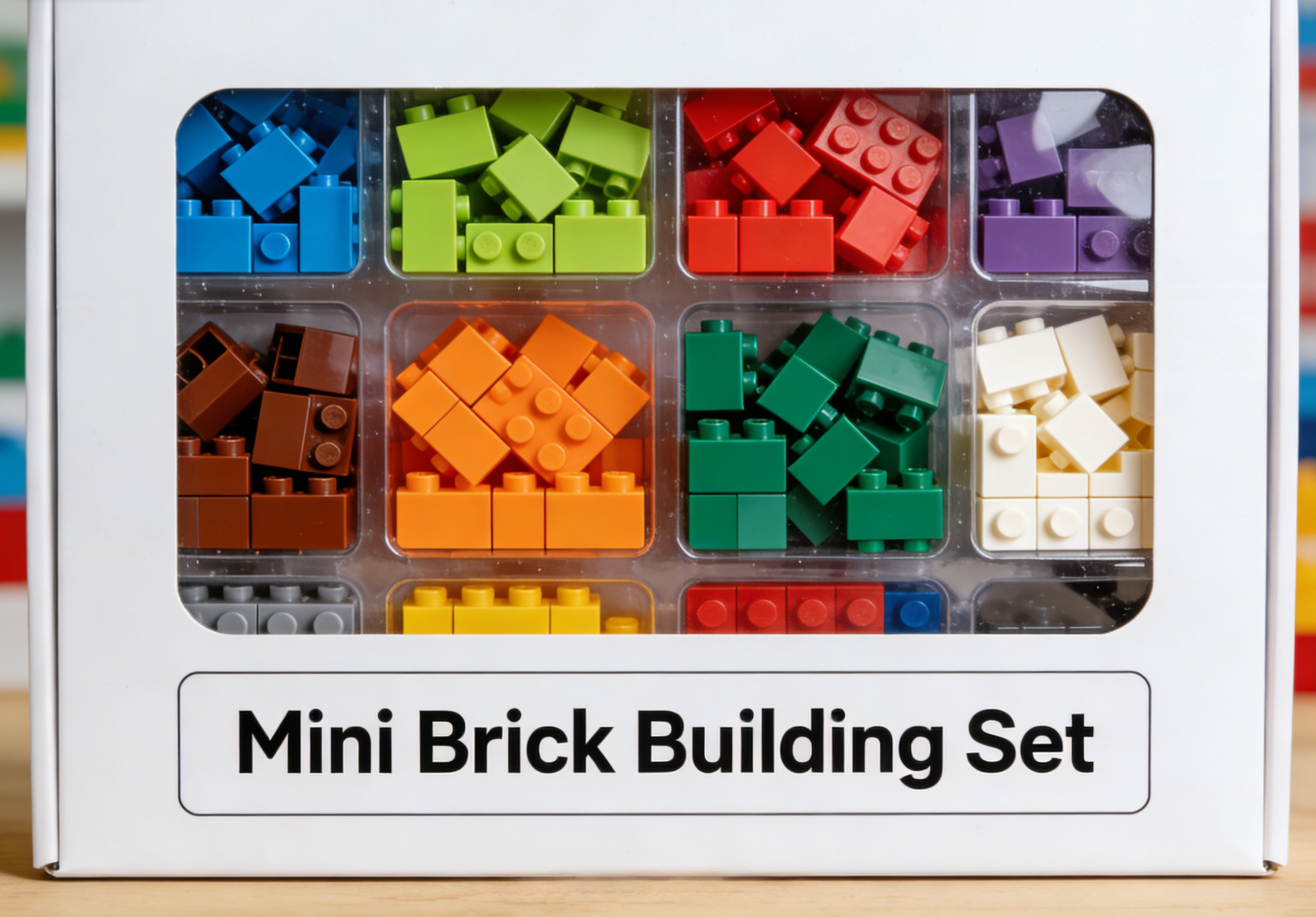
For some four-year-olds, especially those with advanced fine motor skills or prior experience with larger blocks, transitioning to slightly smaller interlocking blocks can be a rewarding challenge. These are not the tiny pieces of advanced sets but rather the standard-sized bricks that offer more intricate building possibilities.
- Benefits for 4-Year-Olds: Significantly enhances fine motor precision and dexterity. Introduces the concept of more detailed construction and allows for building a wider array of shapes and structures. Encourages greater patience and concentration due to the smaller scale.
- What to Look For: Starter sets with a good mix of basic bricks, plates, and perhaps some specialized elements like windows, doors, or wheels. Look for sets specifically labeled for younger builders (e.g., 4+).
- Why They’re Great: They provide a natural progression from larger blocks, offering a more nuanced building experience and preparing children for even more complex construction as they grow older. These types of sets really expand the possibilities for creative expression.
Each of these categories offers unique benefits, ensuring that you can find the best building block sets for 4 year olds that perfectly match your child’s developmental stage and play preferences. For high-quality, durable building sets suitable for young builders, consider exploring the curated selection at modelbuilderus, a trusted source for educational and engaging toys.
Tips for Engaging Your 4-Year-Old with Building Blocks
Simply providing a block set isn’t always enough; active engagement and a supportive environment can significantly enhance a child’s play experience. Here are some practical tips to encourage your 4-year-old to make the most of their building blocks.
Encourage Free Play
The most important tip is to allow your child to lead. Avoid giving too many instructions or dictating what they should build. Instead, encourage open-ended exploration. Ask questions like, “What are you building?” or “Tell me about your creation,” rather than “You should build a house.” This fosters autonomy and truly sparks their imagination.
Play Together
Children learn a great deal through observation and imitation. Sit down with your child and build alongside them. You don’t have to build the same thing; simply being present and engaged can be a powerful motivator. You can demonstrate different techniques, like making a strong base or adding decorative elements, without taking over their project. Collaborative building can also teach important social skills.
Provide a Dedicated and Organized Play Space
Having a designated area for block play, perhaps a mat or a specific corner of a room, can make it more inviting. Easy access to blocks encourages spontaneous play. Moreover, teaching your child to sort and put away blocks after playtime can instill a sense of responsibility and organization. Large bins or storage containers make cleanup simpler for little hands.
Integrate Blocks with Other Toys
Expand the play possibilities by bringing in other toys. Toy animals can inhabit a block zoo, cars can drive on block roads, and dolls can live in a block castle. This integration encourages imaginative storytelling and adds new dimensions to their building projects, making the playtime even richer and more varied.
Rotate and Refresh
If you have multiple block sets or a very large collection, consider rotating them. Keeping some sets out of sight for a while can make them feel new and exciting when reintroduced. You can also add new, complementary pieces to existing sets to spark fresh ideas and challenges as your child’s skills develop. This keeps the play dynamic and prevents boredom.
Conclusion
Choosing the best building block sets for 4 year olds is an investment in their holistic development. These versatile toys are instrumental in refining motor skills, igniting creativity, fostering problem-solving abilities, and even nurturing early social and emotional intelligence. By focusing on safety, durability, and open-ended play, you can select sets that will provide countless hours of engaging and educational fun.
Remember that the ultimate goal is to provide a rich, supportive environment where your child feels empowered to explore, create, and learn through play. Whether you opt for large interlocking blocks, magnetic tiles, classic wooden sets, or themed construction kits, the right choice will undoubtedly lay a strong foundation for future learning. For further exploration of high-quality, developmentally appropriate toys, visit modelbuilderus, your trusted partner in nurturing young minds.
Frequently Asked Questions (FAQ)
Why are building blocks good for 4-year-olds?
Building blocks are excellent for 4-year-olds because they foster cognitive development (spatial reasoning, problem-solving), fine and gross motor skills, creativity, and imaginative play. They also encourage social interaction and emotional development through cooperative play and perseverance.
What safety features should I look for in building block sets for 4-year-olds?
Prioritize non-toxic materials, smooth edges, and appropriately sized blocks that are too large to be a choking hazard. Look for certifications like CE (for Europe) or ASTM F963 (for the US) to ensure compliance with safety standards. Always check for any small, detachable parts in themed sets.
How do I choose the right type of building blocks for my 4-year-old?
Consider your child’s interests and developmental stage. Large, interlocking blocks are great for beginners, while magnetic tiles encourage complex, gravity-defying structures. Wooden blocks offer tactile sensory input and open-ended play. The key is finding a set that offers both challenge and fun, fostering both independent and collaborative play.
How can I encourage my 4-year-old to play with building blocks?
Start by playing alongside them, demonstrating different ways to use the blocks without dictating their play. Encourage free exploration, ask open-ended questions about their creations, and provide a dedicated, accessible space for block play. Rotate sets to maintain interest and introduce new challenges as they grow.
Are specific brands better for building blocks for 4-year-olds?
While several reputable brands offer high-quality building blocks, the ‘best’ often depends on the specific type of block (e.g., large interlocking, magnetic, wooden). Focus on the features discussed – safety, durability, ease of use, and versatility – rather than solely on brand name. Many excellent generic options offer comparable quality and value for money, often found through trusted retailers like modelbuilderus.