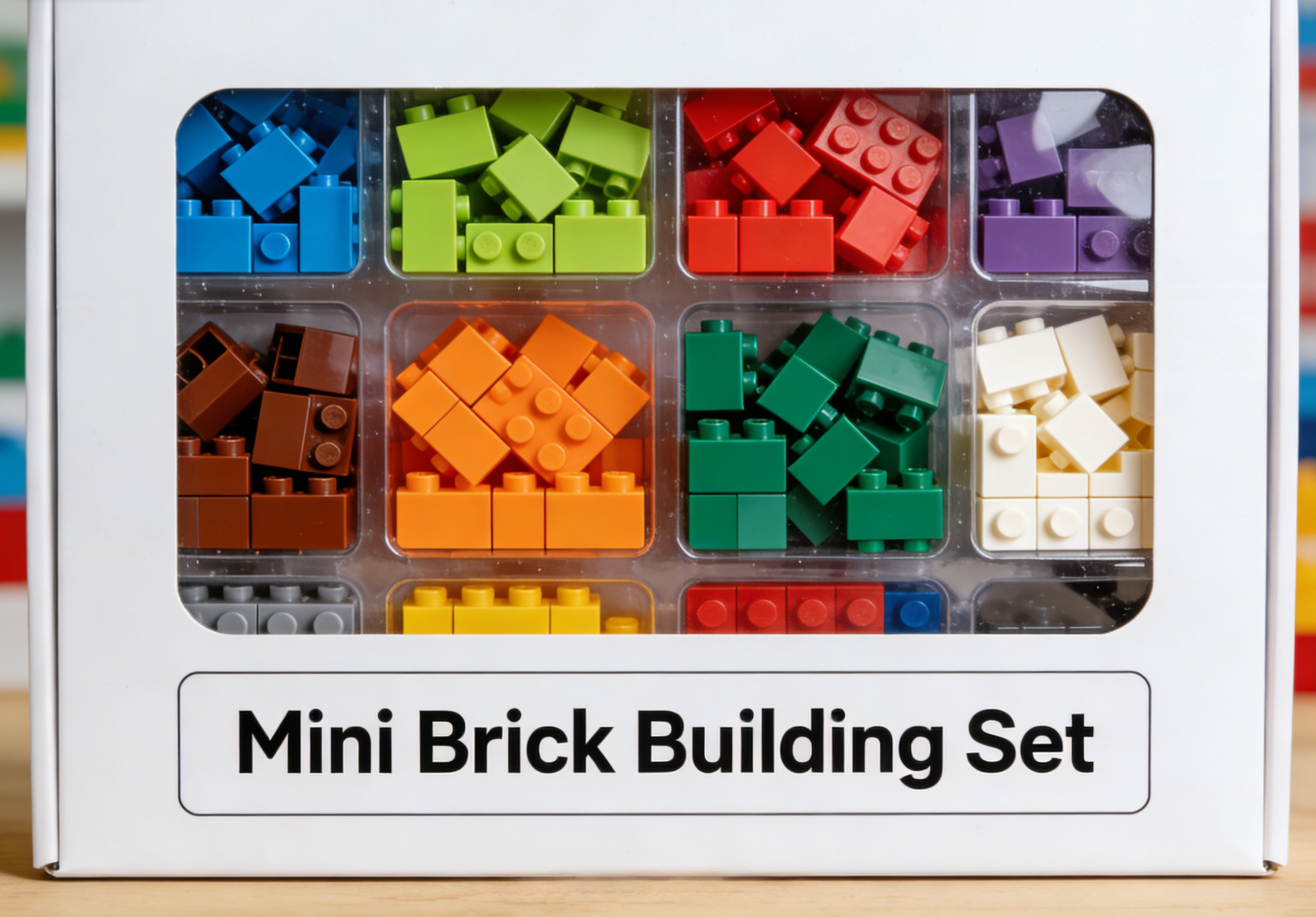

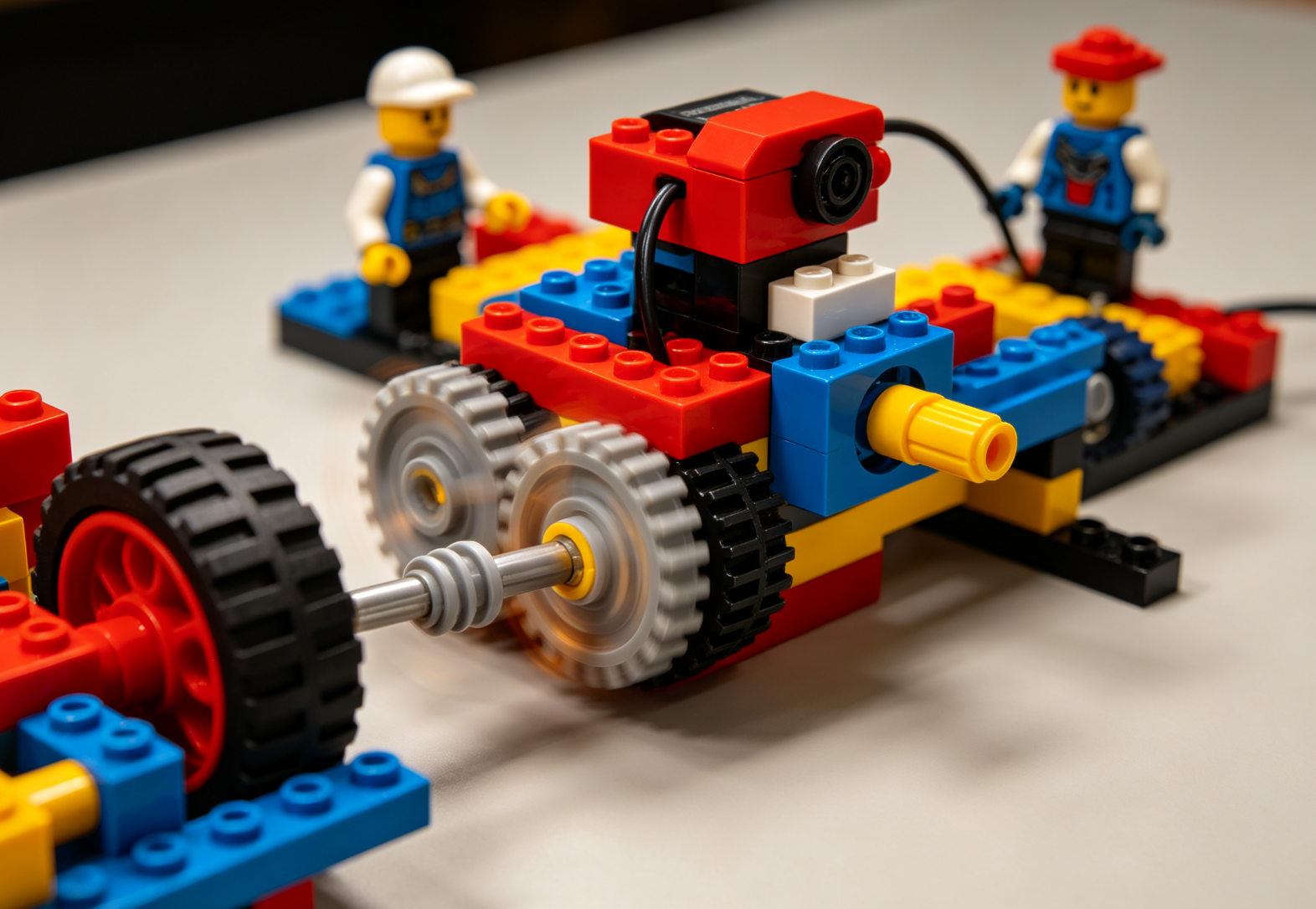
Quick answer: Art/creativity building block stress relief toys calm the mind through open-ended design. Electric gear building block toys introduce kids and adults to mechanical and circuit concepts. Vintage building block toys offer collector value and nostalgic play. Each type rewards a different kind of builder — here’s how to choose and use them all.
Building blocks have come a long way from a simple pile of colored bricks on the living room floor. Today, the category spans calming creativity kits engineered for stress relief, motorized gear sets that teach real mechanical principles, and sought-after vintage sets that collectors track down across flea markets and online auctions. Each type serves a different purpose — and getting the most out of them means knowing which one fits your goals, your space, and your skill level.
This guide breaks down all three types in detail. Whether you’re a parent building STEM habits in your kids, an adult looking for a mindful creative outlet, or a collector hunting for the next centerpiece, you’ll find practical, specific advice for each category. You’ll also learn how ModelBuilder, a fast-growing LEGO alternative, fits into the picture for builders across the US and Europe.
What Are Art/Creativity Building Block Stress Relief Toys and Why They Matter
Art/creativity building block stress relief toys are open-ended construction sets designed without a fixed outcome. Unlike themed kits that guide you toward a single completed model, these sets hand you a collection of versatile pieces — mosaic tiles, freeform connectors, textured bricks, or color-sorted assortments — and invite you to build whatever your mind produces.
The stress relief angle is grounded in how the activity engages the brain. Repetitive, low-stakes manual tasks — snapping bricks, sorting colors, arranging patterns — activate the parasympathetic nervous system. The result is a measurable drop in mental tension without requiring the kind of focused effort that work or screens demand. Many adult builders describe the experience as comparable to adult coloring books or puzzle assembly, but with a three-dimensional outcome you can display or rebuild.
These sets are particularly effective for:
- Adults managing work stress, who need a tactile creative hobby that doesn’t require a screen
- Children with sensory processing needs, who benefit from structured tactile engagement
- Families looking for low-pressure, screen-free activity time together
- Artists and designers who use block-building as a quick warm-up for their creative process
The best sets in this category prioritize piece variety over piece count, include a wide color palette, and work across age groups without dumbing down the experience.
How to Choose the Right Art/Creativity Building Block Stress Relief Toys
Choosing the right set comes down to three variables: who is building, what environment the set lives in, and how much creative freedom the builder actually wants.
For adults seeking genuine stress relief, look for sets with 500 or more pieces in an open assortment. Mosaic-style sets — where flat tiles create pixel-art patterns — are particularly effective because they combine meditative repetition with a visible result. Avoid sets marketed for stress relief but built around a rigid single-model instruction format. Those are standard kits with a wellness label.
For children aged 5–10, prioritize large, easy-grip pieces in bold, distinct colors. Sets with rounded connectors reduce frustration during building and allow younger hands to disassemble and rebuild quickly. The goal at this age is creative confidence, not complexity.
For teens and adult hobbyists who want expressive building, look for sets that include specialty pieces: angled connectors, transparent bricks, textured surfaces, and curved elements. These add design range and prevent the creative ceiling from hitting too early.
Key factors to check before buying:
- Compatibility: Does the set work with bricks you already own?
- Storage: Does the set come with a sorting system, or will you need one?
- Piece quality: Cheap plastic warps over time and creates loose connections. Look for sets that meet EN71 (European) or ASTM F963 (US) safety standards.
- Rebuild potential: The best stress-relief sets are ones you want to tear down and rebuild. Sets with only one “right” answer lose their value after the first build.
Electric Gear Building Block Toys: What They Are and How to Use Them
Electric gear building block toys sit at the intersection of creative play and applied engineering. These sets go beyond static models — they include motorized axles, working gear trains, LED lighting components, electronic modules, or simple circuit connectors that bring the finished build to life.
The educational value here is concrete. Builders learn how mechanical advantage works when a small gear drives a larger one. They discover cause and effect through circuits. They troubleshoot when a motor runs in the wrong direction or a gear slips under load. These aren’t abstract STEM concepts — they’re physical principles the builder encounters and solves with their hands.
Electric gear building block toys are well-suited for:
- Children aged 8 and up being introduced to mechanical thinking and basic electronics
- Teen and adult hobbyists who want functioning models, not just static displays
- Educators and parents building STEM foundations in an engaging format
- Engineers and designers who use building toys as rapid prototyping tools for design concepts
Most sets in this category are sold in difficulty tiers. Entry-level sets use pre-wired motor modules that snap directly onto a standard brick chassis. Advanced sets require builders to wire their own circuits, calibrate gear ratios, and solve real engineering constraints before the model works.
How to Get the Most Out of Electric Gear Building Block Toys
The biggest mistake builders make with motorized sets is following the instructions once and calling the build done. These sets are designed to be modified. Once the base model is running, the real learning starts.
Start with the included model, then deviate. Complete the first build exactly as instructed so you understand how the gear train and motor interact. Then, swap out one gear for a different size and observe how the output speed and torque change. This single experiment teaches more about mechanical engineering than most classroom explanations.
Use these building habits for best results:
- Sort before you build. Electric sets often include small, easy-to-lose components — gear pegs, axle connectors, wire clips. Spend ten minutes sorting before you start. Losing a critical piece mid-build breaks focus and momentum.
- Test the motor module before assembly. Faulty motors are rare but they do happen. Confirm the motor runs before you build it into a chassis that takes twenty minutes to disassemble.
- Document your modifications. Keep a phone photo of each variation before you rebuild. Adult hobbyists who do this develop a personal library of working gear configurations they can reference in future builds.
- Build with a goal. Challenge yourself: “Can I make this crane lift a pencil?” Specific functional goals push you to solve real constraints rather than building for appearance alone.
- Introduce the set gradually to younger builders. For children aged 8–10, start with the lowest-piece-count build in the set. Reserve the complex configurations for once they’ve mastered the basic motor-and-gear relationship.
ModelBuilder’s electric and gear-compatible collections include sets that work across experience levels, making them a strong entry point for families and solo builders alike.
Vintage Building Block Toys: A Collector’s and Parent’s Guide
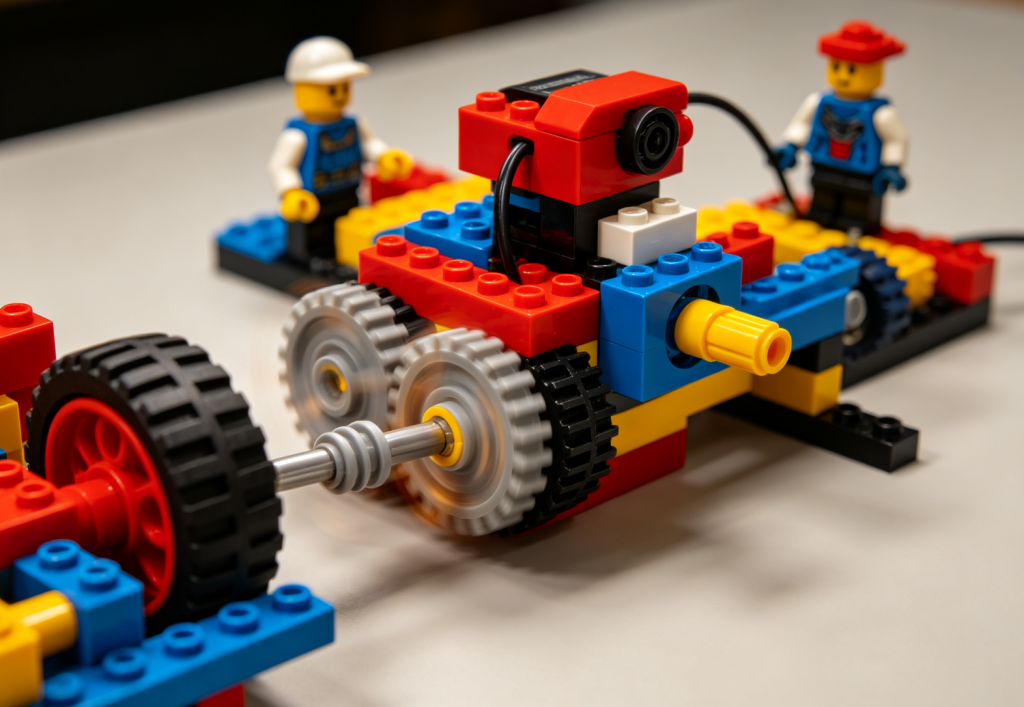
Vintage building block toys occupy a different space from modern sets entirely. For collectors, they represent engineering history — early LEGO System sets from the 1950s and 1960s, pre-patent era Kiddicraft bricks, original Meccano and Erector sets, or early Fischertechnik gear systems. For parents, vintage sets introduce children to toys that have outlasted decades of trend cycles, which says something significant about their design quality.
What distinguishes a true vintage set from a retro-styled modern one:
- Material: Cellulose acetate (early LEGO bricks pre-1963) versus modern ABS plastic. Vintage materials often show surface aging — crazing, yellowing, or slight warping — that authenticates the set.
- Stud design: Early LEGO bricks used a hollow stud top. The closed-stud design we recognize today wasn’t universal until the late 1950s.
- Clutch power: Vintage bricks connect differently. Early bricks from the 1950s have noticeably less clutch resistance than modern equivalents — they were designed to a different manufacturing tolerance.
- Box and instruction format: Original boxes used lithographed tin or early cardboard printing. Instruction booklets used line drawings, not the step-by-step numbered illustrations used today.
For parents introducing vintage building block toys to children, the practical concern is condition. Vintage bricks may carry surface micro-scratches or discoloration from age, but structurally sound pieces are safe for play. The main caution is small pieces: sets from the 1950s and early 1960s predate modern choking hazard regulations, so vintage sets are best suited for builders aged 6 and up with direct supervision for younger children.
How to Find and Authenticate Vintage Building Block Toys
Sourcing quality vintage sets requires patience and a working knowledge of what separates genuine vintage pieces from reproduction bricks sold as originals.
Where to look:
- Estate sales and auctions: The most reliable source for authentic sets with original packaging. Estate sales often surface sets that have been in storage for decades.
- eBay and BrickLink: The two largest online marketplaces for vintage building sets. BrickLink is builder-specific and includes a catalog system that helps identify sets by part number and year.
- Specialty toy fairs: Major cities in the US and Europe host annual toy and collectible fairs where established dealers sell authenticated vintage sets.
- Thrift stores: Less reliable for complete sets, but individual vintage bricks and partial lots surface regularly. Useful for building a loose-brick collection.
Authentication checklist:
- Check the underside of bricks for the correct patent text for the era. Early LEGO bricks are marked “LEGO” on the stud top and “KLIT” on the inner tube (from the Kiddicraft patent era).
- Verify material aging is consistent across the lot. A mix of fresh-looking bricks and aged bricks in the same “vintage” set is a red flag for mixed-era pieces being sold as a complete original set.
- Cross-reference set numbers against the official LEGO or Meccano catalog archives, both of which are available online through collector communities.
- For high-value purchases, request a condition report and provenance statement from the seller.
Step-by-Step Guide: Setting Up and Playing with Each Type
Art/Creativity Stress Relief Sets
- Sort pieces by color and shape before your first session — this is part of the calming process.
- Choose a loose prompt rather than a plan: “a garden,” “a city block,” “an abstract pattern.”
- Build for 20–30 minutes without aiming for completion. The process is the point.
- Photograph the result. Tracking builds over time creates a personal creative record.
- Disassemble and rebuild. The best sessions often come on the second or third attempt at the same prompt.
Electric Gear Building Block Toys
- Read the full instruction booklet before touching the pieces.
- Lay out all components by category: structural bricks, gear components, electronic modules, connectors.
- Build the base chassis first, before attaching any motorized elements.
- Test each motorized section as you add it — don’t wait for a complete build to discover a connection issue.
- Once the model runs, document it, then modify one variable at a time.
Vintage Building Block Toys
- Clean pieces with a soft, dry cloth before use. For yellowed bricks, a brief soak in diluted hydrogen peroxide (in natural light, not UV) is the collector-standard method for whitening.
- Handle vintage bricks gently — they’re more brittle than modern ABS.
- Store loose vintage bricks in acid-free containers to prevent further yellowing.
- Build simpler structures — vintage bricks are better appreciated in display models than complex technical builds.
Tips for Maximizing Play Value and Educational Benefits
Across all three types, the builders who get the most out of their sets share a few common habits:
- Build with intention. Random building is fine for stress relief, but setting a loose goal — even something as simple as “build something taller than your last build” — accelerates skill development.
- Involve others. Collaborative builds, whether with a partner, child, or fellow hobbyist, consistently produce more creative outcomes than solo builds. The constraint of building with someone else forces new solutions.
- Rotate sets. Keeping one set in rotation at a time creates novelty. Rotating between a stress-relief set, a gear set, and a vintage display set across weeks gives each type its proper context.
- Document progress. Phone photography takes thirty seconds and builds a creative archive over months. Looking back at earlier builds is genuinely motivating.
- Join the community. Builders who connect with online communities — Reddit’s r/lego, BrickLink forums, or ModelBuilder’s own creator network — report significantly higher long-term engagement with the hobby.
ModelBuilder: A Creative LEGO Alternative
ModelBuilder is a US-based building block brand producing high-quality LEGO-alternative sets for builders across the US and Europe. The catalog spans custom brick sets, themed collections, and educational workshop kits — making it a strong option whether you’re looking for art/creativity building block stress relief toys, a motorized build that introduces engineering concepts, or a collector-quality display model.
What separates ModelBuilder from generic LEGO alternatives is the design process. Every set moves through a concept, material selection, prototype, and production phase — with eco-friendly materials selected at each stage. The result is a brick that holds its clutch power, resists warping, and meets both US (ASTM F963) and European (EN71) safety standards.
For families, the themed collections create shared building experiences that don’t require prior skill. For adult hobbyists and collectors, the custom brick sets offer piece variety and compatibility that rewards intermediate and advanced builds. And for educators, ModelBuilder’s workshop kits are designed specifically to build STEM outcomes alongside creativity.
Explore the full range at ModelBuilder and find the set that fits where you are as a builder.
Every Builder Finds Their Brick
The right building block set isn’t a universal answer — it depends on what you’re building toward. Art/creativity building block stress relief toys give you a way to quiet the noise and make something with your hands. Electric gear building block toys turn that same impulse into a working machine you can modify, break, and rebuild. Vintage building block toys connect you to the history of the medium and reward patience, research, and an eye for detail.
All three reward consistent engagement over time. The builders who get the most out of each type aren’t the ones with the biggest collections — they’re the ones who keep coming back to the bricks, building something new each time.
Frequently Asked Questions
Are art/creativity building block stress relief toys actually effective for stress relief?
Yes — the tactile, repetitive nature of brick sorting and open-ended building engages the hands and focuses the mind without demanding high cognitive output. The activity is widely used in occupational therapy settings for exactly this reason. The key is choosing a set with no fixed goal, so the process itself remains the reward.
What age group is best suited for electric gear building block toys?
Most electric gear building block toys are best introduced at age 8 and up, when children have the fine motor skills to handle small components and the attention span to follow a multi-stage build. Many sets in this category are designed to grow with the builder — starter configurations suit younger builders, while advanced gear train and circuit challenges engage teens and adults.
How do I know if a vintage building block toy is authentic?
Check the stud markings, material aging, and patent text on the underside of bricks. Cross-reference set numbers against published catalog archives from major brands. For high-value purchases, request provenance documentation from the seller and use collector community forums to verify the set’s history before buying.
Can I mix vintage bricks with modern sets?
In many cases, yes — early LEGO bricks use the same stud-and-tube system as modern bricks, though clutch resistance will differ noticeably. Vintage bricks work best in display builds rather than structural or motorized models, where consistent clutch pressure matters.
Are ModelBuilder sets compatible with standard LEGO bricks?
ModelBuilder sets are designed as LEGO alternatives and are built on a compatible brick system. This means most pieces will work alongside existing collections, giving builders more piece variety and creative range without having to start from scratch.