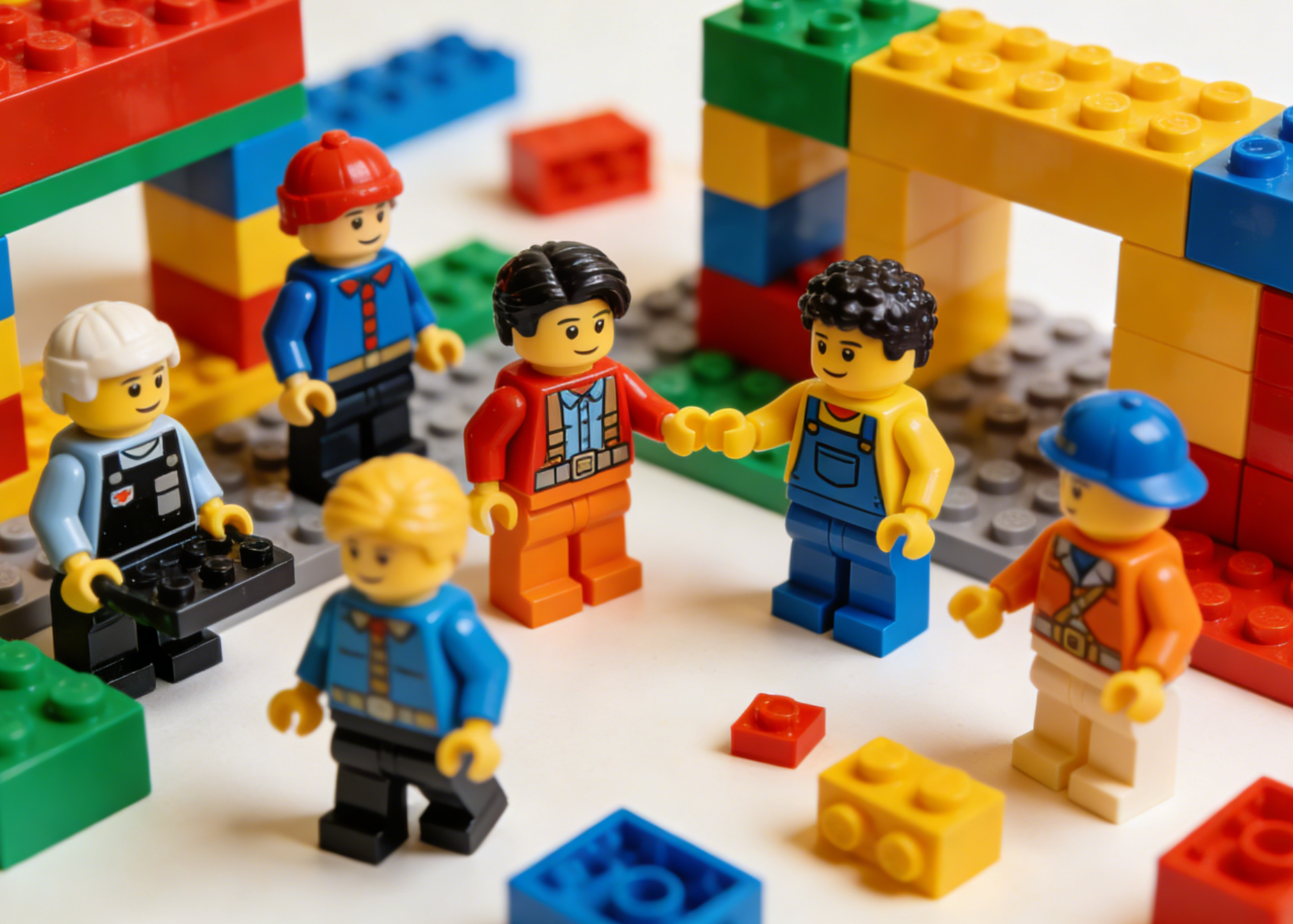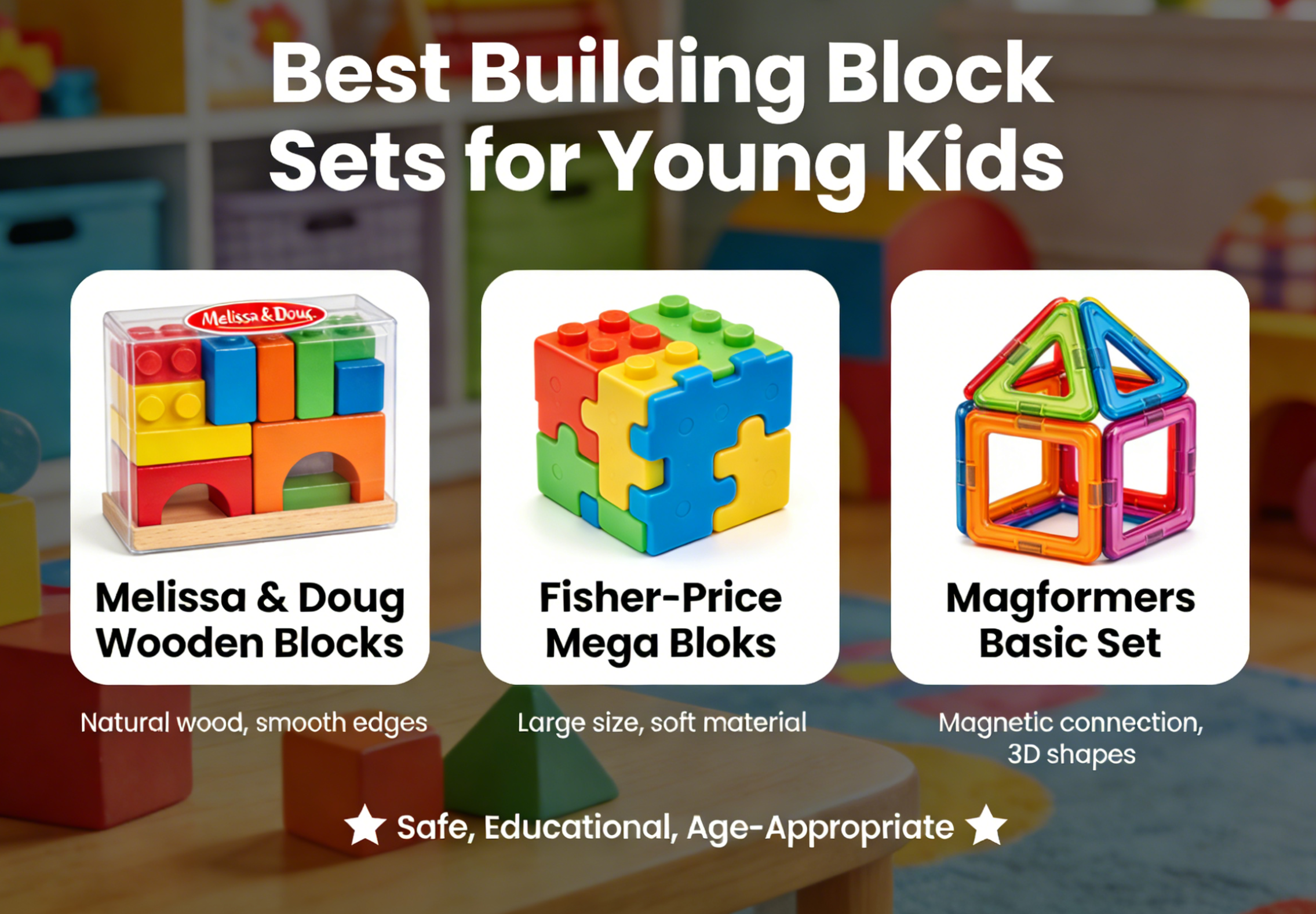

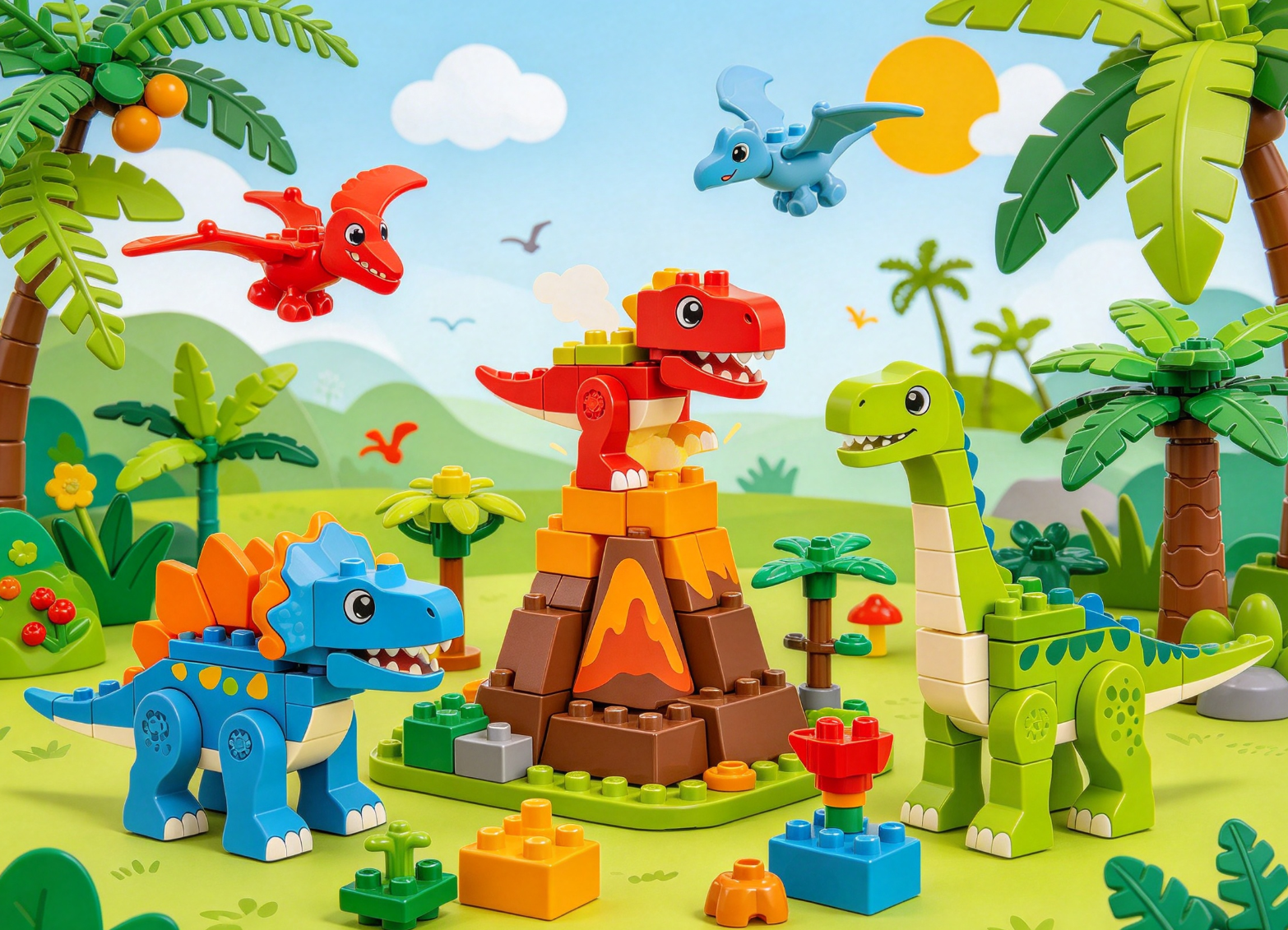
There is a noticeable change in the way children play when they reach six or seven. A simple pile of building bricks is no longer just something to stack. It becomes a starting point for a much bigger idea: a working garage, a suspension bridge, a robot, or even an entire city designed from scratch.
At this age, children are becoming more confident readers, problem-solvers, and independent thinkers. They are also beginning to understand that a successful construction project requires more than imagination. They need to plan, select the right pieces, consider how different parts connect, and sometimes rethink an entire design when something goes wrong.
This makes construction toys particularly interesting for school-age children.
However, choosing the right set can be challenging. Some building kits are too simple to hold a seven-year-old’s attention, while others introduce so many complicated steps that a six-year-old may need constant adult assistance.
So how do parents find the right balance?
The answer is to look beyond age labels and consider what children can actually do with the pieces. A good construction set should provide an achievable challenge today while offering enough creative possibilities to remain interesting tomorrow.
In this guide, we’ll explore how to choose building toys for 6 year olds and building toys for 7 year olds, explain the differences between the two age groups, and share practical building challenges that encourage creativity, engineering thinking, and independent play.
1. Understand How Building Skills Change Between Ages 6 and 7
Six- and seven-year-olds are at an exciting point in their development. They are transitioning from predominantly imaginative preschool play toward more structured activities that involve planning, sequencing, and following instructions.
Of course, children develop at different speeds. Some six-year-olds already enjoy complex construction projects, while some seven-year-olds still prefer building freely without a specific plan.
Nevertheless, understanding common developmental differences can help parents make better purchasing decisions.
What Makes Building Toys Suitable for a 6-Year-Old?
At six, many children are becoming more comfortable handling smaller components and combining different shapes to create recognizable models.
They may already understand how to build a basic structure, but they are beginning to explore more complicated connections.
Typical building interests include:
- Constructing houses, garages, and simple buildings.
- Creating vehicles with wheels and moving components.
- Following illustrated building instructions.
- Experimenting with different colors and shapes.
- Building structures that serve a specific purpose.
- Rebuilding a model with their own modifications.
One particularly interesting change is that children begin to think about the relationship between different parts of a structure.
For example, instead of simply adding more bricks to a tower, a child might start considering why the bottom needs to be wider or why certain pieces should be placed in a particular position.
This is an ideal time to introduce construction sets that combine straightforward instructions with opportunities for independent experimentation.
What Changes When a Child Turns 7?
By seven, many children are more comfortable working through multi-step activities and spending longer periods on a project.
They may start paying attention to smaller details and become interested in making their creations resemble real-world objects.
A seven-year-old might:
- Follow more detailed building instructions independently.
- Create larger structures using several connected sections.
- Design vehicles with moving or rotating components.
- Reconstruct a model after studying a reference picture.
- Identify problems and make changes to improve a design.
- Work with friends or family members on shared projects.
Children at this age may also become more interested in the finished model as something they can display, use in imaginative play, or show to other people.
For parents, this means that building toys for 7 year olds should ideally offer more than a single building experience.
Look for sets that can be rebuilt, modified, combined with other pieces, or used as the starting point for entirely new creations.
2. Choose Building Sets Based on the Skills You Want to Encourage
Instead of asking whether a construction set is suitable for a six- or seven-year-old, consider which abilities it allows children to practice.
Different building toys encourage different kinds of thinking.
Spatial Awareness and Visual Thinking
Spatial awareness is the ability to understand how objects relate to one another in space.
Construction toys naturally encourage children to explore this concept.
When building a vehicle, for example, children need to think about where the wheels should go, how the body fits together, and whether the finished structure looks balanced.
When creating a house, they may need to consider the relationship between walls, floors, doors, and roofs.
Look for sets containing different shapes, angles, plates, and connecting elements.
These components allow children to explore how individual pieces fit together to create a larger structure.
Planning and Sequencing
A larger construction project often requires children to complete several steps in a particular order.
Consider building a small house.
A child might need to:
- Create a stable foundation.
- Build the surrounding walls.
- Add windows and doors.
- Construct the roof.
- Add decorative details.
This introduces the idea that certain tasks need to be completed before others.
Sets with illustrated instructions can support this learning process, particularly when children are transitioning from free building to more structured projects.
However, avoid choosing a set that requires an adult to interpret every step.
The aim is to encourage independence, not create a project that parents end up completing.
Creativity and Design Thinking
Following instructions is useful, but children should also have opportunities to make their own decisions.
For example, after completing a standard vehicle model, encourage your child to redesign it.
Could it become a racing car? Could it have a larger cabin? Could it be transformed into a rescue vehicle?
This process introduces a simple design cycle:
Imagine, build, test, change, and improve.
The best construction experiences allow children to move naturally between these stages.
3. Look for Construction Toys That Offer More Than One Finished Model
One of the biggest differences between a short-lived toy and a genuinely engaging construction set is what happens after the first model is complete.
Some sets are designed primarily around one finished creation. Others contain versatile components that can be used in numerous combinations.
For children aged six and seven, flexibility becomes particularly valuable.
Why Rebuildable Sets Offer More Play Opportunities
Imagine buying a construction set that can only produce one specific model.
Once the instructions have been completed, the main building challenge may be over.
Now imagine a set containing different bricks, connectors, wheels, plates, and structural elements.
The same collection might be used to create:
- A racing car.
- A delivery truck.
- A small construction vehicle.
- A garage.
- A bridge.
- A miniature city.
The child can return to the same pieces repeatedly without needing an entirely new toy for every activity.
This flexibility also helps children become more confident because they are no longer limited to copying a finished example.
Pay Attention to Component Variety
When comparing construction sets, examine the range of included components.
Useful building elements may include:
- Standard bricks for walls and foundations.
- Flat plates for floors and platforms.
- Angled components for roofs and slopes.
- Wheels and axles for vehicles.
- Windows and doors for architectural projects.
- Connectors for creating different structural arrangements.
A well-balanced collection does not necessarily need hundreds of specialized pieces.
What matters is whether the components can work together in different ways.
For families looking for building toys for 6 year olds, this is particularly important because children are beginning to move beyond basic stacking and explore more intentional construction.
4. Match the Building Challenge to Your Child’s Interests
A construction toy becomes much more engaging when it connects with something a child already enjoys.
Some children are fascinated by vehicles, while others prefer animals, architecture, fantasy worlds, or space exploration.
Instead of choosing a set simply because it looks educational, think about the activities your child naturally gravitates toward.
Here are five themes worth considering.
Vehicles and Mechanical Creations
<Vehicle-themed construction activities can introduce children to moving parts and functional design.>
Cars, trucks, trains, and emergency vehicles are excellent starting points for construction projects.
Children can build a basic vehicle and then experiment with different designs.
For example, challenge them to create a vehicle with:
- Four wheels.
- A recognizable driver’s cabin.
- A cargo area.
- A sturdy base.
- A distinctive front section.
Older or more experienced builders might enjoy designing a vehicle with additional moving components.
Parents can introduce questions such as:
“How can we make the wheels turn more freely?”
“What happens if we change the distance between the wheels?”
These questions encourage children to explore how different components work together.
Architecture and City Building
Some children enjoy creating miniature versions of the places they see every day.
This makes architecture-themed construction particularly appealing.
Encourage them to build:
- A family house.
- A school.
- A supermarket.
- A hospital.
- A fire station.
- A multi-level parking garage.
A particularly fun activity is creating a small neighborhood.
Different family members can build separate structures, then connect them using roads, bridges, and public spaces.
This creates an ongoing project that can evolve over several days.
Robots and Futuristic Designs
Robot building is a great way to encourage children to think about shape, symmetry, and function.
A child might create a robot with two arms, two legs, a head, and a control panel.
However, there is no need to insist that every robot looks realistic.
Encourage unusual designs, such as a robot with multiple arms, a rotating head, or an imaginary tool attachment.
The freedom to experiment is what makes the activity enjoyable.
Animals and Fantasy Worlds
Animal-themed construction allows children to combine building with storytelling.
They might create a dinosaur enclosure, a dragon’s castle, a wildlife rescue center, or an underwater research station.
These projects are particularly interesting because there is no single correct design.
A child’s imagination determines what the finished environment looks like.
Space Exploration
Space-themed construction can inspire children who enjoy rockets, planets, astronauts, and science-fiction adventures.
Possible projects include:
- A rocket launch platform.
- A lunar exploration vehicle.
- A space station.
- A satellite.
- A Mars research base.
Ask your child to imagine what an astronaut would need in their creation.
Would the space station need a landing area? Where would astronauts sleep? How could a vehicle move around the planet?
These questions turn a building session into an imaginative design activity.
5. Introduce Real Engineering Challenges Through Play
For six- and seven-year-olds, one of the most rewarding ways to use construction toys is to introduce simple engineering challenges.
The idea is not to teach formal engineering lessons.
Instead, children should be given a practical problem and the freedom to discover different ways of solving it.
Here are five activities that work particularly well at home.
Challenge 1: Build a Bridge That Can Hold Weight
Start with a simple challenge: build a bridge between two stable surfaces.
Place two books a short distance apart and ask your child to construct a bridge across the gap.
Once the bridge is finished, test it using a small, safe object.
Then ask:
- Can the bridge support something heavier?
- Does it need more support underneath?
- Would a different arrangement make it stronger?
- Can the bridge be made longer without becoming unstable?
Children can test different designs and compare the results.
The important part is allowing them to make changes based on what they observe.
Challenge 2: Design a Vehicle That Rolls Straight
Ask your child to build a small vehicle and see whether it rolls in a straight line.
If it turns unexpectedly, investigate why.
Possible explanations include uneven wheel placement, differences in the structure, or an unstable connection.
Encourage your child to make one adjustment at a time and test the vehicle again.
This introduces the basic idea of testing variables rather than changing everything simultaneously.
Challenge 3: Create the Tallest Freestanding Tower
Give your child a selection of building pieces and challenge them to construct the tallest tower that can stand independently.
Set a time limit if your child enjoys friendly competition.
After the first attempt, ask them to build a second tower using a different design.
Compare the two structures.
Which has a wider base? Which uses fewer pieces? Which is more stable?
This activity introduces concepts related to balance, structural support, and efficient design.
Challenge 4: Build a Moving Machine
Invite your child to create an imaginary machine with at least one moving element.
It could be a rotating crane, a vehicle with rolling wheels, or a machine with a movable arm.
Once it is complete, ask your child to explain what the machine does.
You might discover that the machine is designed to rescue animals, deliver packages, or clean an entire city.
The combination of mechanical thinking and storytelling makes this activity especially engaging.
Challenge 5: Rebuild a Model in a Different Way
Choose a simple finished model and ask your child to recreate it without looking at the instructions.
They can study the original structure first, then try to remember how its parts fit together.
Afterward, encourage them to change one important feature.
For example, transform a single-story house into a two-story building.
This encourages visual memory, observation, and creative modification.
6. How to Make Construction Play More Educational Without Adding Screen Time
Many parents want toys that offer meaningful learning opportunities without relying on electronic screens.
Building toys are well suited to this because the learning happens through physical interaction.
Children can touch, move, compare, connect, and test individual components.
Here are several ways to make ordinary building sessions more educational.
Use Mathematics During Construction
You do not need a formal mathematics worksheet.
Simply introduce numbers and comparisons during play.
For example:
- Count how many pieces are used in a building.
- Compare the heights of two towers.
- Sort bricks by size or shape.
- Create repeating patterns with different colors.
- Estimate how many pieces are needed for a wall.
For seven-year-olds who are becoming more confident with numbers, you can introduce simple measurement challenges.
Ask them to build a structure that is taller than a book but shorter than a chair.
This turns mathematical ideas into something they can see and physically test.
Encourage Early STEM Thinking
STEM stands for Science, Technology, Engineering, and Mathematics.
Construction toys provide practical opportunities to explore these subjects.
A bridge-building activity introduces structural thinking. A vehicle-building challenge involves movement and mechanical relationships. Creating a symmetrical robot introduces geometry and spatial reasoning.
Parents can support these experiences by asking questions rather than providing immediate answers.
For example:
“What do you think will happen if we remove this support?”
“Why does this side look different from the other?”
“How could we make the structure more stable?”
These conversations encourage children to explain their observations and think through possible solutions.
Develop Reading and Instruction-Following Skills
Many building sets include illustrated instructions.
For school-age children, these can provide an opportunity to practice interpreting visual information and following sequences.
Encourage your child to study each stage before selecting the necessary components.
If they are comfortable reading, they can also explain the steps aloud.
However, do not turn every construction activity into a reading exercise.
Sometimes the most valuable experience is simply creating something without instructions.
Build Confidence Through Independent Projects
A child who completes a project independently often gains a strong sense of accomplishment.
Start with a manageable challenge and gradually introduce more complicated designs.
For example, a child who can build a basic garage might next try adding a second floor, a ramp, or an additional parking space.
Let the child decide when they are ready for the next challenge.
7. How to Choose Between Building Toys for 6-Year-Olds and 7-Year-Olds
Although the two age groups have many shared interests, their needs may differ depending on their construction experience.
The following comparison can help parents make a more informed decision.
| Selection Factor | Age 6 | Age 7 |
|---|---|---|
| Building experience | Moving toward more structured projects | Increasingly confident with complex projects |
| Instructions | Simple illustrated instructions | More detailed multi-step instructions |
| Construction style | Small vehicles and buildings | Larger models and multi-part structures |
| Creativity | Experimenting with different combinations | Modifying and redesigning existing models |
| Problem-solving | Identifying simple construction problems | Testing different solutions |
| Building time | Short to medium projects | Longer projects when interest is strong |
| Social play | Sharing materials and building together | More collaborative planning and role-sharing |
What to Look for in Building Toys for 6-Year-Olds
When selecting construction toys for a six-year-old, prioritize a balance between guidance and creative freedom.
Look for:
- Components that are easy to identify and connect.
- A useful variety of basic and specialized pieces.
- Simple instructions that encourage independent building.
- Opportunities to construct recognizable objects.
- Designs that can be modified after completion.
A six-year-old may enjoy a set that introduces a new construction technique without requiring too many complicated steps.
What to Look for in Building Toys for 7-Year-Olds
For a seven-year-old, consider sets that introduce more advanced creative challenges.
Useful features include:
- Greater variety in component shapes.
- More detailed construction possibilities.
- Opportunities to create larger structures.
- Moving or functional components where appropriate.
- Multiple ways to rebuild or customize models.
- Projects that encourage planning and independent decision-making.
When choosing building toys for 7 year olds, think about what happens after the child finishes the first model.
Can they create another version? Can they combine the pieces with other construction materials? Can they use the set to invent something completely different?
The ability to extend play beyond the original instructions is an important consideration.
Remember that age recommendations are only starting points. A child’s experience, interests, and confidence should guide the final decision.
8. Check Safety, Durability, and Compatibility Before Buying
As children become more confident builders, they may enjoy working with smaller and more varied construction components.
This makes product quality and safety important considerations.
Check the Recommended Age Range
Always follow the manufacturer’s recommended age range and product warnings.
In the United States, applicable toy safety requirements are regulated by the Consumer Product Safety Commission (CPSC). Parents can consult its Toy Safety guidance for information about selecting and using toys safely.
In the European Union, toys must comply with applicable toy safety legislation and carry the CE marking when required.
The European Commission provides additional information through its Toy Safety guidance.
Inspect the Quality of the Components
Building toys are handled frequently, connected repeatedly, and sometimes dropped during play.
Look for components that feel sturdy and have consistent connections.
Before purchasing, consider:
- Whether the pieces have smooth edges.
- Whether connectors remain secure during normal play.
- Whether the components appear durable.
- Whether there are clear manufacturer instructions.
- Whether replacement or additional pieces are available.
If any component becomes cracked or damaged, remove it from the play area.
Consider Compatibility Carefully
Families who already own construction toys may want to expand their existing collection.
However, not every building system uses the same dimensions, connection mechanisms, or tolerances.
If compatibility is important, check the manufacturer’s product specifications instead of assuming that different brands will connect perfectly.
This is especially useful when buying construction toy alternatives.
A compatible collection can make it easier to combine existing pieces with new creative projects, provided the products are genuinely designed to work together.
9. How to Make Building Toys Last Longer in Your Child’s Play Routine
A construction set does not have to be used in exactly the same way every time.
In fact, changing the purpose of a familiar collection can help children rediscover its creative potential.
Here are some simple strategies parents can use.
Create a Weekly Building Project
Instead of introducing a completely new activity every day, choose one project that develops throughout the week.
For example, a child could create a miniature city.
On Monday, build the houses. On Wednesday, add a road and a bridge. On Friday, construct a fire station or supermarket.
The project gradually becomes more detailed, giving children a reason to return to their construction materials.
Encourage Children to Draw Before Building
For children who enjoy planning, introduce a simple design sketch.
Ask them to draw what they want to create before selecting the pieces.
The drawing does not need to be realistic.
It can simply show where the main sections will go.
After the model is complete, compare the original drawing with the finished structure.
Ask whether they would change anything next time.
This activity connects imagination, visual planning, and practical construction.
Keep a Collection of Building Ideas
Children sometimes need inspiration before starting a new project.
Create a small collection of ideas using photographs of previous models, simple sketches, or pictures of real-world structures.
When your child says they do not know what to build, invite them to choose an idea and adapt it.
Over time, they may begin creating their own designs without needing suggestions.
Display Finished Creations
Not every finished model needs to be dismantled immediately.
If space allows, create a small display area for favorite creations.
This can encourage children to take pride in their work and explain how different structures were built.
You can also photograph larger projects before taking them apart.
The photographs become a visual record of your child’s changing interests and building abilities.
10. Why ModelBuilder Is Worth Considering for Creative Builders
As children become more confident with construction toys, parents often start looking for sets that offer greater flexibility and longer-lasting creative value.
A good construction collection should support more than one finished model. It should provide components that children can use to explore new ideas, experiment with different structures, and gradually develop their own building style.
ModelBuilder specializes in building toy alternatives and offers families another brand to explore when comparing construction play options.
For parents choosing a set for a six-year-old, it makes sense to prioritize accessible building experiences and versatile components that encourage experimentation.
For seven-year-olds, consider whether the available construction possibilities offer enough variety to support more detailed projects and independent design.
Rather than choosing a product simply because it contains a large number of pieces, consider how those pieces can be used together.
Can children create different models? Are there opportunities to modify existing designs? Does the construction experience match their current abilities?
These are more useful questions than piece count alone.
You can explore the ModelBuilder official website to discover available construction toy options and find products that match your family’s interests.
Whether your child is fascinated by vehicles, architecture, robots, or imaginative worlds, the right building materials can turn an ordinary afternoon into an opportunity for creative discovery.
Final Thoughts: Choose Building Toys That Challenge, Inspire, and Grow With Your Child
Six and seven are important years for developing construction skills.
Children are becoming more independent, more capable of following instructions, and increasingly interested in creating objects that reflect their own ideas.
For six-year-olds, the ideal construction toy offers a balance between simple guidance and open-ended experimentation.
For seven-year-olds, more detailed projects, versatile components, and opportunities for redesign can provide a satisfying next step.
The most important thing is to avoid choosing a toy based on complexity alone.
A construction set with hundreds of pieces is not automatically better than one with fewer, more versatile components.
Instead, think about what your child enjoys, how they approach challenges, and whether the set offers room for future creativity.
The best building toy is not necessarily the one that produces the most impressive model.
It is the one that makes a child look at a collection of pieces, imagine something new, and feel confident enough to build it.
Frequently Asked Questions (FAQs)
1. What are the best building toys for 6 year olds?
The best building toys for 6 year olds generally combine easy-to-use components with opportunities for more structured construction. Look for versatile building bricks, simple illustrated instructions, and sets that allow children to create vehicles, houses, and other recognizable models.
2. What should I look for in building toys for 7 year olds?
For seven-year-olds, consider construction sets with varied components, more detailed building possibilities, and opportunities for independent problem-solving. Rebuildable sets are particularly useful because children can create different models rather than completing only one project.
3. Are building toys educational for children aged 6 and 7?
Yes. Construction toys can encourage spatial awareness, early mathematics, creative thinking, and problem-solving. They also provide opportunities to explore basic engineering concepts, follow instructions, and practice persistence through hands-on activities.
4. How long should a 6- or 7-year-old spend playing with building toys?
There is no fixed amount of time. Some children enjoy short construction activities, while others may spend an hour or longer working on a project. Allow children to follow their interests and take breaks when they become tired or frustrated.
5. Can building toy alternatives work with existing construction sets?
Compatibility depends on the specific brand, dimensions, and connection system. Some construction toy alternatives are designed to work with established building systems, while others use different specifications. Always check the manufacturer’s compatibility information before purchasing.