

TL;DR: Not every builder needs LEGO. Cardboard building block toys, plastic building block toys, and green building block toys comparable to LEGO each serve different ages, goals, and values. This guide walks through how to evaluate, choose, and use each type — and why ModelBuilder is one of the smartest alternatives on the market today.
Parents and educators are asking harder questions before buying building toys. Is this safe? Will it last? Does it support learning? And increasingly: is there a better option than LEGO?
That last question has real answers. The building toy market has expanded significantly, with alternatives that match or exceed LEGO across categories like sustainability, price, age-appropriateness, and creative depth. Families in the US and Europe now have access to a wide range of block sets that deliver genuine educational value — without defaulting to the most recognizable brand on the shelf.
This guide covers everything: the different types of building block toys available, how to evaluate quality and safety, how to match the right toy to the right child, and how to build an environment — at home or in the classroom — that gets the most out of every set. By the end, you’ll know exactly what to look for, and why ModelBuilder deserves a place on your shortlist.
Understanding the Types of Building Block Toys
The category of “building block toys” covers a wide range of materials, formats, and complexity levels. Before comparing brands, it helps to understand what you’re actually choosing between.
Cardboard Building Block Toys
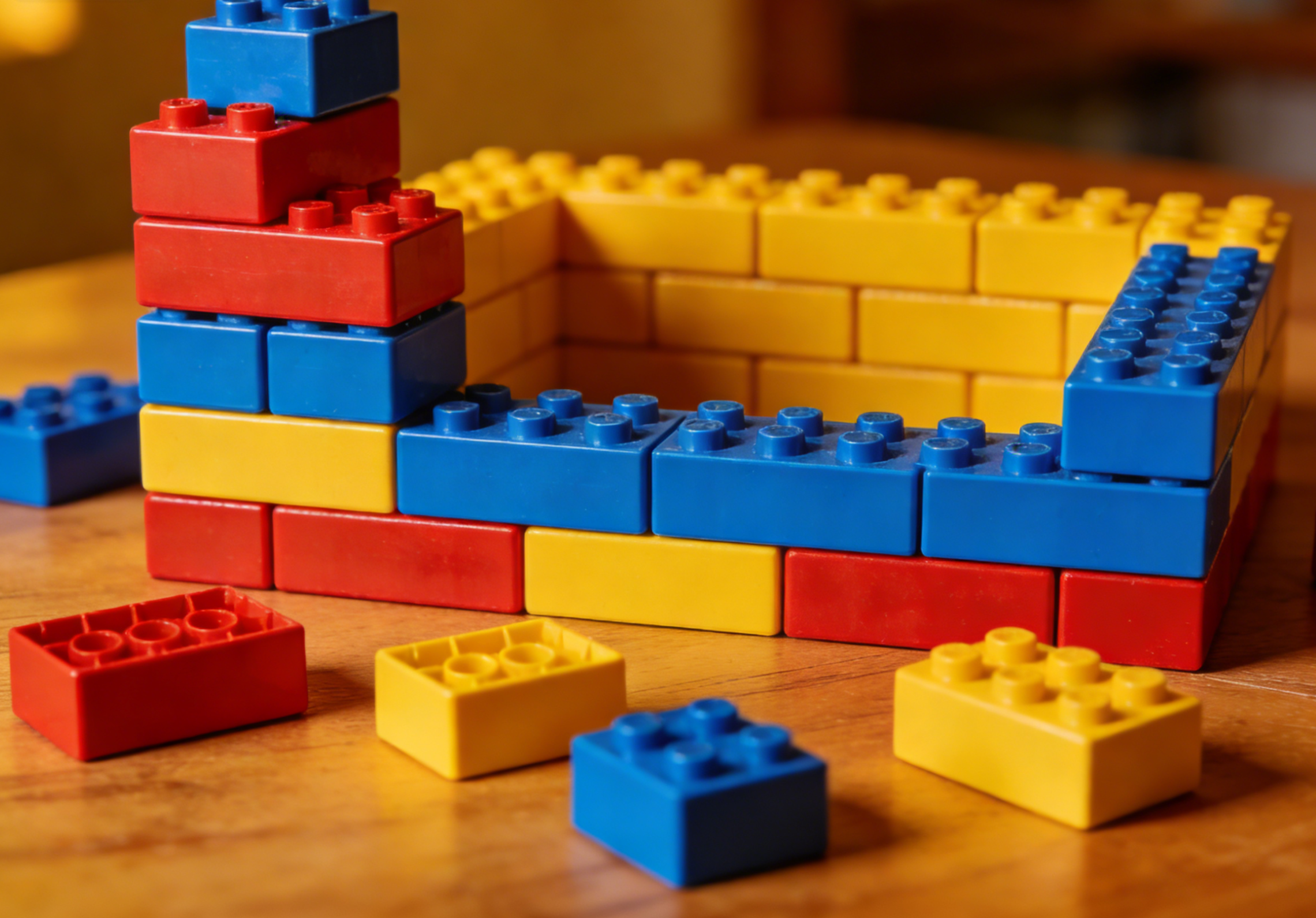
Cardboard building block toys are an underrated category. Often dismissed as low-tech, they offer something plastic sets can’t: scale. Large cardboard bricks let young children (typically ages 1–6) build life-sized structures — forts, castles, walls — using gross motor skills rather than fine ones.
The benefits go beyond size. Cardboard blocks are lightweight, stackable, and safe for toddlers who are still in the knock-it-down phase of play. Many are printed with bright patterns or left plain for decorating. From a classroom perspective, they’re excellent for group builds and cooperative play.
The trade-off is durability. High-quality versions hold up well under normal play conditions, but they’re not waterproof and won’t survive rough handling indefinitely. Look for double-walled construction and non-toxic inks when evaluating options.
Best for: Ages 1–6, early childhood settings, gross motor development, group play.
Plastic Building Block Toys
Plastic building block toys are the most familiar format — and for good reason. Interlocking plastic bricks offer precision, repeatability, and creative range that cardboard and wood can’t easily match. Children can build, dismantle, and rebuild without any degradation in the pieces themselves.
The quality gap between budget plastic sets and well-engineered ones is significant. Cheap bricks warp, don’t interlock cleanly, and can have sharp injection-mold edges. High-quality plastic block sets — like those offered by ModelBuilder — use ABS plastic (acrylonitrile butadiene styrene), the same material used by leading brick manufacturers, with tolerances tight enough to ensure a satisfying, secure connection every time.
Plastic blocks are also the most versatile across age groups. Sets designed for ages 4+ typically use larger, chunkier pieces. Teen and adult sets introduce smaller elements, Technic-style mechanics, and complex architectural builds. For families who want one format that grows with the child, quality plastic blocks are the practical choice.
Best for: Ages 4 and up, home and classroom, STEM learning, long-term creative development.
Green Building Block Toys Comparable to LEGO
Sustainability has become a genuine purchasing priority, not just a marketing claim. Green building block toys comparable to LEGO are sets made from bio-based, recycled, or sustainably sourced materials — designed to deliver the same creative experience with a significantly lower environmental footprint.
LEGO itself has committed to making all products from sustainable materials by 2032, acknowledging what many parents already know: standard ABS plastic is petroleum-derived and not biodegradable. Green alternatives use materials like plant-based plastics, recycled content, or sustainably harvested wood to close that gap now.
What makes a green building block toy truly comparable to LEGO? Precision matters. The pieces need to interlock reliably, the sets need enough variety to support complex builds, and the materials need to meet child safety standards (more on that shortly). ModelBuilder’s eco-conscious line hits all three benchmarks, making it a credible choice for families and schools that want both creativity and environmental responsibility.
Best for: Eco-conscious families, schools with sustainability mandates, builders of all ages who want quality without the environmental cost.
How to Evaluate Quality and Safety Standards in the US and Europe
Safety certification isn’t optional — it’s the baseline. In the US, building toys for children must comply with the Consumer Product Safety Improvement Act (CPSIA), which covers lead content, phthalates, and small parts hazards. The relevant standard is ASTM F963, the American toy safety standard.
In Europe, the equivalent framework is EN 71, the European Standard for Toy Safety, enforced under the EU Toy Safety Directive. Products sold in the EU must carry CE marking as evidence of compliance. Since 2021, the UK has operated its own UKCA marking system post-Brexit, though standards remain closely aligned with EN 71.
When evaluating any building block toy — regardless of brand — check for:
- Age-appropriate labeling: Small parts warnings for children under 3 are legally required in both the US and EU.
- Material disclosures: For green sets, look for third-party verification of bio-based or recycled content claims.
- Certification marks: ASTM F963 (US), EN 71/CE (EU), or equivalent marks from recognized testing bodies.
- Brick tolerance and finish: Sharp edges or poorly formed connectors indicate manufacturing shortcuts that affect both safety and usability.
ModelBuilder products are designed with these standards in mind across both the US and European markets, making them a reliable choice whether you’re shopping in Boston or Berlin.

How to Choose the Right Building Block Toy for Your Child’s Age and Skill Level
Age guidance on packaging is a starting point, not a ceiling. A curious 7-year-old with prior building experience will likely outpace the recommended age range for their set. That said, these general frameworks hold up well across most children:
Ages 1–3: Large-format cardboard or soft blocks. Focus on stacking, color recognition, and basic spatial reasoning. Fine motor skills aren’t developed enough for interlocking plastic bricks.
Ages 4–6: Chunky plastic bricks with simple builds. Duplo-style sizing (roughly twice the standard brick scale) is appropriate. Sets should include clear pictorial instructions and build in no more than 30–50 steps.
Ages 7–10: Standard brick sizing becomes accessible. This is the sweet spot for STEM-focused sets — simple machines, bridges, vehicles. Look for sets that introduce a challenge while keeping completion achievable.
Ages 11–14: Complex architecture, moving parts, and Technic-style mechanisms. Older children benefit from sets that reward patience and planning, not just assembly.
Ages 15+: Adult-oriented builds that prioritize display value and technical depth. This is where ModelBuilder’s custom brick sets and themed collections really shine — detailed models that take real skill to complete and look genuinely impressive on a shelf.
Skill level matters as much as age. For children new to building toys, start simpler than you think necessary. An early win builds confidence faster than a partially finished, frustrating build.
How to Set Up the Perfect Building Environment at Home or in the Classroom
The physical environment shapes how much creative work actually gets done. A few practical considerations:
Dedicated surface space. Builds in progress shouldn’t have to be cleared for meals or packed away mid-session. A dedicated table or fold-out board keeps momentum going and signals that building is a valued activity.
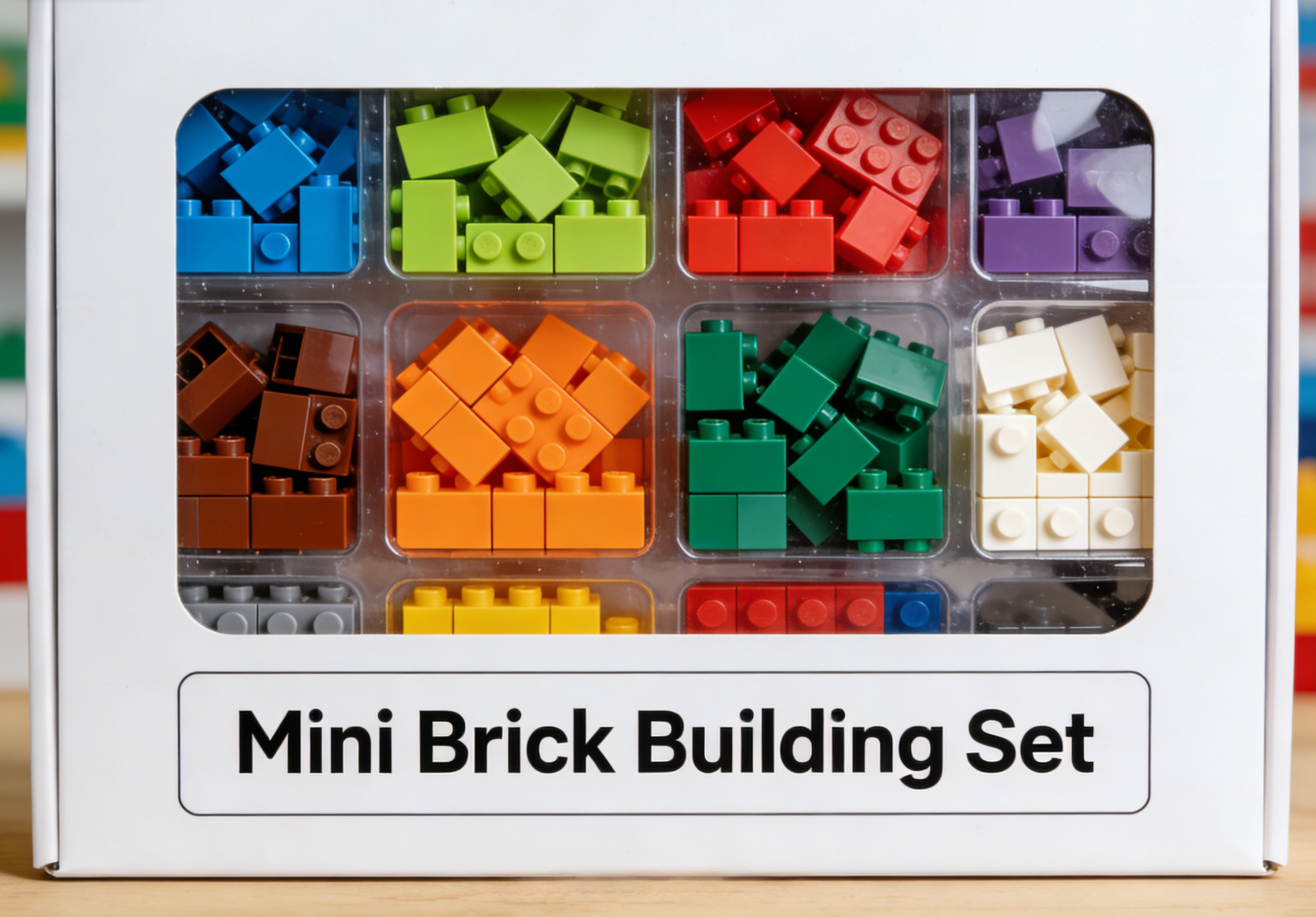
Organized storage. Random brick piles slow builds down and lead to lost pieces. Shallow sorting trays organized by color or piece type make it easy to find what you need. For classrooms, labeled bins by set or category work well.
Good lighting. Detailed builds require clear visibility. Natural light is ideal; a well-placed desk lamp is a practical alternative.
Minimize interruptions. Building develops focus and sustained attention — qualities that need uninterrupted time to strengthen. Even 20–30 minutes of uninterrupted building produces noticeably better outcomes than fragmented sessions.
In classroom settings, consider building into structured creative time rather than free play alone. Giving students a design brief — “build a bridge that holds this weight” or “recreate this landmark in 30 minutes” — adds a productive constraint that sharpens problem-solving skills.
How to Maximize Creativity and Learning with Building Block Toys
The biggest mistake with building toys is treating the instruction booklet as the finish line. It isn’t. It’s the starting point.
Once a set is built following instructions, the real creative work begins: dismantling it, mixing it with other sets, and building something entirely original. Encourage this. Children (and adults) who move beyond the instruction manual develop stronger spatial reasoning, confidence in their own design instincts, and greater problem-solving ability.
A few approaches that consistently deepen engagement:
- Theme-based challenges. “Build a city” or “design a vehicle that doesn’t exist yet” gives structure without dictating the outcome.
- Timed builds. A 15-minute challenge forces creative decisions under constraints — a genuine cognitive workout.
- Documentation. Encourage builders to photograph finished builds. Sharing work in online communities (ModelBuilder has one worth joining) adds a social dimension that keeps motivation high.
- Iterative building. Introduce the concept of prototyping: build a first version, identify what doesn’t work, rebuild it better. This mirrors real engineering and design processes.
Cardboard building block toys work particularly well for collaborative classroom challenges where scale and physical movement are part of the activity. Plastic building block toys shine in precision builds and STEM problem-solving. Green building block toys comparable to LEGO layer in an additional conversation about materials and sustainability that’s increasingly relevant to how children understand the world.
Why ModelBuilder Is a Smart Alternative to LEGO
ModelBuilder was built on a straightforward premise: builders deserve creative alternatives that match LEGO on quality while expanding what’s possible in terms of design, customization, and sustainability.
The ModelBuilder range covers three core offerings. Custom brick sets are tailored to individual builders — a genuinely rare option in a market dominated by fixed configurations. Themed collections span architecture, vehicles, and imaginative builds, with enough variety to serve both children and adult collectors. Educational workshops bring structured building experiences to schools and community groups, connecting the physical product to learning outcomes.
What distinguishes ModelBuilder from budget LEGO alternatives is manufacturing discipline. Brick tolerances, finish quality, and material selection are treated as non-negotiable — not as cost variables. The result is a set that connects cleanly, holds its shape, and doesn’t frustrate builders mid-build.
For families choosing green building block toys comparable to LEGO, ModelBuilder’s eco-material line answers the sustainability question directly without sacrificing the build quality that makes the experience worthwhile.
Explore the full range at modelbuilderus.com — and if you’re still deciding between options, the site includes a detailed guide to the best LEGO alternatives for adults as well.
Start Building Smarter
The right building block toy isn’t the most expensive one or the most recognizable brand. It’s the one that matches your child’s age and skill level, meets safety standards for your market, fits the values you want to model (including environmental ones), and leaves enough creative room to grow.
Cardboard building block toys bring scale and physicality to early childhood play. Plastic building block toys offer precision and longevity across every age group. Green building block toys comparable to LEGO deliver creative depth without the environmental cost. Each has a place — and the best builders eventually use all three.
ModelBuilder sits at the intersection of quality, creativity, and purpose. Browse the collections, start with one set, and see where it leads.
Frequently Asked Questions
Are plastic building block toys from non-LEGO brands as good quality?
Quality varies significantly by manufacturer. The key differentiator is brick tolerance — how precisely the pieces are molded and whether they interlock with consistent pressure. Well-engineered plastic building block toys made from ABS plastic, like those from ModelBuilder, perform comparably to LEGO in terms of fit and durability. Budget alternatives often cut corners on mold quality, which leads to loose connections and a frustrating build experience. Always check for ASTM F963 (US) or EN 71/CE (Europe) certification before purchasing.
What age are cardboard building block toys appropriate for?
Cardboard building block toys are best suited for children ages 1–6. They’re designed for large-scale stacking and gross motor play rather than fine motor assembly. They’re a strong choice for early childhood classrooms and toddler play spaces because of their size (safe, low fall risk), lightweight design, and the collaborative builds they enable. Most children transition to interlocking plastic blocks around age 4.
How do I know if a building block toy is genuinely eco-friendly?
Look for third-party verification of material claims rather than relying on packaging language alone. Credible green building block toys comparable to LEGO will specify the material source (bio-based plastic, recycled content, FSC-certified wood) and carry recognized certifications. Vague claims like “eco-conscious” or “green materials” without specifics are a flag. ModelBuilder’s eco-material line provides transparent material sourcing as part of its product documentation.
Can building block toys support STEM learning at home?
Yes — and research consistently supports the connection. Block play develops spatial reasoning, mathematical thinking, and early engineering concepts. The key is moving beyond pure assembly toward open-ended challenges: building structures that bear weight, designing vehicles with specific functions, or recreating real-world architecture. Plastic building block toys with Technic-style mechanics introduce simple machines and mechanical reasoning for older children. ModelBuilder’s educational workshop curriculum offers a structured framework for parents who want to go further.
Is ModelBuilder available in Europe as well as the US?
Yes. ModelBuilder designs its products to meet both US (ASTM F963/CPSIA) and European (EN 71/CE) safety standards, making the range available to builders across both markets. Visit modelbuilderus.com for current availability, collections, and shipping information.