
How to Clean and Maintain Building Block Sets: The Ultimate Guide
There is nothing quite like the feeling of opening a fresh box from modelbuilder and seeing those pristine, shiny plastic bricks ready for assembly. Whether you are building complex car building block sets or simple creative structures, the joy of building is universal. However, over time, even the most impressive collection can fall victim to the “three horsemen” of the hobby: dust, grime, and sunlight. If you want your collection to remain a centerpiece of your home, learning how to clean and maintain building block sets is an essential skill every builder should master.
For parents buying building block sets for kids, hygiene is often the top priority. For adult collectors who invest in large building block sets for adults, preserving the resale value and the aesthetic of the display is the primary concern. Regardless of your motivation, this guide will walk you through the safest and most effective methods to keep your bricks looking as good as the day they were manufactured.
The Importance of Regular Maintenance
Why should you care about how to clean and maintain building block sets? Plastic bricks are durable, but they aren’t invincible. Dust contains abrasive particles that can leave microscopic scratches on the surface of your bricks, eventually dulling their signature shine. Furthermore, oils from our hands can attract more dirt, and if you live in a household with pets or smokers, the buildup can happen surprisingly fast.
By staying on top of maintenance, you ensure that your click brick building sets remain easy to assemble and disassemble. Dirt and residue inside the tubes and studs of the bricks can create friction, making it harder for pieces to snap together or, worse, causing them to get stuck permanently. Taking care of your collection today means it will be ready for the next generation of builders tomorrow.
Dusting Your Display Models
For many adult fans, the most common maintenance task is dusting. If you have finished several best building block sets for adults, you likely have them displayed on shelves. You don’t want to take them apart every time they get a little dusty. Here are the best tools for a quick “dry” clean:
- Makeup Brushes: Large, fluffy brushes are perfect for broad surfaces, while smaller shadow brushes can reach into tight gaps around studs.
- Compressed Air: A can of air (the kind used for keyboards) can blow dust out of hard-to-reach nooks. Be careful not to blow too hard, as small detail pieces might fly off!
- Microfiber Cloths: These are great for wiping down flat surfaces like the sides of buildings or the windshields of your car building block sets.
Consistency is key. A quick dusting once every two weeks prevents the dust from settling and bonding with the plastic, which makes deep cleaning much easier later on.
Deep Cleaning: The Hand-Wash Method
Sometimes, a dry dusting just won’t cut it. Maybe you’ve bought a used collection of japanese building block sets that arrived a bit sticky, or perhaps the kids’ bin needs a sanitary refresh. When it’s time for a deep clean, the hand-wash method is the safest route for all types of bricks, including mini building brick sets.
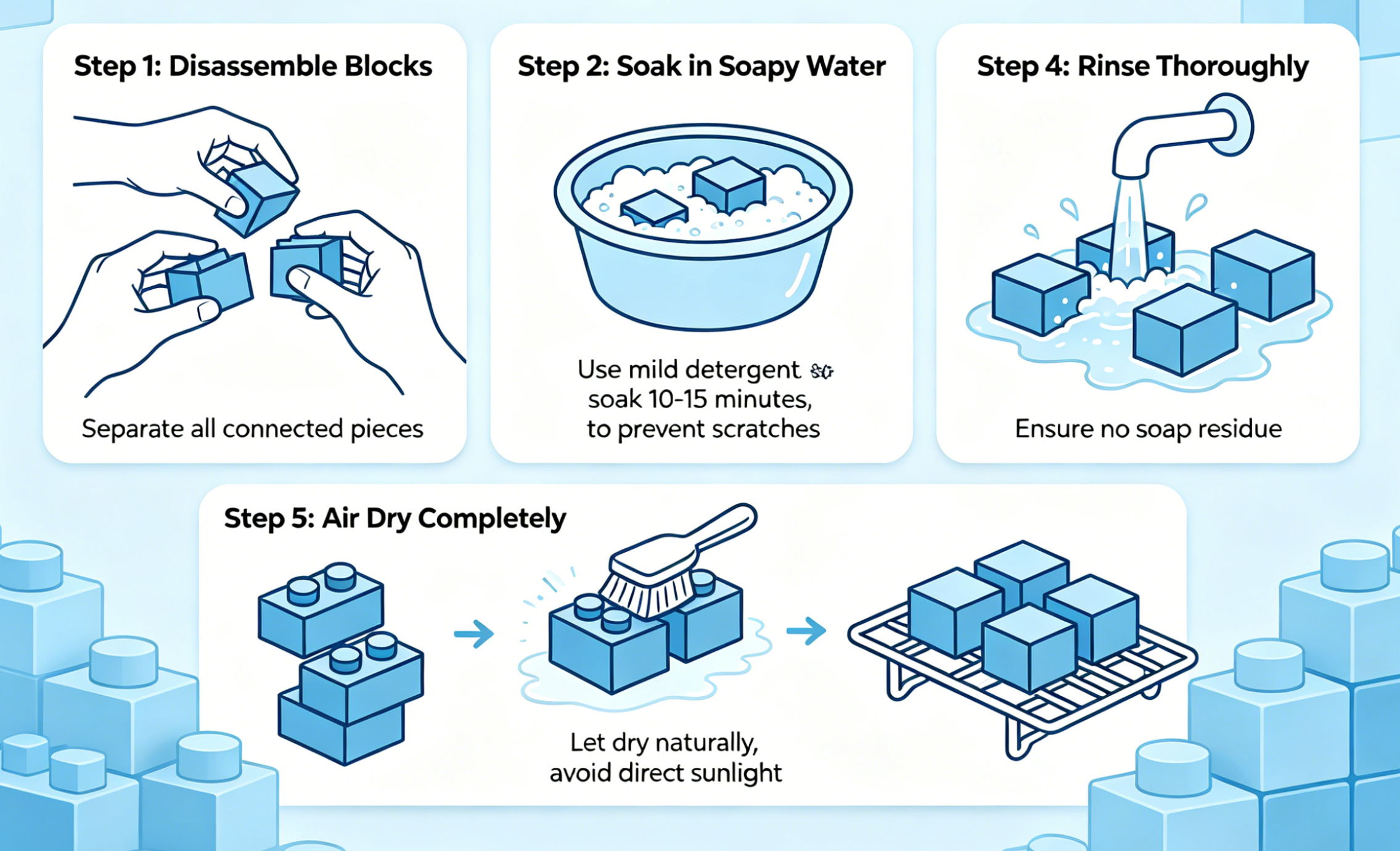
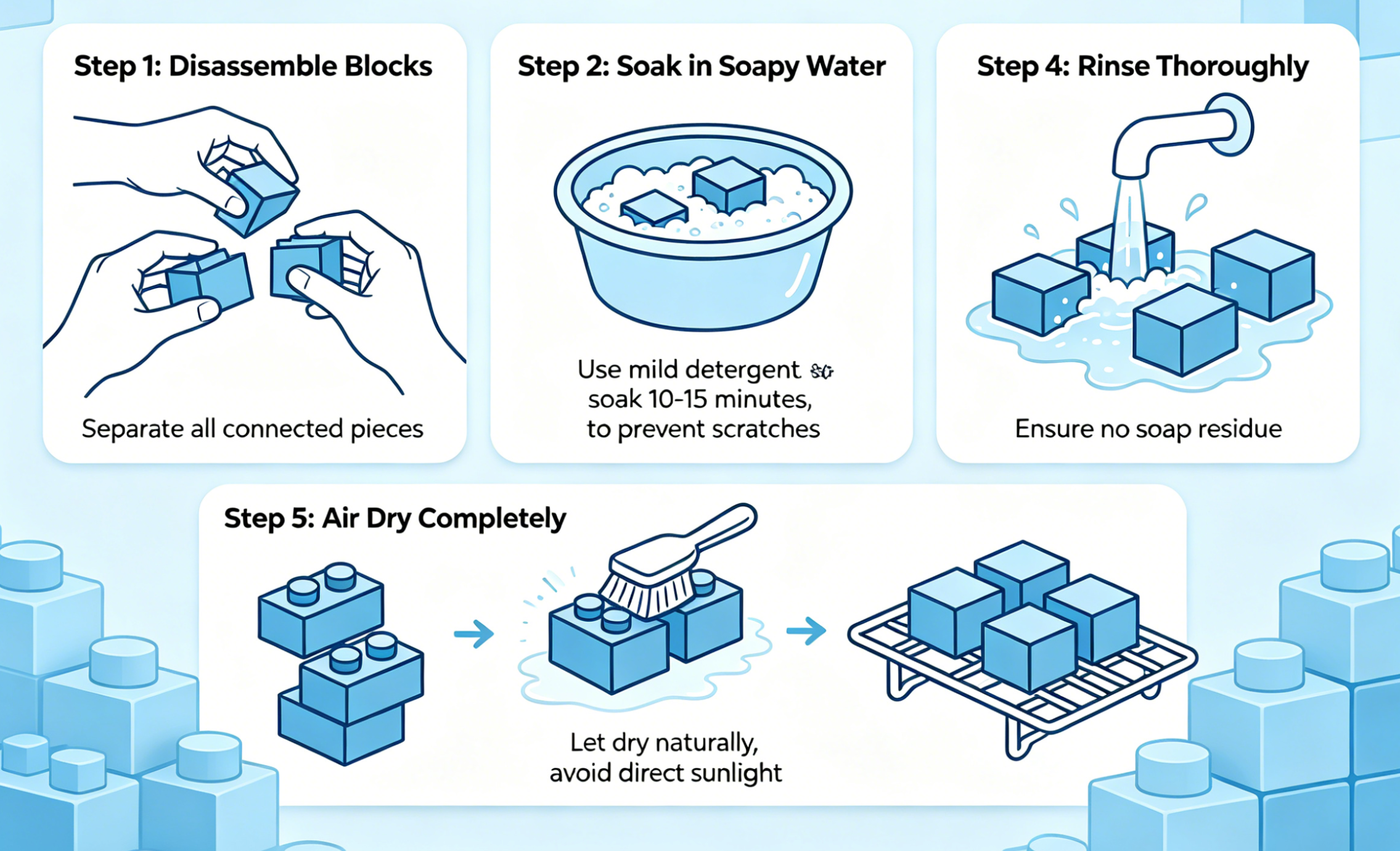
Step 1: Sorting and Disassembly
Before you get the water running, disassemble the sets. While you can wash large chunks, cleaning individual bricks is the only way to ensure the grime inside the studs is removed. At this stage, separate pieces with stickers or printed designs, as well as any electronic components. These require special care which we will discuss later.
Step 2: The Soaking Solution
Fill a large basin or your sink with lukewarm water. Crucial tip: Never use hot water! High temperatures can cause the plastic to warp, ruining the clutch power of your bricks. Add a few drops of mild dish soap. Avoid harsh chemicals or bleach, as these can strip the color from the bricks. Let the pieces soak for about 20 to 30 minutes.
Step 3: Gentle Scrubbing
For stubborn spots, use a soft-bristled toothbrush. This is particularly effective for modelbuilder fans who have intricate sets with lots of texture. Gently scrub the surfaces and inside the connector tubes. Once clean, rinse the pieces thoroughly in cool, clear water to remove all soap residue.
Can You Use a Washing Machine?
Many hobbyists wonder about how to clean and maintain building block sets using modern appliances. While it is possible to use a washing machine, it comes with risks. If you choose this method, place the bricks inside a fine-mesh laundry bag or a pillowcase tied tightly. Use the “delicate” or “hand wash” cycle with cold water. Never put your bricks in the dryer; the heat will almost certainly melt or deform the pieces. Instead, always air-dry them.
For those starting out with top-rated building block sets for beginners 2026, we generally recommend sticking to the hand-wash method until you are comfortable with how the plastic reacts to different environments.
Drying and Reassembly
Drying is perhaps the most tedious part of the maintenance process, but it is vital. If you reassemble bricks while they are still damp, moisture can get trapped inside the studs, leading to mold or unpleasant odors. Lay the bricks out on a clean towel with the studs facing down. This allows water to drain out of the tubes.
Keep the drying bricks away from direct sunlight. While it might seem like a good way to speed up the process, UV rays are the enemy of plastic. Prolonged exposure can cause white bricks to turn yellow and vibrant colors to fade. Allow at least 24 hours for everything to air-dry completely before you start rebuilding your anime building block sets.
Special Care for Unique Elements
Not all parts of a building block set are created equal. Some require a more “surgical” approach to cleaning:
Stickers and Printed Parts
Avoid soaking bricks that have stickers applied. The water will dissolve the adhesive, causing the stickers to peel or bubble. Instead, use a damp cloth to wipe the plastic around the sticker. Printed parts (where the design is baked onto the plastic) are generally safer to wash, but you should still avoid heavy scrubbing on the printed area.
Electronics and Chrome
If your set includes LED lights or motors, never submerge them in water. Use a slightly damp cloth to wipe the exterior, and ensure no moisture enters the battery compartments. For chrome-finished pieces often found in building block sets like lego, use only a dry microfiber cloth to avoid scratching the delicate metallic coating.
Storage Solutions for Long-Term Maintenance
Mastering how to clean and maintain building block sets also involves knowing how to store them properly. If you aren’t displaying your sets, they should be stored in a way that minimizes wear and tear. Here are some pro tips:
- Climate Control: Store your collections in a room with stable temperatures. Attics and basements can be too hot or too damp, which can affect the plastic’s integrity over several years.
- Opaque Containers: If possible, use bins that block out light to protect the bricks from UV damage.
- Categorization: For those with massive inventories, sorting by part type or color in multi-drawer cabinets (like those used for hardware) prevents the “digging” that causes scratches on the brick surfaces.
When you take care of your storage environment, your modelbuilder sets will remain in “mint condition” for decades.
Conclusion
Taking the time to understand how to clean and maintain building block sets is the best way to honor the hard work you put into building them. From simple dusting to deep cleaning and proper storage, these steps ensure that your hobby remains a source of pride rather than a dusty mess. Whether you are a fan of japanese building block sets or you prefer the complexity of large building block sets for adults, a little maintenance goes a long way. So, grab your soft brushes and some lukewarm water, and give your collection the spa day it deserves. Your modelbuilder masterpieces will thank you!
Frequently Asked Questions (FAQ)
Is it safe to use vinegar to clean building blocks?
While vinegar is a great natural cleaner, it can be slightly acidic. A very diluted vinegar solution can help remove odors from used bricks, but for general cleaning, mild dish soap is safer for the plastic’s finish and color.
How do I fix yellowed plastic bricks?
Yellowing is usually caused by UV damage. Some collectors use a “retrobrighting” process involving high-concentration hydrogen peroxide and UV light, but this can be risky and may make the plastic brittle. Prevention by keeping sets out of the sun is the best strategy.
Should I take my sets apart before cleaning?
For a thorough deep clean, yes. Dust and skin oils often accumulate in the joints and under the studs. However, for regular maintenance, a light dusting with a brush while the set is assembled is usually sufficient.
Can I use a hair dryer to speed up the drying process?
No, you should avoid using a hair dryer. Even the “cool” setting can sometimes be too warm if held too close, and the “hot” setting will definitely warp the bricks. Air-drying on a towel is the safest method.
What is the best way to clean transparent bricks?
Transparent bricks show scratches and fingerprints more easily. Use a very soft microfiber cloth and avoid any abrasive sponges. If they are cloudy, a soak in warm soapy water usually does the trick.