

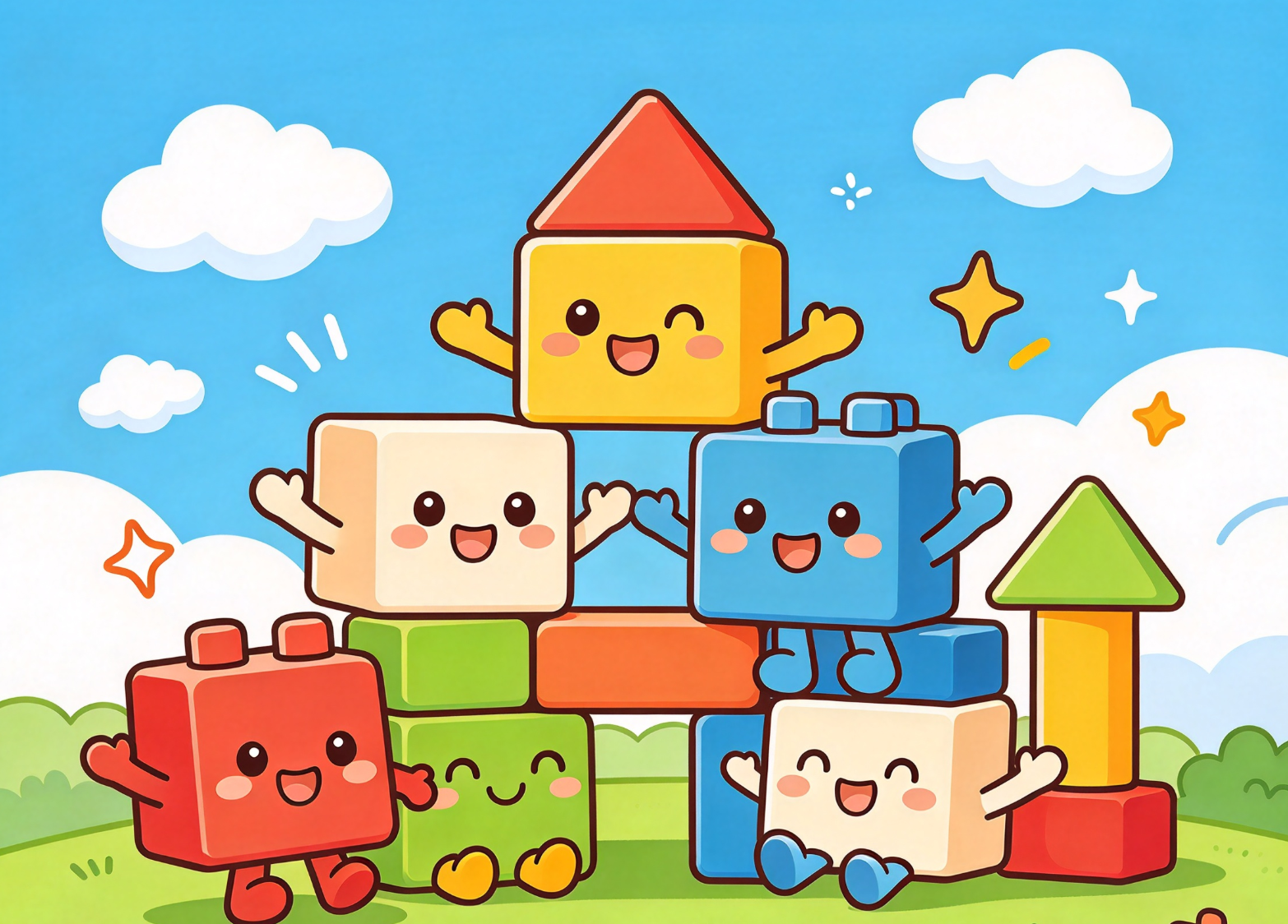
Quick answer: The best building blocks for children match a child’s age, hand strength, and interests, while offering room to grow in complexity. Look for durable, non-toxic materials, compatible piece systems, and sets that balance guided instructions with open-ended creativity. Age recommendations are a starting point, not a strict rule — always consider your own child’s skill level first.
Walking down the toy aisle, or scrolling through an online store, can feel overwhelming when you’re trying to pick the right building set. There are hundreds of brands, dozens of piece sizes, and no shortage of marketing claims promising to make your child “smarter” or “more creative.” As a parent, you don’t need hype — you need practical guidance that helps you choose a set your child will actually enjoy and benefit from.
This guide breaks down exactly what to look for in children’s building blocks, how to match sets to your child’s age and skill level, and why building play remains one of the most valuable (and least screen-dependent) activities you can offer a growing child. Whether you’re buying a first set for a toddler or searching for something more advanced for a ten-year-old who’s outgrown their starter kits, you’ll find clear, actionable advice below.
We’ll also cover common mistakes parents make when selecting sets, how to introduce building blocks in a way that keeps kids engaged long-term, and what separates a genuinely well-made block set from one that will end up in a landfill within a year.
Why Do Building Blocks Matter for Child Development?
Before diving into which set to buy, it helps to understand what building blocks actually do for a developing brain and body.
Building blocks give children a physical, hands-on way to practice problem-solving. When a child tries to balance a tower, fit two pieces together, or follow a multi-step instruction booklet, they’re working through cause and effect in real time. If a tower falls, they learn why — and they try again with a different approach. That kind of trial-and-error thinking transfers directly to skills used in math, engineering, and even reading comprehension.
There’s also a strong physical development component. Manipulating small pieces builds fine motor control and hand-eye coordination, both of which support handwriting and other precision tasks later on. For younger children, larger blocks develop grip strength and spatial awareness before they’re ready for smaller, more intricate pieces.
Finally, building play supports sustained attention. A child who spends thirty minutes completing a model is practicing focus and patience — skills that don’t come naturally to most young kids, but that improve with repeated, low-pressure practice.
What Age Should Kids Start Using Building Blocks?
Most children can start with oversized, soft-edged blocks as early as 12 months old. These early sets are designed for stacking and knocking down rather than intricate assembly, which suits a toddler’s developing motor skills and short attention span.
By ages 3 to 5, children are ready for basic connecting blocks with larger studs and simple shapes. This is typically when kids start following very simple visual instructions, like building a two-piece car or a small house.
From ages 6 to 9, most children can handle standard-sized building blocks for children, including sets with more pieces, smaller connectors, and multi-step instruction booklets. This is also the age range where interest-based sets — dinosaurs, vehicles, fantasy castles — tend to hold attention best.
By age 10 and up, many kids are ready for advanced sets with hundreds or even thousands of pieces, moving parts, and more complex instructions. Some children in this range start experimenting with custom builds that go beyond the instruction manual entirely.
Keep in mind that these are general guidelines, not hard rules. A confident 5-year-old might handle a set designed for age 7, while a cautious 8-year-old might prefer something simpler. Always prioritize your child’s actual comfort and skill level over the number printed on the box.
What Should You Look for When Buying Children’s Building Blocks?
Not all block sets are created equal, and price isn’t always a reliable indicator of quality. Here’s what actually matters.
Is the Material Safe and Durable?
Safety should always come first. Look for sets made from non-toxic, BPA-free plastic, and check for certifications relevant to your region (such as ASTM F963 in the US or EN71 in Europe). Durable materials also matter for longevity — cheap, brittle plastic cracks easily and can create sharp edges or choking hazards over time.
Rounded edges and a consistent, tight-fitting connection between pieces are both signs of a well-manufactured set. If pieces feel loose or connect unevenly straight out of the box, that’s often a sign of lower manufacturing standards.
Does the Set Match Your Child’s Skill Level?
A set that’s too advanced will frustrate a child before they finish the first section, while a set that’s too simple will bore them within minutes. Read the recommended age range, but also look at piece count and instruction complexity as a secondary check. A 200-piece set with a 20-page instruction booklet is a very different experience from a 200-piece set that builds in five simple stages.
If you’re buying for a child you don’t know well — a niece, nephew, or classmate — it’s usually safer to choose a set slightly below their stated age range rather than above it.
Is It Compatible With Sets You Already Own?
Compatibility across piece systems is a genuinely underrated factor. If your child already owns a collection of building blocks for children, choosing a new set that connects seamlessly with existing pieces multiplies the creative possibilities. It also protects your investment, since kids can mix and match instead of keeping every set in a separate, isolated pile.
ModelBuilder designs its sets with this kind of compatibility in mind, so growing collections stay flexible rather than fragmented across incompatible systems.
Does It Encourage Open-Ended Creativity?
Instruction-based sets are great for teaching sequencing and following directions, but the real long-term value of block play comes from open-ended building — when a child takes the same pieces and builds something entirely their own. Look for sets that include a healthy mix of standard pieces (not just highly specialized, single-use parts) so your child can go beyond the box art once they’ve built the original model.
How Do You Introduce Building Blocks to a Reluctant Child?
Not every child gravitates toward building play immediately, especially if they’re used to screens or more passive entertainment. A few strategies can help ease a reluctant child into the habit.
Start small. A short, simple build that takes ten minutes is far less intimidating than a 500-piece project. Early wins build confidence and make a child more willing to try something bigger next time.
Build alongside them, at least for the first few sessions. Parent-child interactive building isn’t just a bonding opportunity — it also models patience and problem-solving in a low-pressure way. Many parents find that once a child completes their first full model with support, they’re far more willing to tackle the next one independently.
Tie the set to an existing interest. A child who loves dinosaurs, space, or a particular movie is far more motivated by a themed set than a generic one. Interest-driven engagement tends to outlast novelty-driven engagement by a wide margin.
Finally, keep the pieces visible and accessible rather than stored away in a closet. Kids are more likely to return to open-ended building when the materials are part of their everyday environment, not something they need permission to access.
What Are Common Mistakes Parents Make When Buying Building Blocks?
Even well-intentioned parents fall into a few predictable traps.
Buying strictly by age recommendation, without factoring in the individual child’s skill level, is one of the most common mistakes. It leads to either frustration or boredom, both of which reduce long-term engagement with the toy.
Overbuying single-use, highly specialized sets is another common issue. A set that can only ever become one specific model, with no reusable general pieces, offers a single afternoon of play and then sits on a shelf. Sets with a strong mix of standard, reusable pieces provide far more long-term value.
Ignoring piece compatibility across brands can also fragment a child’s collection unnecessarily. If you’re planning to build a growing library of children’s building blocks over several years, checking for cross-compatibility before buying saves both money and frustration down the line.
Lastly, some parents underestimate how much children benefit from open-ended, undirected building time. Instruction-based sets are valuable, but they shouldn’t be the only mode of play. Balance is key.
Which Type of Building Block Set Is Right for Your Child?
Choosing between different set types comes down to your child’s age, interests, and how much guidance they need.
Choose a beginner connecting-block set if your child is under 5 and still developing basic motor skills — these sets prioritize large, easy-to-grip pieces over complexity.
Choose a themed instruction-based set if your child is between 6 and 9 and enjoys following clear, structured steps toward a specific outcome, like a vehicle, animal, or building.
Choose an advanced, high-piece-count set if your child is 10 or older and has already shown consistent interest in completing models — this age group often benefits most from sets that challenge planning and patience over a longer build time.
Choose a mixed-piece, open-ended set at any age if your goal is to encourage independent creativity rather than following a single fixed design. These sets tend to get more total playtime over their lifespan, since they can be rebuilt into something new indefinitely.
Parents looking for a next step can explore ModelBuilder’s current collection to compare options across age ranges and piece compatibility before making a decision.
Give Your Child Room to Build, Fail, and Try Again
Choosing the right building set isn’t about finding the toy with the most pieces or the flashiest box art. It’s about matching a set to where your child is right now, while leaving enough room for them to grow into more complex, more creative building over time.
The most valuable building blocks for children are the ones that get used again and again — pulled out on a rainy afternoon, rebuilt into something new, and eventually handed down or passed on once your child moves on to the next stage. That kind of long-term engagement matters more than any single feature on a box.
If you’re ready to start building that kind of collection, browse ModelBuilder’s sets to find a starting point that matches your child’s age and interests, with room to expand as their skills grow.
Frequently Asked Questions
What age is appropriate for a child’s first building block set?
Most children can start with oversized, soft-edged blocks around 12 months old, moving to standard connecting blocks between ages 3 and 5. Always prioritize your child’s individual motor skills over the age printed on the packaging.
Are building blocks better than digital or screen-based toys for young children?
Building blocks offer hands-on problem-solving, fine motor development, and sustained attention practice that screen-based activities generally don’t provide. Most experts recommend balancing both, with block play prioritized during a child’s early developmental years.
How many pieces should a beginner set have?
Beginner sets for children under 5 typically range from 10 to 50 large pieces. As skill level increases, piece counts can scale into the hundreds or thousands for older, more experienced builders.
Do building blocks from different brands work together?
Compatibility varies by brand and piece design. Checking stud size and connector type before buying helps ensure a new set works with a child’s existing collection, rather than sitting separately.
Is it better to buy instruction-based sets or open-ended sets?
Both serve a purpose. Instruction-based sets teach sequencing and patience, while open-ended sets build independent creativity. A balanced collection includes both types rather than relying exclusively on one.


