

Quick answer: The best building toys for kids match your child’s age, skill level, and interests while offering room to grow. Look for durable, compatible pieces, clear instructions, and open-ended designs that encourage creativity beyond the box. Brands like ModelBuilder offer LEGO-compatible alternatives with themed collections and custom sets, giving families more variety at a lower cost.
Choosing the right kids building toys can feel more complicated than it should be. Walk down any toy aisle in the US or across Europe and you’ll find dozens of brands claiming to be the “next LEGO,” each with its own piece sizes, price points, and instruction styles. Add in questions about safety, durability, and whether a set will actually hold your child’s attention past the first afternoon, and it’s easy to end up overwhelmed before you even reach the checkout.
This guide walks you through the entire process, from picking the right set for your child’s age and interests, to setting up a play space that works, to turning ordinary building sessions into genuine learning opportunities. Whether you’re buying your first set or building out a growing collection, you’ll find practical steps you can apply right away.
By the end, you’ll know exactly what to look for in building toys for kids, how to guide your child through their first build without taking over, and how to keep every piece organized so nothing ends up lost under the sofa.
What Are Building Toys for Kids?
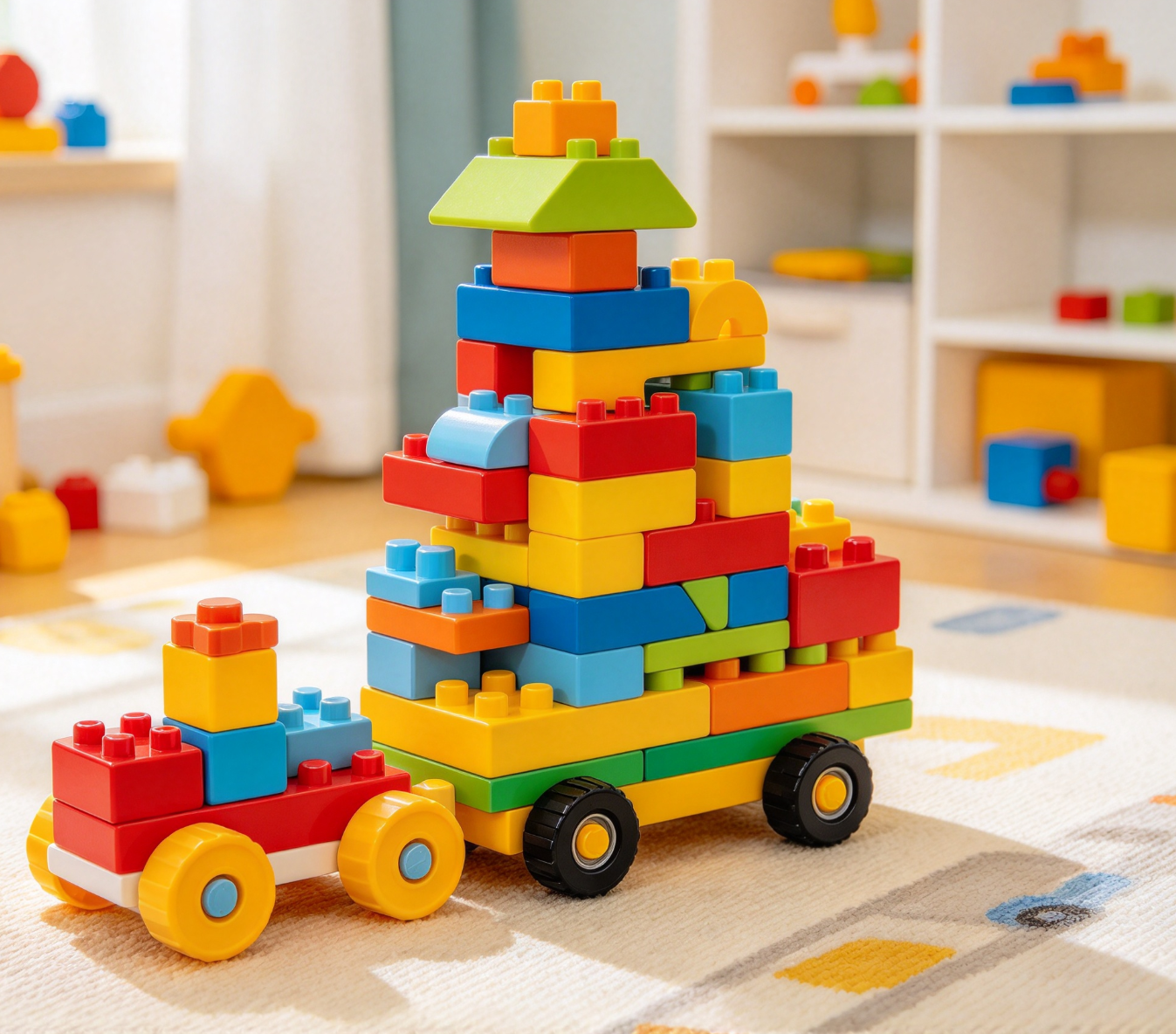
Building toys are interlocking pieces, bricks, or modular parts that children assemble into models, structures, or vehicles. Unlike toys with a single fixed function, building sets are open-ended by design. A single box of bricks might become a spaceship one day and a castle the next.
Most kids building toys fall into a few broad categories:
- Brick-based sets — small interlocking pieces, similar to LEGO, used for detailed models
- Large block sets — oversized pieces designed for younger children, easier for small hands to grip
- Themed collections — sets built around a specific idea, like vehicles, animals, or fantasy worlds
- Custom or creative sets — mixed pieces without a single “correct” build, meant for free construction
Each category serves a different purpose. Large blocks suit toddlers and preschoolers who are still developing fine motor skills. Detailed brick sets suit older children who want a challenge and a finished model to display. Knowing which category fits your child is the first step toward a purchase that actually gets used.
How to Choose the Right Kids Building Toys
Picking a set isn’t just about matching a box to an age range printed on the packaging. A few extra checks can save you from a toy that ends up forgotten in a drawer.
Match the Set to Your Child’s Age and Skill Level
Age recommendations on packaging are a starting point, not a guarantee. A 6-year-old who’s been building since age 3 might handle a set designed for 8-year-olds without trouble. Watch how your child handles smaller pieces and multi-step instructions before assuming a set is too advanced or too simple.
Consider Piece Compatibility
One of the most practical things to check before buying is whether a set’s pieces are compatible with sets you already own. Many alternative brands, including ModelBuilder, design their bricks to work with existing collections, so a new themed collection can expand what your child already has instead of starting from scratch.
Look at Durability and Material Quality
Cheaper sets sometimes use brittle plastic that cracks under pressure or loses its grip after repeated use. Pieces that snap together securely and hold their shape after months of play are worth the extra cost. This matters even more for families who plan to pass sets down between siblings.
Think About Your Child’s Interests
A set themed around dinosaurs, space, or vehicles will hold a child’s attention far longer than a generic box of bricks, especially for kids who aren’t naturally drawn to building. Interest-driven sets give a child a reason to finish the build rather than losing motivation halfway through.
Check for Clear, Age-Appropriate Instructions
Instructions with large, clear diagrams and minimal text work best for younger builders. Older children who want more of a challenge often enjoy sets with fewer step-by-step guides, since it pushes them to problem-solve independently.
How to Set Up the Perfect Play Space
A good building session starts before the first piece even comes out of the box. Where and how your child builds affects how long they stay engaged and how easy cleanup becomes afterward.
Choose a flat, dedicated surface. A table or designated play mat works better than a carpeted floor, where small pieces can get lost or stepped on. If floor space is the only option, a large tray or building mat keeps pieces contained.
Sort pieces before starting. For bigger sets, sorting by color or size before building reduces frustration, especially for younger children who might get discouraged hunting through a mixed pile.
Keep lighting and space generous. Building toys often involve small parts and detailed instructions, so good lighting and enough table space to spread out the manual matter more than people expect.
Store the box and instructions nearby. Keeping the original packaging within reach makes it easier to reference piece counts and sort leftover parts once the build is done.
A well-organized setup doesn’t just make building easier. It also teaches kids habits around organization and care for their belongings, something that carries over well beyond playtime.
Step-by-Step: Guiding Your Child Through Their First Build
If your child is new to building toys for kids, the first build sets the tone for how they feel about future sets. Here’s a simple approach that works for most ages.
- Open the box together and take inventory. Before building anything, look through the instructions and count out the main piece groups. This gives your child a sense of what’s ahead.
- Read the first few steps out loud. For younger children, walk through each diagram together rather than handing over the manual and stepping back.
- Let them attempt each step first. Resist the urge to build it for them, even if it’s slower. Struggling briefly with a step and figuring it out builds confidence.
- Step in only when needed. If your child gets stuck for more than a minute or two, offer a hint rather than the full answer. Ask what they think might be wrong before showing them.
- Celebrate the finished model. Display it somewhere visible, at least for a few days. Seeing the result reinforces that the effort was worth it.
- Talk about what they’d build next. Ending on a question about future ideas keeps enthusiasm going into the next session.
This approach works whether you’re building a small themed set in twenty minutes or a larger model across several sittings over a week.
How to Make Building Toy Play More Educational
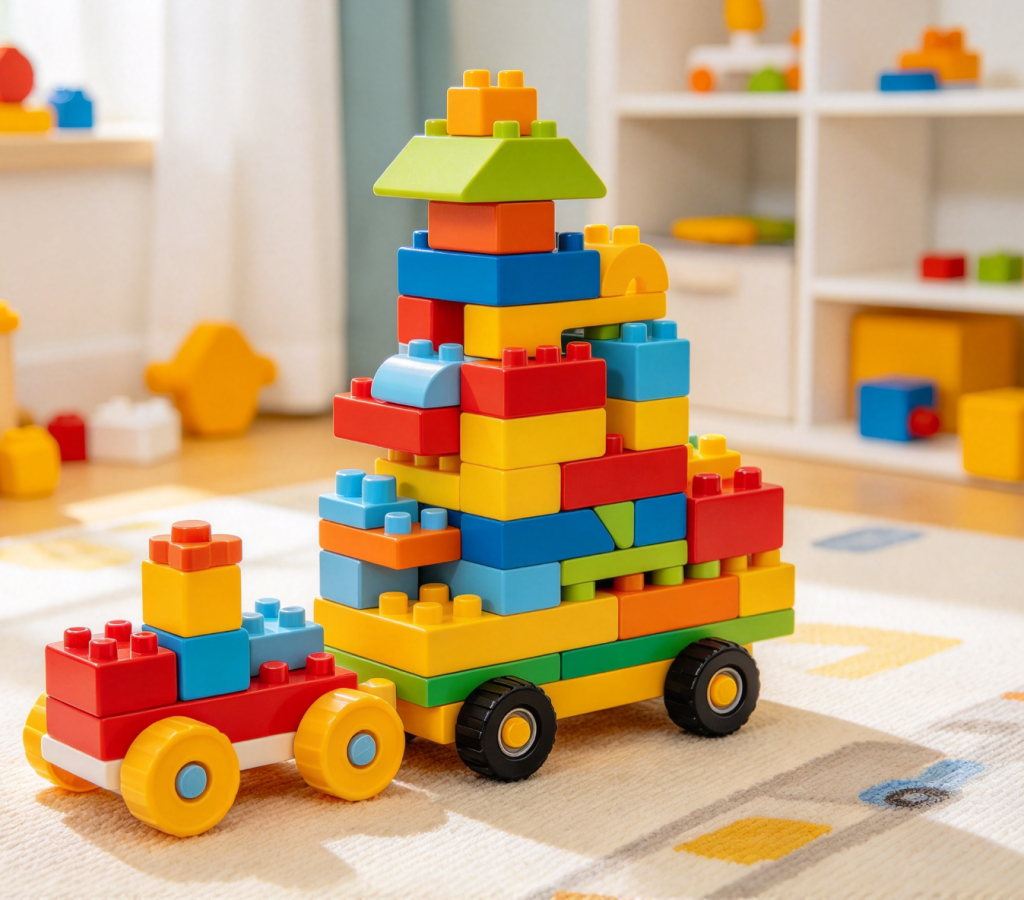
Building toys naturally teach skills like spatial reasoning and problem-solving, but a few small changes can turn casual play into something closer to structured learning.
Introduce basic engineering concepts. Ask your child why a certain shape makes a structure more stable, or what happens if a base is too narrow. These questions build early engineering intuition without feeling like a lesson.
Add math into the mix. Counting pieces, estimating how many bricks a section will need, or measuring height and width all sneak in math practice during play.
Encourage storytelling. Once a model is built, ask your child to explain what it does or invent a short story around it. This builds language skills and creative thinking alongside the physical construction.
Set creative challenges. Occasionally ask your child to build something without instructions, like “a vehicle that can carry three passengers” or “the tallest tower that won’t fall over.” Open-ended challenges push problem-solving further than following a manual.
Rotate between guided and free building. A mix of instruction-based builds and free construction keeps both structured learning and open creativity in the routine.
Parents looking for kids building toys with STEM value in mind should prioritize sets that support both approaches, rather than ones limited to a single fixed model.
How ModelBuilder Stands Out as a LEGO Alternative
Families across the US and Europe often look for LEGO alternatives to get more variety without paying premium prices for every new set. ModelBuilder offers a few practical advantages worth considering.
Compatible piece design. ModelBuilder’s bricks are built to work alongside other major brick systems, so new purchases add to an existing collection instead of creating a separate, incompatible pile.
Themed and custom collections. Beyond standard sets, ModelBuilder offers themed building collections designed around specific interests, along with custom brick sets tailored to individual preferences.
Focus on durable materials. Every set goes through a design and prototype process before production, with materials selected specifically for durability and safety across repeated use.
Educational workshops. For families interested in the learning side of building, ModelBuilder also runs interactive workshops focused on creativity and problem-solving skills, extending the value of a set beyond the box itself.
Parents comparing options for building toys for kids can explore ModelBuilder’s full range to see how the sets fit alongside existing collections and interests.
Tips for Maintaining and Storing Kids Building Toys
A good set can last for years, but only with a bit of routine care.
- Sort pieces by type or set. Clear bins with labels make it far easier to find specific pieces later, especially for families with multiple sets in rotation.
- Check instructions periodically. Keep manuals in a folder or envelope near the storage bins, since rebuilding a model months later often requires the original steps.
- Clean pieces occasionally. A quick wash with mild soap and water keeps bricks free of dust and grime, particularly for sets that see heavy use.
- Avoid extreme temperatures. Storing bins in a hot attic or damp basement can warp plastic pieces over time. A dry, temperature-stable space works best.
- Involve your child in cleanup. Turning storage into part of the routine, rather than a chore done entirely by a parent, reinforces the same care and organization skills learned during building itself.
Good storage habits protect your investment and make it far easier to return to old sets for a rebuild months or years down the line.
Building a Habit, Not Just a Toy Box
Choosing the right building toys for kids comes down to matching the set to your child’s age, interests, and skill level, then supporting that choice with a good play setup and a few small educational nudges along the way. The goal isn’t a perfect finished model every time. It’s a habit of creative problem-solving that sticks with your child well beyond playtime.
Start small if you’re new to this. Pick one set that matches your child’s current interests, set up a simple, organized space to build in, and let your child lead the process as much as possible. From there, expanding into themed collections or custom sets becomes a natural next step rather than a guessing game.
Frequently Asked Questions
What age should a child start with building toys?
Most children can start with large, simplified building blocks around age 2 to 3. Detailed brick-based sets designed for fine motor control and multi-step assembly are generally better suited to children age 5 and up.
Are LEGO alternatives like ModelBuilder safe for kids?
Reputable alternative brands, including ModelBuilder, select materials specifically for durability and safety during their design and prototype process. As with any small-piece toy, always check the manufacturer’s recommended age range before purchasing.
Can building toys really help with STEM learning?
Yes. Building toys support spatial reasoning, basic engineering concepts, and problem-solving skills. Adding simple prompts around measurement, stability, or structure design during play increases the educational value further.
How do I know if a building toy set is compatible with what we already own?
Check the piece dimensions and connection style listed by the manufacturer. Many alternative brands design their pieces to be compatible with major brick systems, allowing new sets to integrate directly into an existing collection.
What’s the best way to store loose building toy pieces?
Clear, labeled bins sorted by piece type or set work best. Keeping instruction manuals stored alongside the pieces makes it much easier to rebuild models later.


