

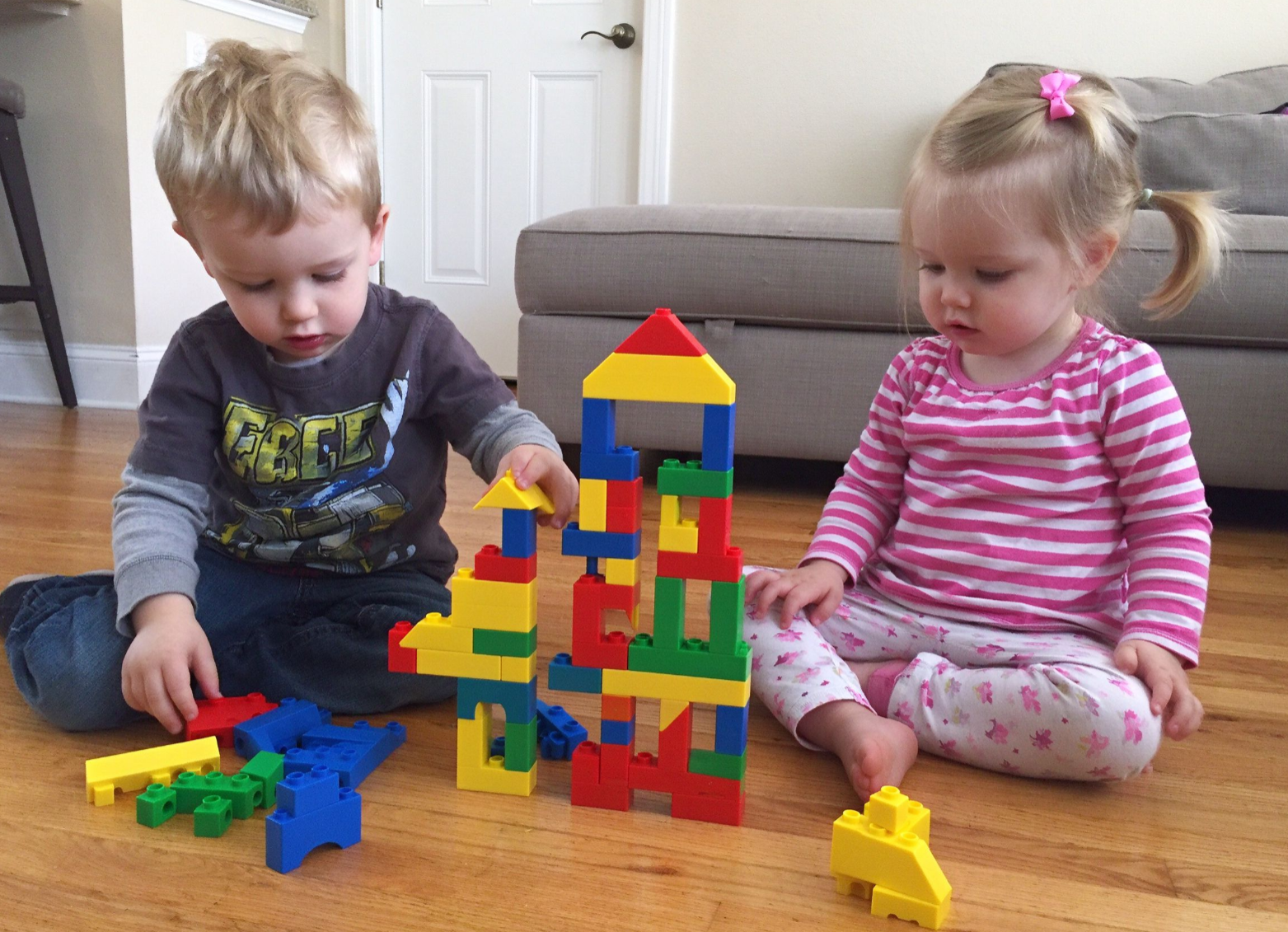
Quick answer: The best building toys for toddlers are large, chunky, non-toxic blocks sized for small hands, free of choking hazards under 1.25 inches, and simple enough to stack, sort, and topple. Start with oversized blocks around 12-18 months, then graduate to more detailed toddler building toys as fine motor skills and attention span grow. Rotate sets regularly and always supervise play to keep it safe, fun, and developmentally rich.
Toddlers don’t need flashy screens or complicated gadgets to learn. Give a two-year-old a pile of colorful blocks, and watch how quickly a living room turns into a construction site. That instinct to stack, knock down, and stack again isn’t just play — it’s how young brains build the foundations for math, language, and problem-solving.
Choosing the right building toys for this age group, though, isn’t as simple as grabbing whatever’s on the shelf at the toy store. Toddlers have specific developmental needs, safety requirements, and attention spans that shape what “the right toy” actually looks like. This guide walks through why building toys matter, how to pick ones that match your child’s stage, how to set up a safe play area, and how to keep the fun going as your toddler grows into a confident little builder.
Why do building toys matter for toddler development?
Building toys give toddlers a hands-on way to practice skills they’re just starting to develop. Every time a toddler picks up a block, turns it over, and tries to fit it onto another, they’re working on hand-eye coordination and spatial reasoning at the same time.
Here’s what’s happening beneath the surface during a simple stacking session:
- Fine motor skills: Gripping, pinching, and placing blocks strengthens the small muscles in fingers and hands, laying groundwork for skills like holding a crayon or using scissors later.
- Cognitive development: Sorting by color or size, or figuring out why a tower keeps falling, introduces early problem-solving and cause-and-effect thinking.
- Language growth: Naming colors, shapes, and actions (“stack,” “big,” “red block”) during play builds vocabulary in a low-pressure, repetitive way.
- Emotional resilience: A toppled tower is a toddler’s first lesson in frustration tolerance — and the drive to rebuild it teaches persistence.
The American Academy of Pediatrics recommends limiting passive screen time for young children and encouraging hands-on, unstructured play instead. Building toys check that box perfectly: no batteries, no screens, just a child directing their own learning.
How do you choose the right toddler building toys?
Not every block set is toddler-ready. Age grading exists for a reason, and picking the right toddler building toys comes down to matching the toy’s design to your child’s developmental stage.
Prioritize size and safety first
Look for pieces larger than 1.25 inches in diameter — the U.S. Consumer Product Safety Commission uses this measurement as its small parts standard for toys intended for children under three. Oversized blocks reduce choking risk and are genuinely easier for small hands to grip.
Check the materials
Non-toxic, BPA-free plastics or untreated wood are the safest bets. Toddlers mouth everything, so materials matter as much as size.
Match complexity to age
An 18-month-old doesn’t need interlocking gears or tiny connector pieces. Simple stacking cubes, chunky interlocking blocks, or soft foam shapes are age-appropriate starting points. As coordination improves closer to age three, you can introduce sets with more pieces and slightly finer detail.
Look for open-ended play value
The best building toys for toddlers don’t come with one “correct” way to play. A set of basic blocks can become a tower, a bridge, a garage, or a spaceship — whatever the child imagines that day. Open-ended toys tend to hold attention longer than single-purpose ones because they grow with the child’s imagination.
Consider durability
Toddlers drop, throw, and chew on toys constantly. Durable, well-made pieces last through multiple children or hand-me-downs, which also makes them a better long-term value than flimsier alternatives.
How do you set up a safe play space for building toys?
A safe environment matters just as much as the toy itself. Before handing over a box of blocks, take a few minutes to prepare the space.
- Clear the floor. Remove tripping hazards and make sure there’s enough open space for building without bumping into furniture.
- Use a soft surface. A rug or play mat cushions falls and keeps small pieces from scattering across hard floors.
- Separate by age if siblings are present. If an older child’s set includes smaller pieces, store it out of a toddler’s reach to avoid mixing choking hazards into toddler-safe play.
- Supervise, don’t hover. Toddlers need room to experiment and fail, but an adult should stay within arm’s reach, especially during the early stages of introducing new toys.
- Rotate storage bins. Keeping a few sets accessible and the rest stored away prevents overwhelm and keeps novelty alive.
What’s the best way to introduce building toys at each age stage?
Toddler development moves fast, and the right toy at 12 months looks very different from the right toy at 3 years. Here’s a stage-by-stage approach.
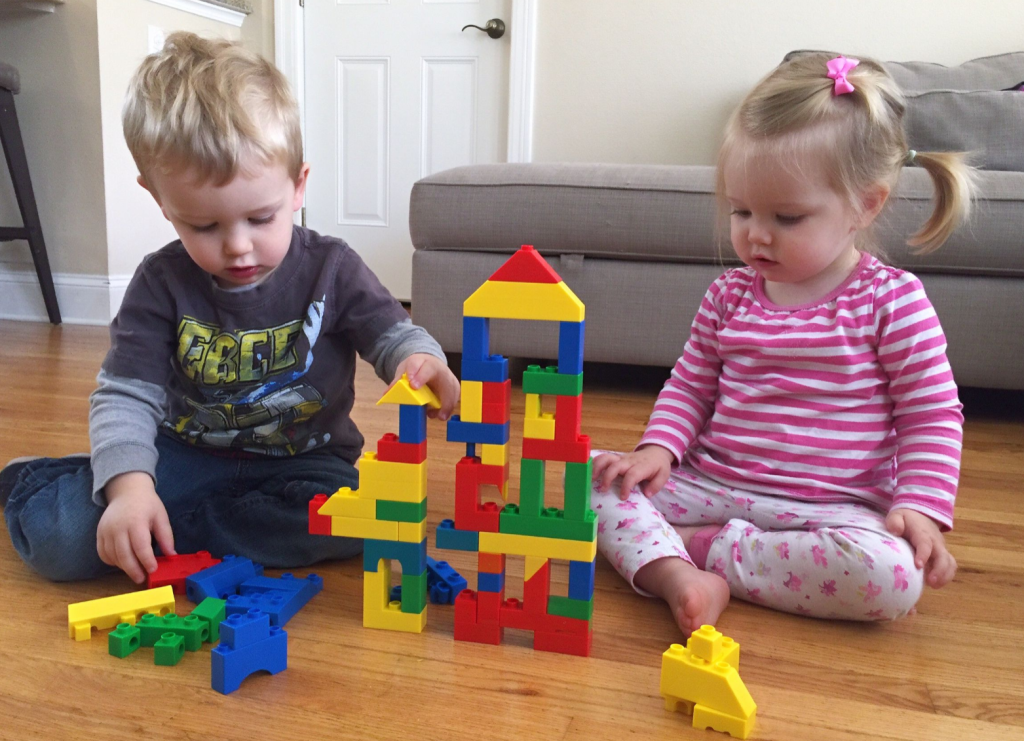
12–18 months: Stack and knock down
At this stage, toddlers are refining their grip and building basic cause-and-effect understanding. Oversized soft blocks or simple stacking cups work well. Expect more knocking-down than building — that’s normal, and it’s still valuable play.
18–24 months: Sort and connect
Coordination improves enough for simple interlocking pieces. Look for chunky sets designed specifically for this age range, where blocks click together with minimal force. Sorting by color or shape becomes a favorite activity here too.
2–3 years: Build with purpose
Toddlers in this range start building recognizable structures — towers, walls, simple “houses.” Introduce sets with a slightly wider variety of shapes and colors to support more intentional building. This is also a good age to start basic parent-child interactive guides, where a parent demonstrates a simple structure and the child copies or adapts it.
3–4 years: Add complexity
As fine motor skills mature, toddlers can handle smaller connector pieces and more detailed sets. This transition period is where many parents start looking at LEGO-style building systems, since attention span and dexterity finally support more intricate builds.
How do you keep building toy playtime fun and educational?
Even the best set gets boring if it’s the only option on the shelf. A few simple habits keep engagement — and learning — high.
- Rotate toys every few weeks. Store some sets away and bring them back later; toddlers often rediscover “old” toys with fresh enthusiasm.
- Build alongside your child. Narrate what you’re doing (“I’m putting the blue block on top”) to reinforce vocabulary and demonstrate new building techniques.
- Set small challenges. Ask your toddler to build the tallest tower they can, or match colors while stacking. Simple prompts turn free play into a light educational activity.
- Celebrate the process, not just the result. A wobbly, half-finished structure represents just as much learning as a perfect one.
- Connect building to other interests. If your toddler loves animals, build a “zoo” out of blocks. If they love vehicles, build a garage. Tying play to existing interests extends attention span naturally.
Why is ModelBuilder a smart LEGO alternative for young builders?
As toddlers grow into preschoolers and beyond, many parents look for building systems that scale up in complexity without switching brands entirely. This is where ModelBuilder fits into the picture.
ModelBuilder offers alternative building blocks designed for builders of all ages — from custom brick sets to themed collections that grow alongside a child’s skills. Instead of outgrowing a toy box by age four, families can move from simple, toddler-safe starter sets into more detailed builds as coordination and patience develop, all within a system built for long-term use.
For parents thinking beyond the toddler years, ModelBuilder’s educational workshops are worth exploring too. They’re built around the same hands-on, screen-free learning philosophy that makes building toys for toddlers so valuable in the first place — just scaled up for older kids who are ready for bigger challenges.
Parents who want to compare options in more detail can explore ModelBuilder’s full range before deciding which set fits their child’s current stage best.
Give your toddler room to build
Building toys give toddlers something screens can’t: a hands-on way to shape their own world, one block at a time. The right set — sized safely, matched to their stage, and open-ended enough to grow with them — turns ordinary playtime into a quiet but powerful learning tool.
Start simple, watch how your toddler plays, and let their interests guide which sets come next. The goal isn’t a perfect tower. It’s a toddler who wants to build one again tomorrow.
Frequently asked questions
What age should toddlers start playing with building toys?
Most toddlers can start with oversized, soft stacking blocks around 12 months old. By 18 months, many children are ready for simple interlocking pieces designed specifically for small hands.
Are building blocks safe for toddlers under three?
Yes, as long as the pieces are larger than 1.25 inches in diameter — the small parts safety standard set by the U.S. Consumer Product Safety Commission — and made from non-toxic materials. Always check the manufacturer’s age recommendation before purchasing.
How many building toys does a toddler actually need?
Fewer than most parents expect. Two or three well-chosen sets, rotated periodically, keep play fresh without overwhelming a toddler with too many options at once.
When should toddlers move from big blocks to smaller, LEGO-style pieces?
Most children are ready for smaller connector pieces between ages 3 and 4, once fine motor skills and attention span have developed enough to handle more detailed building.
Can building toys really support early learning, or is that overstated?
Building toys genuinely support early learning. Stacking and connecting pieces builds fine motor skills, spatial reasoning, and problem-solving — all through unstructured, child-led play rather than passive screen time.


