

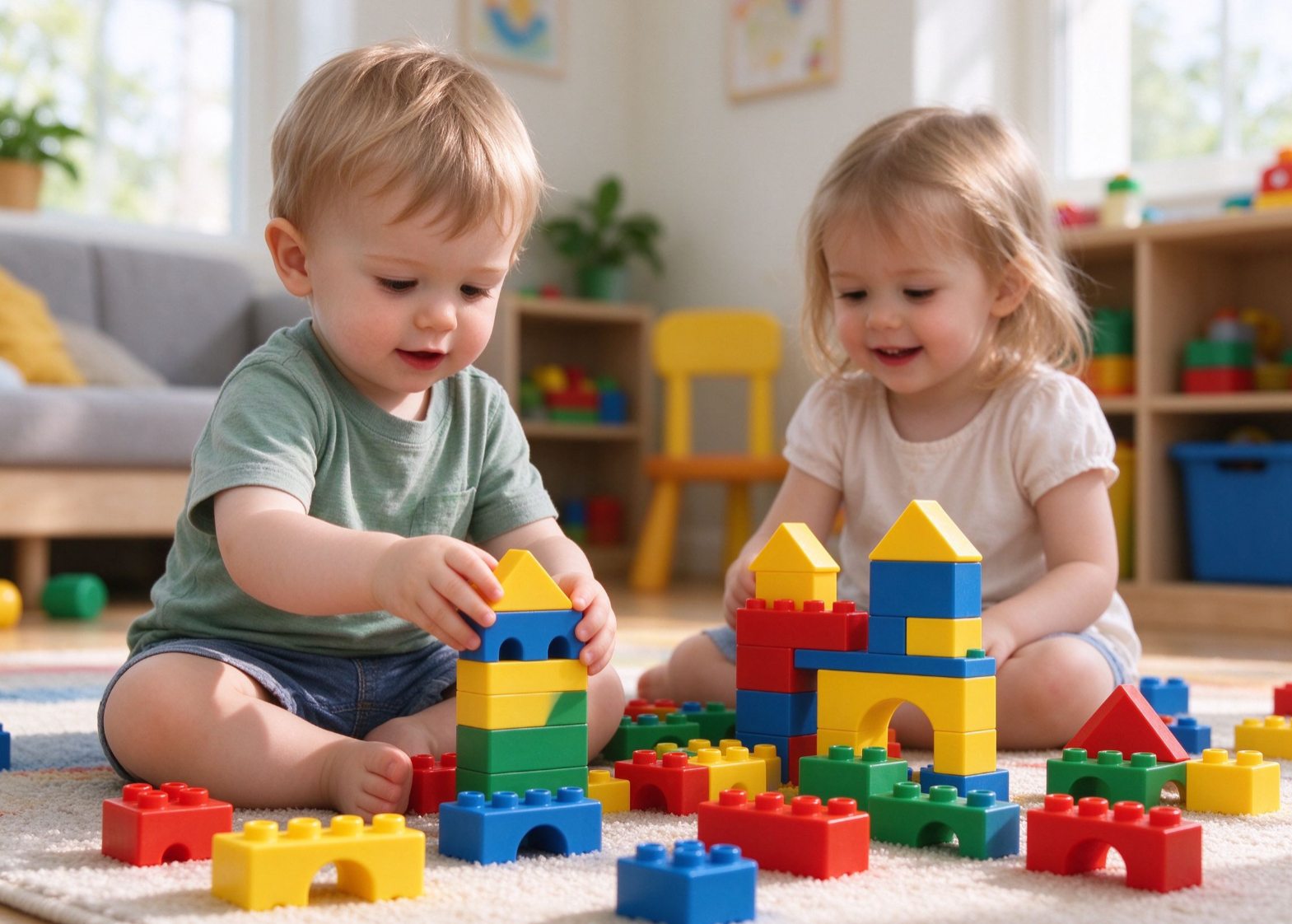
Quick answer: The best building blocks for toddlers are large, chunky, non-toxic pieces designed for small hands — think oversized bricks rather than tiny LEGO-style pieces. Choose sets rated for ages 1-3, avoid choking hazards, and introduce play in short sessions. Toddler building blocks support fine motor skills, early problem-solving, and hand-eye coordination when matched to your child’s age and stage.
Toddlers are natural builders. Stack two blocks, and a toddler will try to stack three. Hand them a mismatched shape, and they’ll figure out — through trial, error, and a fair amount of toppling — how the pieces fit. This instinct to build isn’t just entertaining to watch. It’s one of the clearest windows into how a young child’s brain develops problem-solving skills, spatial reasoning, and hand control.
But not all blocks are created equal, and not every set on the shelf is designed with a toddler’s hands, attention span, or safety needs in mind. Choosing the right building blocks for toddlers means understanding what your child’s developmental stage actually requires — and then finding a set that matches it.
This guide walks through why building blocks matter for early development, how to choose the right set, how to set up a safe play space, and how to introduce blocks at each age and stage from 12 months through the preschool years. Along the way, we’ll cover practical tips for keeping playtime both fun and educational, and explain why ModelBuilder has become a trusted LEGO alternative for families building smarter from the start.
Why Building Blocks Matter for Toddler Development
Block play looks simple from the outside. A child stacks, knocks down, stacks again. But underneath that repetition, several developmental processes are firing at once.
Fine motor skills and hand-eye coordination
Picking up a block, rotating it, and placing it precisely on top of another requires a level of hand control that toddlers are actively building. Each attempt strengthens the small muscles in the hand and wrist — the same muscles later used for holding a pencil or buttoning a shirt.
Early problem-solving and spatial reasoning
When a tower falls, a toddler is faced with a mini problem: why did it fall, and what happens if I try again differently? This trial-and-error process is one of the earliest forms of problem-solving. Toddlers also start to grasp basic spatial concepts — big versus small, tall versus short, balanced versus unstable — long before they have the words to describe them.
Language and social development
Block play often happens alongside a parent, sibling, or caregiver, which opens the door for language-rich narration: “Can you find the red block? Let’s make it taller.” According to early childhood development research widely cited by pediatric associations, this kind of shared play supports vocabulary growth and turn-taking skills that carry into other social settings.
A foundation for STEM thinking
Long before toddlers understand what STEM stands for, they’re doing the groundwork for it. Balancing shapes, testing weight distribution, and recognizing patterns are the earliest, most instinctive forms of engineering and design thinking. Choosing toddler building blocks with this in mind sets the stage for more advanced building play later on.
How to Choose the Right Building Blocks for Toddlers
Walking into a toy aisle — or scrolling through an online store — can be overwhelming. Here’s what actually matters when selecting building blocks for toddlers.
Prioritize size and safety first
Toddlers explore with their mouths as much as their hands, especially before age 2. Blocks should be:
- Large enough to avoid choking hazards — look for pieces sized for ages 1-3, typically larger than standard building bricks.
- Free of small, detachable parts like tiny wheels, stickers, or decorative add-ons that could come loose.
- Made from non-toxic, BPA-free materials. Check for safety certifications on the packaging.
Match the set to your child’s current skill level
A 12-month-old and a 3-year-old have very different capabilities. A set that’s too advanced leads to frustration; a set that’s too simple gets ignored after day one.
- 12-18 months: Chunky, oversized blocks that are easy to grip and stack two or three high.
- 18-24 months: Slightly smaller pieces that allow for basic shape-sorting and simple structures.
- 2-3 years: Sets with a wider variety of shapes and colors that support imaginative building — houses, animals, simple vehicles.
Look for open-ended play potential
Sets that lock a child into building one specific object (and only that object) tend to lose appeal quickly. Open-ended sets — where the same pieces can become a tower one day and a truck the next — extend the life of the toy and keep engagement high. ModelBuilder’s building sets are designed around this kind of flexible, reusable play, giving toddlers room to build differently every time.
Consider color and texture variety
Bright, distinct colors help toddlers with early color recognition and sorting skills. Textured or patterned pieces add a sensory layer that keeps hands-on exploration interesting.
Durability matters more than you’d think
Toddlers drop, throw, and chew on toys. Blocks made from durable, high-quality materials hold up to this treatment far better than flimsy alternatives — and they’re more likely to survive long enough to be handed down to a younger sibling.
How to Set Up a Safe and Engaging Play Space
Once you’ve chosen the right set, the environment matters almost as much as the blocks themselves.
Clear a low-traffic, soft-floored area
A carpeted room or a play mat works well. This reduces the risk of injury from falls and muffles the noise of blocks hitting the floor — a small but real consideration during nap-adjacent hours.
Keep the block collection visible and accessible
Toddlers are far more likely to initiate independent play when they can see their options. A low, open bin or shallow basket works better than a deep toy box where blocks disappear from view.
Rotate sets to maintain interest
Instead of leaving every block set out at once, rotate two or three options every couple of weeks. This keeps the novelty factor alive without requiring new purchases.
Supervise, but don’t hover
Toddlers benefit from independent exploration, but should always be supervised during block play — particularly with children under 3, where mouthing objects is still common. Supervision doesn’t mean directing every move; it means being present enough to intervene if needed while letting your child experiment freely.
Step-by-Step: How to Introduce Toddler Building Blocks at Each Age Stage
Introducing blocks isn’t a one-time event — it’s a gradual process that evolves as your toddler grows. Here’s a practical, stage-by-stage approach.
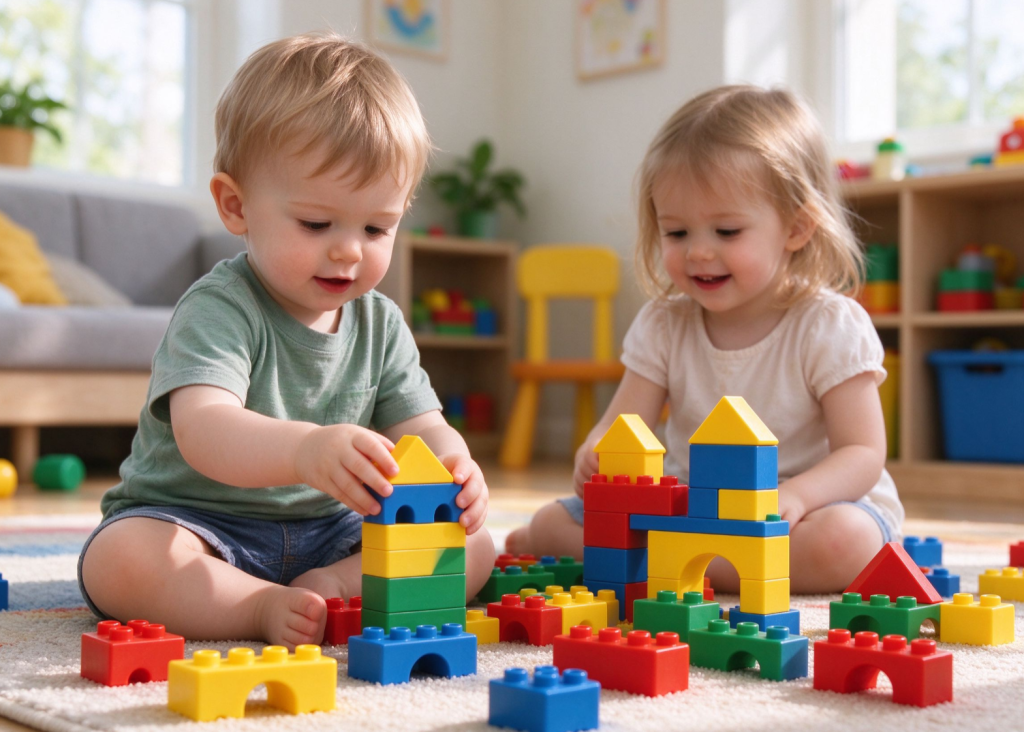
Step 1: 12-18 months — Start with stacking basics
Begin with two or three large, easy-to-grip blocks. Demonstrate stacking them yourself first, then hand your toddler a block and encourage them to try. Celebrate the attempt, not just the success — knocking the tower down is often the favorite part at this stage, and that’s fine.
Step 2: 18-24 months — Introduce simple shapes and sorting
Add blocks in a few different shapes and colors. Encourage sorting games: “Can you find all the blue blocks?” This is also a good time to introduce simple building challenges, like “let’s build a tower as tall as your knee.”
Step 3: 2-3 years — Encourage imaginative structures
As fine motor control improves, introduce sets with more pieces and variety. Suggest building specific objects — a house, a bridge, a car — and ask questions that prompt problem-solving: “How can we make it wider without it falling over?”
Step 4: 3+ years — Layer in early design thinking
By this stage, many toddlers are ready to follow simple picture-based instructions and attempt basic replicas of real-world objects. This is a natural transition point toward more structured building sets, including entry-level kits from building blocks for toddlers brands designed to scale in complexity as skills grow.
Step 5: Revisit and rebuild
Don’t retire a set once your child “masters” it. Revisiting a familiar set at a new developmental stage often reveals new ways to play with it — a toddler who once just stacked blocks may now build enclosures, patterns, or simple representations of animals and vehicles.
Tips to Keep Playtime Fun and Educational
- Narrate the play. Describe colors, shapes, and actions out loud — “You’re stacking the yellow block on top of the red one” — to build vocabulary alongside motor skills.
- Ask open-ended questions. Instead of “good job,” try “what do you think will happen if we add one more block?”
- Set small challenges. A simple goal, like building a tower taller than a toy car, gives toddlers a sense of purpose without adding pressure.
- Let mistakes happen. A collapsing tower is a learning moment, not a failure. Resist the urge to fix it immediately.
- Mix solo and shared play. Independent play builds confidence; shared play builds language and social skills. Both matter.
- Keep sessions short. Toddler attention spans are brief. Ten to fifteen focused minutes often beats an hour of scattered play.
Why ModelBuilder Is a Smart LEGO Alternative
Families searching for toddler building blocks often land on well-known brand names first — but price, piece complexity, and design rigidity don’t always match a toddler’s needs. This is where a flexible LEGO alternative earns its place in the toy rotation.
ModelBuilder builds sets around creative freedom rather than single-use instructions. Pieces are designed to be reconfigured into multiple structures, which extends play value well past the first afternoon. For parents managing a household on a budget, ModelBuilder also delivers premium-quality, durable pieces without the premium-only price tag typically attached to name-brand sets.
Beyond individual sets, ModelBuilder supports families through:
- Custom Brick Sets tailored to different skill levels and interests.
- Themed Collections that keep building play fresh and varied.
- Educational Workshops built around creativity and problem-solving — the same skills toddler block play lays the groundwork for.
Parents consistently point to product quality and safety as reasons for choosing ModelBuilder. As one customer put it: “As a parent, I appreciate the quality and safety of ModelBuilder’s products. They not only spark creativity in my child but also provide hours of fun!”
For families building a long-term toy collection — one that grows in complexity as a child does — exploring ModelBuilder’s full range is a practical next step.
Building Better Habits, One Block at a Time
Choosing the right building blocks for toddlers isn’t about finding the flashiest set on the shelf. It’s about matching pieces to your child’s current skills, creating a safe space for exploration, and staying present during the process without over-directing it. Start simple, rotate sets to maintain interest, and let your toddler’s natural instinct to build lead the way.
As your child grows, that early stacking and sorting becomes the foundation for more complex creative and STEM-based play — a progression that brands like ModelBuilder are built to support from the toddler years onward.
FAQ
What age should a toddler start playing with building blocks?
Most toddlers can begin simple block play around 12 months, starting with large, easy-to-grip pieces. By 18-24 months, many children are ready for a wider variety of shapes and basic sorting activities.
Are wooden or plastic building blocks better for toddlers?
Both materials work well, provided they meet safety standards for size and non-toxic construction. Wooden blocks tend to be more durable and have a natural texture, while plastic blocks often offer brighter colors and interlocking designs that support more advanced building as toddlers grow.
How many blocks does a toddler need to start with?
A starter set of 10-20 large blocks is typically enough for toddlers under 2. As fine motor skills improve, sets with more pieces and varied shapes can be introduced gradually.
Is LEGO safe for toddlers, or should I choose a different brand?
Standard LEGO bricks are designed for children ages 4 and up due to small piece sizes that pose choking hazards for younger children. Toddlers should use larger, toddler-specific sets — such as those offered by ModelBuilder — rather than traditional LEGO pieces.
How do I know if my toddler is ready for more advanced sets?
Signs of readiness include stacking five or more blocks without assistance, sorting by color or shape independently, and showing interest in building specific objects rather than random towers. At that point, introducing sets with more pieces and variety supports continued growth.


