

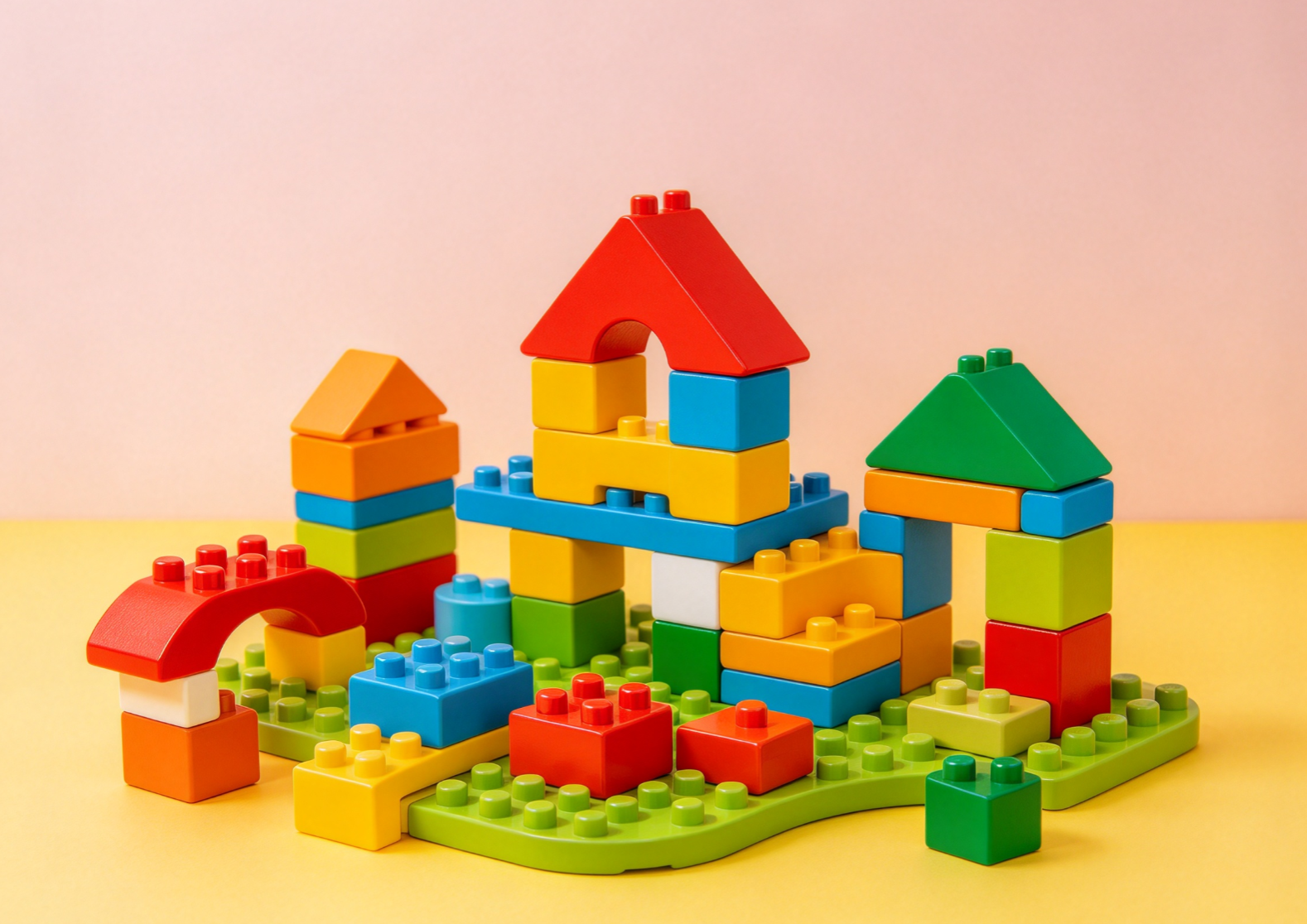
TL;DR: Choosing the right educational building blocks means matching piece size and set complexity to your child’s age, prioritizing open-ended designs over single-use kits, and looking for sets that build STEM skills like spatial reasoning and problem-solving. ModelBuilder’s educational building toys offer compatible, durable alternatives that grow with your child’s skill level.
Walk into any toy aisle and you’ll find dozens of boxes promising to make your kid “smarter,” “more creative,” or “future-ready.” Most of that is marketing noise. But building blocks genuinely earn their reputation as one of the few toy categories that deliver measurable developmental benefits — fine motor skills, spatial reasoning, patience, and early engineering concepts, all from snapping pieces together.
The challenge isn’t whether building toys are good for kids. It’s figuring out which sets actually match your child’s age, interests, and attention span, and which ones will sit untouched in a bin by week three. This guide breaks down exactly how to evaluate educational building blocks, what to look for at each developmental stage, and how to use them in ways that keep kids engaged long after the initial excitement fades.
Whether you’re buying your first set or replacing one that’s outgrown its usefulness, these steps apply whether you’re shopping for a toddler just learning to stack or a ten-year-old ready for multi-step builds.
What Age Should Kids Start Using Building Blocks?
Most children can start with large, chunky blocks around 12 to 18 months. At this stage, the goal isn’t construction — it’s grip, stacking, and cause-and-effect learning (“if I knock this tower, it falls”). Look for oversized pieces with rounded edges and no small, detachable parts.
Between ages 3 and 5, kids develop the fine motor control needed for smaller interlocking pieces. This is typically when families move into true educational building toys — sets with simple instructions, bright colors, and basic shapes that teach sequencing and following directions.
By age 6 and up, children can handle smaller pieces, longer build times, and multi-step instructions. This is where sets start introducing real engineering concepts: gears, axles, load-bearing structures, and basic mechanics. Kids in this range also start caring about what they’re building — vehicles, buildings, characters — so thematic variety matters more than it did at age 3.
How Do I Know If a Set Is Too Advanced for My Child?
Check the piece count and instruction complexity before checking the recommended age on the box — age labels are often inconsistent across brands. A good rule of thumb: if a set has more than 200 pieces or requires reading multi-page instruction booklets independently, it’s better suited to kids 8 and older, even if the packaging suggests younger ages. For children exploring ModelBuilder’s range, starting with a smaller set and working up to larger builds prevents the frustration that kills interest in building toys altogether.
What Makes Building Blocks “Educational” Versus Just Fun?
Not every brick set delivers the same developmental value. The educational value comes from specific design choices, not just the fact that pieces interlock.
Open-ended building systems teach more than single-purpose kits. A set that can only be assembled one way — following the box image exactly — offers less long-term value than one where the same pieces can build a dozen different structures. Open-ended kits force kids to problem-solve, plan, and iterate, which is where most of the cognitive benefit comes from.
Progressive complexity matters too. The best educational building blocks systems scale with skill level, using a compatible piece library that a child can keep building on for years rather than needing an entirely new (and incompatible) set every time they outgrow one.
Three things separate genuinely educational sets from toys that just happen to have blocks in them:
- Compatibility across sets — pieces that work with a child’s existing collection extend play value and reduce waste
- Instructions that teach sequencing — step-by-step guides build planning and logic skills, not just assembly skills
- Open-ended potential — sets that can be rebuilt into something new once the original model is “finished”
Why Does Piece Compatibility Matter for Long-Term Learning?
When pieces are compatible across multiple sets, kids build bigger, more complex projects by combining collections. This mirrors real engineering — working within a constrained system of parts to solve increasingly complex problems. A child who’s been building with the same compatible piece system for three years develops far more advanced spatial reasoning than one who’s cycled through five disconnected sets.
How Should I Choose Between Themed Sets and Open-Ended Kits?
Themed sets (castles, spaceships, race cars) are great for initial engagement — they give kids a clear goal and a sense of accomplishment when finished. But once assembled, many themed sets get displayed on a shelf rather than rebuilt, which limits their long-term educational value.
Open-ended kits, by contrast, are designed for repeated deconstruction and rebuilding. They tend to have less immediate “wow factor” on the box but deliver more sustained engagement because kids aren’t locked into one final outcome.
The smartest approach for most families is a mix: one or two themed sets for initial excitement, paired with a larger base collection of open-ended educational building toys that the themed pieces can eventually integrate into. This gives kids both the satisfaction of completing a specific project and the freedom to keep creating afterward. ModelBuilder’s themed collections are designed with this crossover in mind, so themed pieces aren’t dead ends once the original build is done.
Should I Buy Based on My Child’s Interests or Their Skill Level?
Interest drives initial engagement, but skill level determines whether a set gets finished at all. A dinosaur-obsessed 5-year-old will be far more excited by a dinosaur-themed set than a generic one — but if that set requires skills beyond their current ability, the excitement turns to frustration fast. When possible, match sets to skill level first, then look within that range for themes your child actually cares about.
What Should Parents Look for in Set Quality and Safety?
Not all building blocks are manufactured to the same standard, and this matters more than most parents realize. Here’s what to check before buying:
- Material safety certifications — look for ABS plastic that meets EU and US safety standards (EN71 in Europe, ASTM F963 in the US)
- Piece tolerance and fit — poorly manufactured pieces that are too loose or too tight make building frustrating and can break with repeated use
- Choking hazard labeling — always check age-appropriate piece sizes, especially for households with younger siblings
- Durability under repeated assembly/disassembly — cheap plastic degrades fast when pieces are snapped together and pulled apart hundreds of times
Price isn’t always a reliable indicator of quality, but extremely cheap sets often cut corners on plastic grade and manufacturing tolerance, which shows up as pieces that don’t click together properly or that crack after moderate use.
How Can I Keep Kids Engaged With Building Toys Over Time?
Buying the right set is only half the equation — keeping kids engaged with it long-term requires some intentional structure.
Rotate sets instead of leaving everything out at once. Having too many building options available simultaneously can overwhelm kids and lead to shallow engagement with all of them. Store a portion of the collection and rotate it in every few weeks to renew interest.
Introduce mild constraints to spark creativity. Challenge kids to build the tallest possible tower with a limited number of pieces, or to recreate a real building they’ve seen, using only non-instruction free-building. Constraints push problem-solving further than unlimited resources do.
Build alongside them, especially for younger kids. Parental involvement — even just 15 minutes of co-building a few times a week — significantly increases both engagement and the educational value of the activity. It also gives you a natural opportunity to introduce vocabulary around shapes, balance, and structure.
Connect builds to real-world concepts. Ask why a tower fell over, or what would happen if the base were wider. These simple prompts turn a building session into an early physics lesson without feeling like a lecture.
At What Point Should I Upgrade to More Complex Sets?
A good signal is when a child starts modifying the instructed build before it’s even finished, or when they complete a set in a fraction of the expected time and immediately want to build something different. This usually indicates they’ve outgrown the complexity level and are ready for a step up — more pieces, finer detail, or mechanical elements like gears and moving parts.
Build a Collection That Grows With Your Child
The biggest mistake parents make with building toys isn’t choosing the wrong set — it’s treating each purchase as a one-off instead of part of a growing, compatible collection. A single large box of educational building blocks that a child can add to over several years delivers far more developmental value than a shelf of disconnected, outgrown kits.
Start with age-appropriate piece sizes, prioritize open-ended systems over single-use builds, and stay within a compatible piece ecosystem so every new set expands what your child can already do. Explore ModelBuilder’s full range of compatible sets to find a starting point that fits your child’s current stage and can grow alongside their skills for years to come.
Frequently Asked Questions
What age are educational building blocks best suited for?
Building blocks offer developmental value from as early as 12 months through the teenage years, provided the piece size and set complexity match the child’s current stage. Toddlers benefit from large, simple stacking pieces, while kids 8 and older can handle detailed, multi-step builds with smaller components.
Are educational building toys actually better than digital learning apps for young kids?
Building toys engage fine motor skills, spatial reasoning, and hands-on problem-solving in ways screen-based apps can’t replicate. Most child development experts recommend balancing both, but physical building play is especially valuable for kids under 8, when tactile learning supports brain development most directly.
How many pieces should a beginner set have?
Beginner sets for kids ages 3 to 5 typically work best with 50 to 100 pieces. This range is large enough to build something satisfying but small enough to avoid overwhelming a new builder. Kids 6 and older can usually handle sets of 150 to 300 pieces.
Can building blocks from different brands be mixed together?
Many building block systems use a standardized peg-and-socket design that’s broadly compatible across brands, though exact fit and durability can vary. Checking a brand’s compatibility claims before combining sets helps avoid pieces that don’t click together securely.
How do I know if a building toy is safe for my child’s age?
Check the packaging for safety certification marks (EN71 for Europe, ASTM F963 for the US) and confirm the piece size matches your child’s age group, especially for households with children under 3 who are still at risk for choking hazards.


