

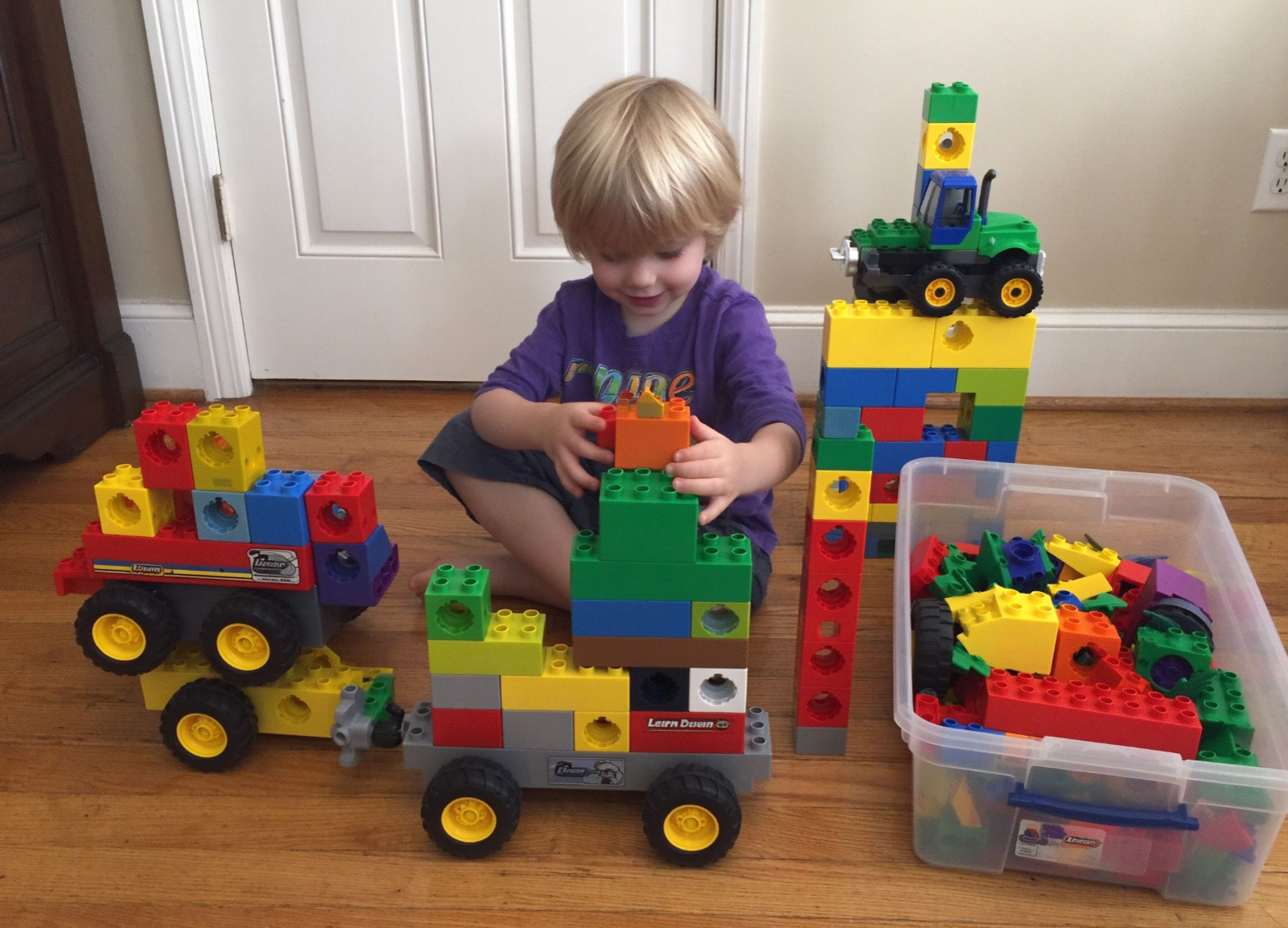
Quick answer: The best learning building blocks match a child’s age, offer open-ended building rather than one-use designs, and connect play to real STEM skills like spatial reasoning and problem-solving. Look for sets with varied piece sizes, compatibility across collections, and challenges that grow with your child. ModelBuilder’s learning construction toys are designed to do exactly that, from first grips to advanced engineering builds.
Few toy aisles cause as much parental hesitation as the building block section. Dozens of boxes promise to make your child “smarter,” “more creative,” or “future-ready,” but the actual educational value behind those claims varies wildly. Some sets are genuinely built around how children learn. Others are gimmicks dressed up in STEM language to justify a higher price tag.
This guide cuts through the noise. We’ll walk through how to choose age-appropriate learning building blocks, how to separate real educational value from marketing fluff, and how to build a toy collection that keeps your child engaged for years rather than weeks. Along the way, we’ll connect the dots between simple block play and the STEM concepts your child’s teacher is likely covering in school.
Whether you’re buying for a toddler’s first set or searching for a challenging gift for a ten-year-old builder, the goal is the same: toys that earn their shelf space by actually teaching something.
How do I choose the right learning building blocks by age?
Age labels on toy boxes are a starting point, not a guarantee. A child’s fine motor skills, attention span, and problem-solving ability all factor into which learning construction toys will actually hold their interest.
Ages 1–3: Build grip strength and cause-and-effect thinking
Toddlers need pieces that are large, easy to grip, and impossible to swallow. At this stage, the “learning” isn’t about complex structures. It’s about understanding that actions have consequences. Stacking a tower and watching it fall teaches cause and effect before a child can even talk about it.
Look for:
- Oversized blocks with simple connection points
- Bright colors and varied textures
- Low piece counts (10–30 pieces) to avoid overwhelm
Ages 4–6: Introduce sequencing and basic planning
This is where learning building blocks start to shift from sensory exploration to early problem-solving. Kids in this range can follow simple step-by-step instructions and begin to understand that a plan comes before a build.
Sets with picture-based instructions work well here, since most children aren’t reading fluently yet. Look for pieces that snap together with light resistance, strong enough to stay connected but forgiving enough for small hands to adjust without frustration.
Ages 7–10: Add complexity and real engineering challenges
By age seven, most children can handle multi-step builds, follow written instructions, and tolerate the frustration of a piece that doesn’t fit the first time. This is the sweet spot for introducing learning construction toys with moving parts, gears, or basic mechanical functions.
ModelBuilder’s mid-complexity sets fall squarely into this range, offering enough challenge to stretch a child’s patience without making the build so difficult that they give up. If you’re shopping for this age group, explore ModelBuilder’s building sets organized by difficulty level rather than just by age.
Ages 11 and up: Shift toward independent design
Older kids benefit most from open-ended systems that let them deviate from the instructions entirely. At this stage, the value isn’t in completing a set model. It’s in using the pieces as raw material for original ideas.
How can I tell if a construction toy is actually educational, or just a gimmick?
Marketing copy is cheap. Educational value is not. Here’s how to separate the two.
Real learning building blocks encourage open-ended play. If a set can only be built one way and has no replay value once assembled, the “educational” label is doing more work than the product itself. Genuine learning happens when a child can take the same pieces and build five different things over five different afternoons.
Watch for compatibility claims that don’t hold up. Some brands advertise cross-compatibility with other major building systems but only support a handful of basic pieces. Before buying, check whether the connection points are a true universal standard or a loose approximation.
Check whether difficulty actually scales. A toy marketed as “STEM” should increase in complexity as a child’s skill grows. If every set from a brand feels roughly the same difficulty regardless of age range, the educational framing is likely a label rather than a design principle.
Look past the box art. Packaging is designed to sell, not to teach. A simple way to vet a set: search for the instruction manual online before purchasing. If the steps are vague or skip explanations of how pieces connect, the “educational” claim probably isn’t backed by actual design work.
A good rule of thumb: if you removed all the STEM language from the packaging, would the toy still hold a child’s attention? If the honest answer is no, it’s a gimmick.
How do I build a toy collection that lasts for years, not months?
One of the most overlooked ways to get value out of learning construction toys is thinking about them as a system rather than a series of one-off purchases.
Prioritize cross-compatible pieces
Before buying a new set, check whether it uses the same connection system as what your child already owns. A collection where every set works with every other set effectively multiplies the number of possible builds. A child with three compatible 200-piece sets has access to far more creative combinations than a child with three incompatible 200-piece sets, even though the total piece count is identical.
ModelBuilder designs its sets around a consistent connection standard specifically so that pieces from a starter kit remain useful years later, once your child has graduated to an advanced set. You can browse ModelBuilder’s full range to see how collections are organized to build on each other rather than compete with each other.
Buy for the next skill level, not just the current one
Children often outgrow a set’s difficulty before they outgrow their interest in the toy’s theme. If your eight-year-old loves vehicle builds, consider a set one difficulty tier above their current comfort zone rather than another set at the same level. It keeps the learning building blocks relevant for longer and avoids the common cycle of toys becoming “boring” within a few weeks.
Rotate, don’t replace
Instead of constantly buying new sets, rotate existing collections in and out of accessibility. Pieces that have been out of sight for a month often feel new again. This approach also teaches kids to revisit and rebuild past projects, reinforcing memory and planning skills rather than relying on novelty alone.
How do I keep my child engaged with building toys over time?
Even the best-designed set will eventually sit untouched if there’s no reason to return to it. Sustained engagement comes down to structure, challenge, and social connection.
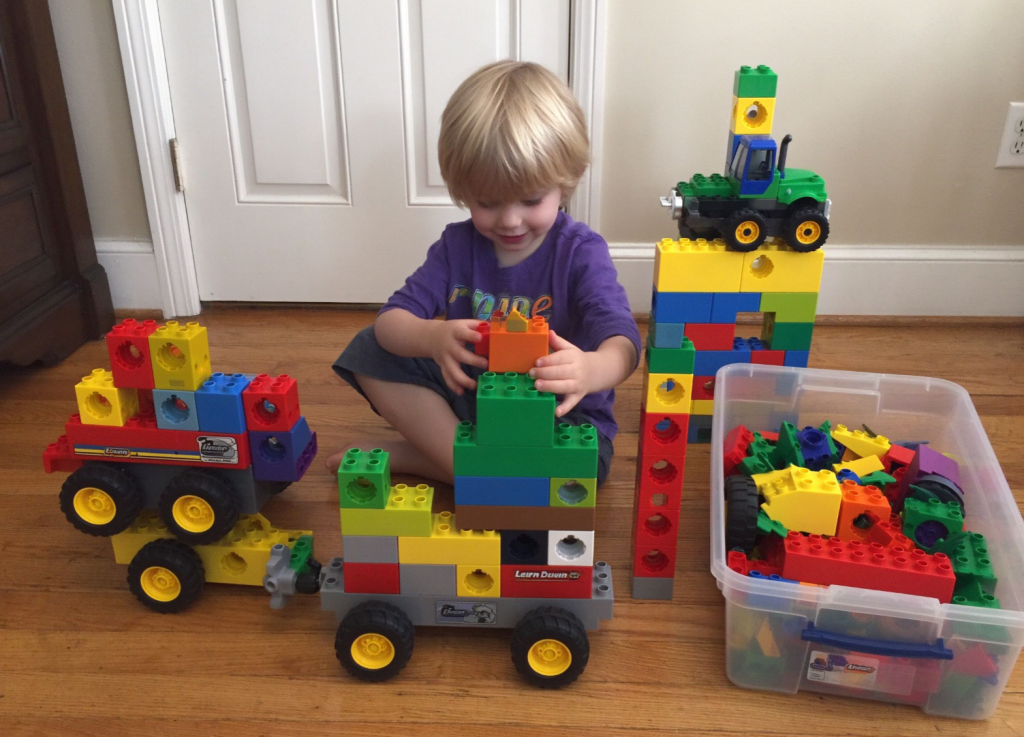
Set a standing challenge. Rather than letting blocks sit as a passive option, introduce a recurring prompt: build something that moves, build the tallest possible tower with a fixed number of pieces, or build a structure that holds weight. Constraints make open-ended toys feel fresh.
Involve siblings or friends. Collaborative builds introduce negotiation and shared problem-solving, skills that solo play doesn’t naturally develop. Two kids working on the same structure have to communicate design decisions out loud, which reinforces the thinking behind the build.
Display finished builds. A child who sees their work displayed, even briefly, on a shelf or windowsill is more likely to return to building as an activity. It signals that the effort mattered.
Introduce mild time pressure occasionally. A 20-minute build challenge taps into a different kind of problem-solving than an open-ended afternoon. Both have value, and alternating between them keeps learning construction toys from feeling repetitive.
How does building play connect to real STEM concepts?
Parents often ask whether block play translates into actual academic skill, and the research-backed answer is yes, when the play involves the right kind of challenge.
Spatial reasoning. Rotating, fitting, and visualizing how pieces connect in three dimensions directly supports spatial skills used later in geometry and physics. This is one of the most well-documented benefits of construction-based play in early childhood development research.
Engineering thinking. Builds that fail, like a tower that topples or a bridge that sags, teach a child to diagnose a structural problem and revise their approach. This trial-and-error process mirrors the engineering design cycle taught in upper-level STEM curricula.
Basic physics. Gear sets, pulley mechanisms, and weight-bearing structures introduce concepts like force, balance, and leverage well before a child encounters them in a textbook. A child who has physically felt how adding weight changes a structure’s stability has a head start when those same concepts appear in a science class years later.
Sequential logic. Following multi-step instructions, or designing a multi-step build independently, builds the same sequential thinking used in early coding education. Many elementary STEM programs now pair construction toys with basic coding units for exactly this reason.
The key for parents: choose sets that create problems to solve, not just parts to assemble. A kit that only requires following steps in order offers some benefit, but a kit that invites a child to ask “what happens if I change this?” offers considerably more.
Give your child building blocks that actually teach something
Choosing the right learning building blocks isn’t about finding the toy with the most STEM buzzwords on the box. It’s about matching complexity to your child’s current skill level, verifying that the educational claims hold up under basic scrutiny, and building a collection designed to grow alongside them.
ModelBuilder designs every set with this progression in mind, from early grip-and-stack pieces to advanced mechanical builds for older kids. If you’re ready to put these principles into practice, explore ModelBuilder’s full collection and find a set that matches exactly where your child is today, with room to grow into tomorrow.
Frequently asked questions
What age should kids start using learning building blocks?
Most children can begin with large, simple building pieces around age one. True multi-step learning construction toys tend to work best starting around age four, once a child can follow basic sequencing and has developed enough fine motor control to connect smaller pieces.
Are building blocks actually better than digital STEM apps?
Physical building blocks and digital STEM apps teach different skills. Blocks build spatial reasoning and fine motor coordination through hands-on manipulation, something a screen cannot replicate. Many educators recommend using both, but prioritizing physical building toys during early childhood when motor skill development matters most.
How many pieces should a beginner set have?
For children under four, 10 to 30 pieces is typically enough to avoid overwhelm. Children ages four to six can usually handle 50 to 100 pieces, while kids seven and older can work comfortably with 150 or more, provided the instructions scale appropriately.
Will ModelBuilder sets work with pieces I already own?
ModelBuilder designs its sets around a consistent connection standard across its own product line, so pieces from different ModelBuilder sets can be combined. Compatibility with other brands depends on the specific connection system each brand uses.
How do I know if my child has outgrown a set?
If your child completes a build quickly and shows no interest in modifying or rebuilding it, the set’s difficulty likely no longer matches their skill level. At that point, consider moving up to a set with more pieces, added mechanical features, or less reliance on step-by-step instructions.


