

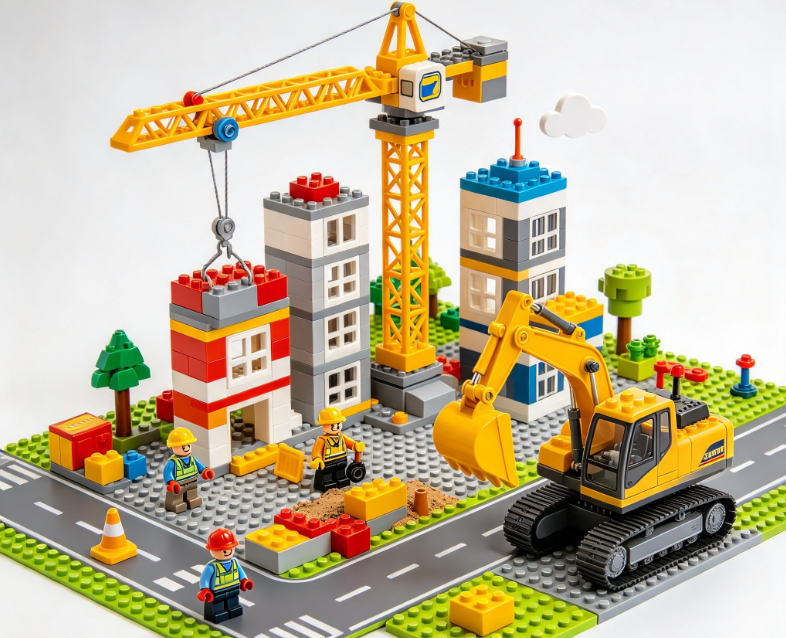
Building blocks aren’t just playthings. Educational construction toys build fine motor skills, spatial reasoning, and problem-solving abilities — in kids and adults alike. If you’re new to this hobby, or shopping for a family member who’s expressed interest, this guide walks you through everything you need: how to choose the right set, how to get started, and how to make the experience last.
ModelBuilder sets are designed for exactly this purpose. Built for enthusiasts, families, collectors, and creators, they deliver complexity, durability, and creative freedom without the premium price tag of mainstream brick brands. Let’s get into it.
Why Educational Construction Toys Matter
STEM skills start with hands. Long before kids can code or run a spreadsheet, they can snap bricks together, test if a tower holds, and fix it when it doesn’t. That’s engineering. That’s physics. That’s learning disguised as fun.
Educational construction sets teach:
- Spatial reasoning — understanding how parts fit in 3D space
- Problem-solving — figuring out why a build isn’t working and adjusting
- Patience and focus — following multi-step instructions to completion
- Fine motor skills — precise hand movements for younger builders
- Creativity — going beyond the instruction manual to build original designs
It’s not just kids who benefit. Adult hobbyists use complex builds as a stress reliever after work. Engineers and designers treat it as an extension of their creative thinking. Parents use it as a screen-free bonding activity. Collectors build display pieces that double as home decor. Whatever your reason for picking up a set, the payoff goes beyond the box.
How to Choose the Right Educational Construction Set
Not every set works for every builder. Here’s what to think about before you buy.
Match the Set to the Builder’s Age and Skill Level
Younger children (ages 5–8) do best with larger pieces, simpler instructions, and shorter build times. Look for sets with fewer than 300 pieces and bold, colorful designs that hold attention.
Ages 9–14 can handle more complexity — vehicles, buildings, and functional mechanisms with 500–1,500 pieces. This is also the age range where STEM curriculum tie-ins (gears, pulleys, simple machines) start to click.
Adult hobbyists and collectors typically want large-scale, detailed builds: architectural models, vehicles with moving parts, or display pieces with thousands of pieces. If you’re buying for yourself or another serious builder, don’t be afraid to go big. Complexity is part of the appeal.
Consider the Purpose of the Build
Ask what the set is actually for:
- Educational use — look for sets explicitly built around STEM concepts like gears, levers, and motors.
- Family bonding — choose something achievable in one or two sittings so the whole family can finish together.
- Display and collection — prioritize detail and finished appearance over play value.
- Creative customization — pick sets with versatile pieces that work well combined with other sets, so builders can go off-script.
Check Piece Quality and Compatibility
Not all building blocks are created equal. Look for sets using durable, consistent materials that connect securely and won’t warp or crack over time. Many alternative brands — ModelBuilder included — design pieces to be cross-compatible with other major building block systems, so builders aren’t boxed into one ecosystem.
Factor in Instructions and Support
Clear, diagram-based instructions matter more than people expect. A confusing manual can turn an exciting project into a frustrating one — especially for younger builders or first-timers. Look for sets with step-by-step visual guides, and ideally, a community or support platform where builders can ask questions or find tips.
If you’re shopping for your first set, browse options directly at ModelBuilder — sets are organized by complexity and theme, so it’s easy to match a build to the person you’re buying for.
Step-by-Step Guide to Getting Started with Construction Sets
Once you’ve picked a set, here’s how to set your builder up for success.
Step 1: Prepare the Workspace
Clear a flat, well-lit surface with enough room to sort pieces. For larger builds, use small trays or bowls to organize pieces by type or color — this alone saves significant build time and reduces frustration.
Step 2: Sort Before You Build
Resist the urge to dive straight into the instructions. Spend ten minutes sorting pieces by size, color, or function first. This step is especially helpful for younger builders, as it turns the sorting itself into a small cognitive exercise.
Step 3: Follow the Instructions in Stages
Work through the manual section by section rather than trying to complete the whole build in one sitting. For longer builds, set mini-milestones — “let’s finish the base today” — to keep momentum without burnout.
Step 4: Test and Problem-Solve Along the Way
If a piece doesn’t fit or a section seems unstable, resist fixing it immediately. Ask the builder (especially if it’s a child) to figure out why. This is where the real learning happens — troubleshooting is the whole point.
Step 5: Celebrate the Finished Build
Once complete, display it. Take a photo. Talk about which part was hardest and which part was most fun. This reinforces the sense of achievement and makes builders more likely to pick up the next set.
Step 6: Move Toward Freeform Building
After a few guided builds, encourage freeform creation using leftover or mixed pieces. This is where educational construction toys shift from “following instructions” to genuine creative expression — arguably the most valuable part of the whole hobby.
Tips for Maximizing Learning and Fun
A few small habits make a big difference in how much value you get out of a set.
Rotate between guided and freeform building. Alternating between instruction-based builds and open-ended creation keeps both structure and creativity in play.
Introduce STEM vocabulary naturally. Terms like “torque,” “load-bearing,” or “symmetry” can be dropped in casually during a build without turning it into a lecture.
Build together when possible. Family builds, even short ones, create a shared sense of accomplishment and give parents a natural opening to ask questions about what their child is learning.
Join a community. Online communities for building hobbyists are full of tips, modification ideas, and inspiration for original builds. This is especially valuable for creators who want to go beyond official sets and for collectors looking for display ideas.
Store pieces properly. Label and store sets separately, or combine compatible pieces into a shared bin for freeform building. Good organization means less time hunting for parts and more time building.
Set a complexity ladder. Start with simpler sets and work up to more advanced ones. This keeps builders challenged without overwhelming them, and it builds confidence with each completed project.
How ModelBuilder Compares to Other Brands
There are plenty of options when it comes to educational construction sets, but a few things set ModelBuilder apart:
- Custom Brick Sets — Tailored building sets designed around specific interests, rather than one-size-fits-all kits.
- Themed Collections — A wide range of themes to match different interests, from architecture to vehicles to fantasy builds.
- Educational Workshops — Interactive sessions designed to build problem-solving and creativity skills beyond just following a manual.
- Compatibility — Pieces are designed to work alongside other major building block systems, so builders aren’t locked into a single brand.
- Community Focus — A platform built around sharing creations and connecting with other builders, not just selling sets.
Compared to mainstream brick brands, ModelBuilder tends to offer more value per piece, more flexible theming, and a stronger focus on the creative and educational side of building rather than pure collectability. For families balancing cost with educational value, and for hobbyists who want detailed, large-scale builds without the premium markup, it’s a practical alternative.
Where to Buy Educational Construction Toys
Ready to pick your first (or next) set? Head to ModelBuilder to browse the full range of custom brick sets, themed collections, and workshop offerings. Sets are organized to help you quickly match complexity and theme to the builder in your life — whether that’s a curious five-year-old, a stressed-out engineer looking to unwind, or a collector hunting for their next display piece.
For anyone building a long-term collection or planning family build nights, it’s worth exploring the full catalog regularly, since new themed collections are added over time.
Frequently Asked Questions
What age is appropriate for educational construction sets?
Most sets are designed for ages 5 and up, but complexity varies significantly. Younger children do best with larger pieces and simpler builds, while sets designed for ages 9 and up introduce more intricate designs, moving parts, and STEM concepts like gears and pulleys. Adult-oriented sets can run into the thousands of pieces for serious hobbyists and collectors.
Are educational construction toys only for kids?
Not at all. A large share of the building hobbyist community is made up of adults — engineers, designers, and creative professionals — who use complex builds for relaxation, creative expression, and even collection and display purposes.
How do I know if a set is good quality?
Look for consistent, durable materials that connect securely without excessive force. Pieces should hold together through repeated building and rebuilding without cracking or loosening. Clear instructions and compatibility with other building systems are also good indicators of a well-designed set.
Can construction toys really teach STEM skills?
Yes. Building naturally reinforces spatial reasoning, structural problem-solving, and basic engineering concepts like balance, load distribution, and mechanics. Many sets are explicitly designed around STEM principles, making them a practical supplement to classroom learning.
What’s the difference between guided building and freeform building?
Guided building follows a set of instructions to create a specific model, which is great for learning structure and following multi-step processes. Freeform building uses pieces without instructions to create original designs, which builds creativity and design thinking. Both are valuable, and alternating between the two keeps the hobby engaging long-term.


