

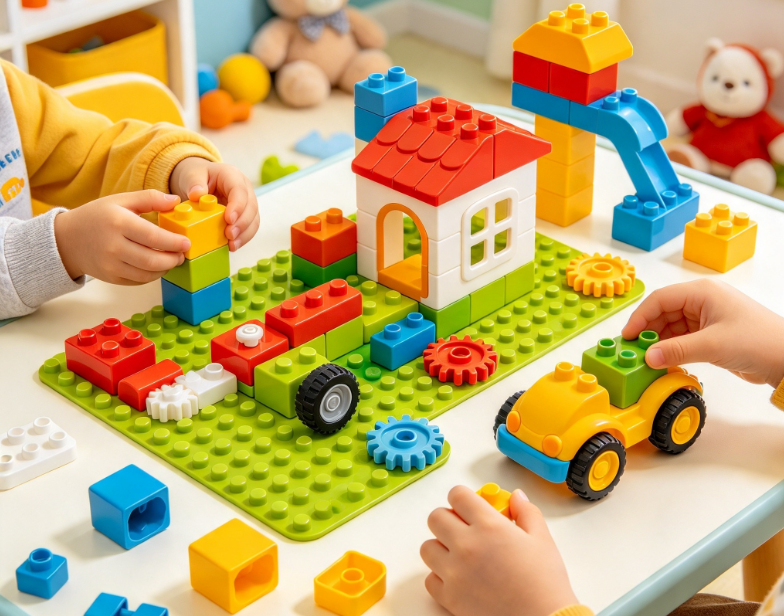
Building blocks do more than keep small hands busy on a rainy afternoon. They teach spatial reasoning, patience, and problem-solving — skills no tablet app can replicate. If you’ve ever watched a child’s face light up the moment a tricky piece finally clicks into place, you already know the value. This guide shows you exactly how to pick the right kids construction sets, set up a space where building thrives, and turn playtime into something genuinely educational. By the end, you’ll know how to choose smart, build smart, and make the most of every brick.
Why Construction Sets Matter for Kids
Construction toys aren’t just entertainment. They build fine motor skills, boost focus, and introduce engineering concepts before a child ever sets foot in a physics classroom. Teachers report that kids who regularly play with building sets show stronger problem-solving instincts and better hand-eye coordination. Parents see something simpler at home: fewer screen-time battles and more hours of quiet, focused concentration.
Construction sets for children also scale with age. A toddler stacking oversized blocks is developing the same core skills as a ten-year-old assembling a 500-piece vehicle model — just at a different level of complexity. That’s what makes this category so valuable: it grows with your child instead of becoming obsolete in a year.
How to Choose the Right Construction Sets for Children
Walk into any toy aisle and you’ll find shelves of options, all claiming to be the best fit for your child. Here’s how to cut through the noise.
Match the Set to Your Child’s Age
Age recommendations on packaging aren’t arbitrary — they’re based on piece size, complexity, and safety testing. For children under 5, look for larger pieces that are easy to grip and impossible to swallow. Kids aged 6 to 9 are ready for sets with moderate piece counts and simple instructions they can follow with occasional help. Once a child hits 10 or older, more advanced kids construction sets with smaller pieces, multi-stage builds, and functional elements (like gears or hinges) keep them challenged without causing frustration.
A good rule of thumb: if your child finishes a set in under 20 minutes and loses interest immediately, size up in complexity next time. If they abandon a build out of frustration, scale back.
Check Piece Complexity and Safety
Piece count isn’t everything — piece complexity matters more. A 300-piece set made of basic rectangular blocks is far easier than a 150-piece set with tiny connectors and intricate joints. Always check for:
- Choking hazard warnings for children under 3
- Non-toxic, BPA-free materials (especially important for sets your child might still mouth)
- Smooth edges and consistent molding — cheap knockoffs often have rough, poorly finished pieces that can pinch small fingers
Quality matters here more than almost anywhere else in the toy aisle. A well-made set holds its shape, snaps together cleanly, and survives years of enthusiastic building — unlike cheaper alternatives that crack or warp after a few uses.
Align the Theme with Their Interests
A dinosaur-obsessed 7-year-old will stay engaged far longer with a prehistoric-themed build than a generic block set. Space, vehicles, animals, castles, city scenes — the options are vast, and matching the theme to an existing passion multiplies engagement. This is also where construction sets for children shine over single-purpose toys: the same core piece system can be reconfigured into dozens of themes, so one investment covers years of changing interests. You can browse a full range of themed collections to find something that matches exactly what your child is into right now.
How to Set Up the Perfect Building Environment at Home
The right setup turns a frustrating pile of pieces into a focused, enjoyable activity.
Pick a dedicated flat surface. A table or floor mat works better than a bed or couch — stability matters when fitting small pieces together. A simple building mat also makes cleanup faster and protects pieces from getting lost in carpet fibers.
Sort pieces before starting. For younger builders especially, dumping an entire box out and sorting by color or size before beginning cuts down on frustration. Small labeled bins or trays work well for ongoing projects that span multiple sessions.
Control the lighting. Good overhead lighting (or a desk lamp for detailed builds) makes it far easier to spot small pieces and read instruction booklets — a detail adults often overlook.
Keep instructions visible and accessible. Prop the manual on a stand, or use a tablet if the set offers digital instructions, so your child isn’t constantly flipping pages with building-dusty hands.
A dedicated space signals to your child that building is a real activity worth taking seriously — not just background noise to a TV show.
How to Guide Your Child Through Their First Build
The first build sets the tone for every build after it. Get this right, and you create a lifelong hobby. Get it wrong, and the set ends up abandoned in a closet.
Start with you both reading the instructions together. Even for pre-readers, walking through the diagrams builds the habit of following visual instructions step by step — a skill that transfers directly to STEM learning.
Resist the urge to take over. It’s tempting to snap a piece into place yourself when you see your child struggling, but the learning happens in the struggle. Offer guidance — “try rotating it” or “check which side is longer” — rather than doing it for them.
Break longer builds into sessions. A 2-hour build is exhausting for a 6-year-old’s attention span. Split it across two or three sittings, and use natural stopping points (like completed sub-assemblies) as breaks.
Celebrate the finished piece. Display it somewhere visible for at least a few days. This reinforces that the effort mattered and makes them eager to start the next set.
How to Make Construction Play More Educational and Fun
Once your child is comfortable with basic builds, there’s a lot of room to deepen the experience.
- Introduce simple engineering questions. Ask “why do you think this part needs to be wider?” or “what happens if we build it a different way?” These questions nudge kids toward engineering thinking without feeling like a lesson.
- Encourage modifications after the official build is complete. Once they’ve followed the instructions once, challenge them to rebuild it differently or combine pieces from two different sets. This is where creativity really takes over.
- Connect builds to real-world concepts. A bridge model becomes a conversation about weight distribution. A vehicle build becomes a conversation about wheels and friction. These small connections stick with kids far longer than abstract explanations.
- Make it social. Building alongside siblings, friends, or parents adds a collaborative element that pure solo play doesn’t offer. Many families find that a weekly “build night” becomes a cherished routine.
- Join an online community. Letting older kids share finished builds in family-friendly online spaces introduces them to a wider world of design ideas and gives them a sense of accomplishment beyond the living room.
Kids construction sets aren’t just a box of parts — they’re a flexible tool for teaching patience, logic, and creative thinking, one brick at a time.
Why ModelBuilder Is a Smart LEGO Alternative
ModelBuilder exists for exactly this: builders of all ages who want quality, creativity, and real value without the premium LEGO price tag. Every set is designed with durable, compatible pieces, clear instructions, and themes that keep kids engaged well beyond the first build.
Here’s what sets ModelBuilder apart:
- Themed Collections that span vehicles, architecture, fantasy worlds, and more — so there’s always a next build waiting
- Custom Brick Sets tailored for specific interests and skill levels
- Educational Workshops that turn building into structured STEM learning
- Materials selected for durability and safety, tested through a four-step production process from design to final build
Families consistently report that ModelBuilder sets hold up to repeated building and rebuilding — a detail that matters when kids want to take a model apart and start fresh. If you want to see the full range for yourself, explore ModelBuilder’s building solutions and find a set that matches your child’s age and interests today.
Whether you’re buying your child’s very first set or looking to level up an already enthusiastic builder, ModelBuilder sets are designed to grow with them — just like the skills they build along the way. Shop the current collection and start your family’s next build this week.
Frequently Asked Questions
What age should my child start with construction sets?
Most children can start with oversized, simple building blocks as early as 2 to 3 years old. Sets with smaller, more intricate pieces are generally better suited for ages 6 and up, once fine motor skills and patience have developed further.
Are LEGO alternatives like ModelBuilder compatible with existing LEGO pieces?
Many building block brands, including ModelBuilder, are designed to be compatible with standard brick dimensions, meaning your child can mix sets from different collections without compatibility issues.
How do I know if a set is too advanced for my child?
Check the recommended age range, piece count, and piece complexity. If your child regularly needs significant help completing even the early stages, consider a set with fewer, larger pieces and simpler instructions.
Can construction sets really support STEM learning at home?
Yes. Building sets naturally introduce concepts like structural stability, symmetry, and spatial reasoning. Asking simple questions during the build process — about balance, shape, or function — reinforces these lessons without requiring a formal curriculum.
How can I keep my child interested in building long-term?
Rotate themes regularly, encourage creative modifications once the official build is complete, and celebrate finished projects by displaying them. Mixing in occasional collaborative builds with family or friends also helps sustain long-term interest.


