
Quick answer: To choose large building blocks for kids, look for rounded edges, non-toxic materials, pieces sized for your child’s age, and compatibility with sets they already own. ModelBuilder designs blocks with these details in mind, so families can build together without worrying about safety or wasted pieces.
Kids don’t need a screen to feel amazed. Give a child a pile of chunky, colorful blocks and watch what happens. They stack them. They knock them down. They build a tower, then a castle, then something that doesn’t have a name yet. That’s the quiet magic of big building blocks for kids — they turn an empty afternoon into a world a child made with their own hands.
We’ve spent years thinking about what makes a block set actually work for families. Not just what looks good in a photo, but what survives a toddler’s grip, a living room floor, and years of daily use. This guide walks you through everything — choosing the right set, setting up a space at home, guiding your child’s first build, and understanding why all that stacking and sorting matters more than it looks.
You don’t need to be an engineer to raise a builder. You just need the right blocks and a little patience.
How to Choose the Right Large Building Blocks for Kids
Not all blocks are built the same. Some crack. Some have sharp edges. Some only work with one brand, leaving half your collection useless the moment you buy a new set. Here’s what we tell parents to check before buying.
Safety Considerations
Safety comes first, always. Look for blocks with rounded corners and smooth edges. Sharp seams can scrape small hands, especially during fast building sessions when excitement outpaces care.
Check the material too. Blocks should be free of BPA, phthalates, and lead-based paints. Reputable brands list their safety certifications clearly — if a product page doesn’t mention this, ask before you buy.
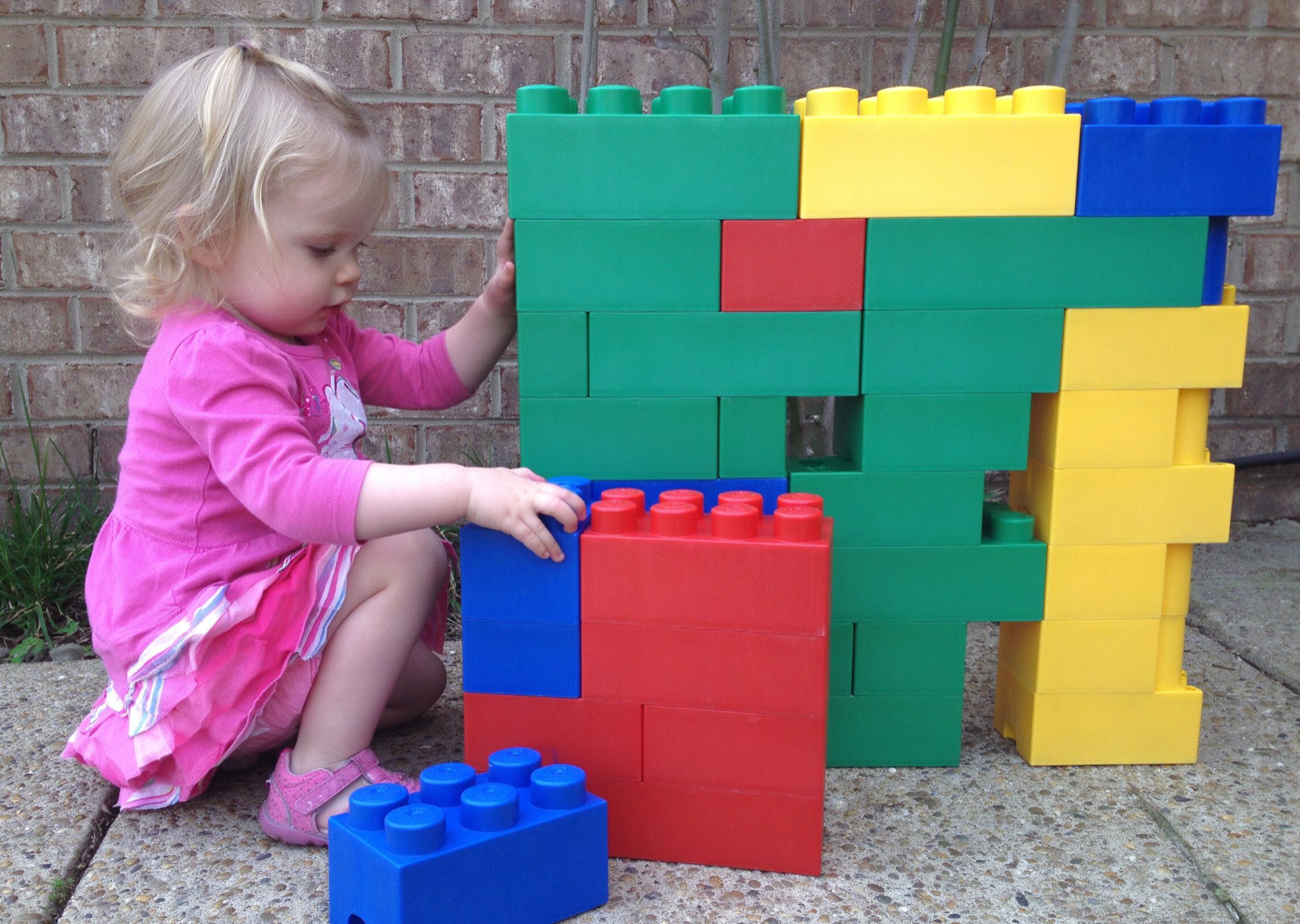
Size matters as much as material. For children under three, pieces should be large enough that they can’t become a choking hazard. This is one reason large building blocks for kids work well for younger builders — the bigger scale keeps small hands safe while still letting them build something real.
Age-Appropriate Sizing
A three-year-old and a ten-year-old need very different sets. Younger children do best with oversized, simple pieces they can grip and connect without frustration. Older kids are ready for smaller pieces, more complex connections, and sets that take real planning to finish.
Buying a set that’s too advanced leads to frustration fast. Buying one that’s too simple gets boring just as quickly. A good rule: check the recommended age range, then consider your child’s actual coordination and patience level, not just their birthday.
Material Quality
Cheap plastic warps, fades, and cracks. Quality plastic holds its color, keeps its shape, and survives being dropped, sat on, and occasionally thrown across a room (it happens).
We build our sets with durability in mind, because a block collection should last through more than one phase of childhood. You can see how we think about material and design on our About page, where we talk through our process from concept to finished product.
Compatibility with Other Sets
Nothing frustrates a builder more than buying a new set and discovering it doesn’t connect with what they already own. Before buying, check whether a brand’s blocks are compatible with major building block standards. This single detail determines whether your child’s collection grows into something bigger over time, or sits in separate, disconnected bins.
How to Set Up the Perfect Building Environment at Home
Even the best blocks need the right space to shine. A dedicated building area tells your child that building is a real activity, not just something to do when they’re bored.
Start with a flat, hard surface. Carpet works for quick play, but a table or hard floor gives pieces a stable base for taller builds. Add good lighting — natural light during the day, a warm lamp in the evening — so your child can actually see what they’re connecting.
Storage should live close to the building space. If blocks are buried in a toy bin across the room, chances are they stay there. Keep bins, trays, or a sorting shelf within arm’s reach, so starting a build takes seconds, not a search party.
Finally, protect the space from interruptions. A half-finished tower that gets knocked over by a sibling, or swept up during cleaning time, teaches a child that their work doesn’t matter. Give builds room to stay standing for a day or two, especially for bigger projects.
Step-by-Step: How to Guide Your Child Through Their First Big Build
A first big build sets the tone for every build after it. Here’s how we recommend walking your child through it.
Step 1: Pick a simple, achievable project. Start small. A basic house, a short tower, or a simple vehicle gives your child a win without overwhelming them.
Step 2: Sort the pieces together. Before building, sort blocks by color or size. This step alone teaches organization and gives your child a mental map of what they’re working with.
Step 3: Let them lead. Resist the urge to build it for them. Offer guidance, not instructions you execute yourself. If they place a piece wrong, let them notice and fix it on their own when possible.
Step 4: Talk through the process. Ask questions as they build. “Why did you pick that piece?” “What do you think happens if you add one more block there?” These small prompts build reasoning skills without feeling like a lesson.
Step 5: Celebrate the finish, not just the result. Whether the build looks exactly like the picture or turns into something entirely their own, celebrate that they finished it. This builds the confidence to try something harder next time.
If you want ideas tailored to your child’s age or interests, our services page walks through the themed collections and custom sets we offer for different skill levels.
How to Use Big Building Blocks for Kids to Support Learning & Development
This is where building blocks stop being just a toy and start being a genuine developmental tool.
STEM Skills
Every build is a small engineering problem. Which pieces support weight? How does a structure stay balanced? What happens if you build too narrow at the base? Children answer these questions through trial, not lecture, which is exactly how STEM learning sticks.
Over time, kids who regularly build with large building blocks for kids develop a natural intuition for spatial reasoning, structural balance, and basic cause-and-effect thinking — skills that carry directly into math and science classrooms.
Creativity and Imagination
Give a child a single set of instructions and they’ll build one thing. Give them open-ended blocks and no instructions, and they’ll build a hundred things across a hundred afternoons. Big building blocks for kids work best when they leave room for imagination, not just assembly.
Encourage your child to build something that doesn’t come from a picture at all. A pet’s house. A spaceship. A place they dream about visiting. These builds strengthen imagination in a way that scripted play simply can’t.
Fine and Gross Motor Skills
Smaller pieces strengthen fine motor skills — the precise finger movements needed for connecting, twisting, and placing blocks accurately. Larger builds, especially bigger structures requiring your child to reach, stretch, and carry pieces, develop gross motor skills at the same time.
Building isn’t just mental work. It’s physical practice disguised as play.
How to Store and Maintain Large Building Blocks
A well-maintained collection lasts for years and can even be passed down to younger siblings or cousins. Here’s how to keep it in good shape.
Store blocks in clear, labeled bins by color, size, or set. Clear storage helps kids see what’s available at a glance, which makes starting a new build far less daunting.
Clean blocks occasionally with warm water and mild soap, avoiding harsh chemicals that can weaken plastic over time. Let pieces air-dry completely before storing, since trapped moisture can lead to mold in enclosed bins.
Finally, do a periodic inventory. Missing pieces are the number one reason unfinished builds get abandoned. A quick check every few months keeps your collection complete and ready to use.
Frequently Asked Questions
What age should kids start using large building blocks?
Most children can start with oversized, simple blocks around age two. As coordination and patience grow, you can move to smaller, more detailed pieces, typically starting around age five or six.
Are big building blocks for kids safe for toddlers?
Yes, as long as the pieces are sized appropriately and made from non-toxic materials. For children under three, choose blocks large enough to avoid any choking risk, with rounded edges and no small detachable parts.
How much should I expect to spend on a quality building block set?
Prices vary widely based on set size and complexity, but quality sets built to last typically cost more upfront than cheap alternatives. The investment pays off through durability and years of reuse.
Can large building blocks for kids work alongside sets from other brands?
It depends on the brand. Many quality sets, including ours, are designed for broad compatibility with major building block standards, so your child’s collection can grow without starting over each time.
What’s the difference between building blocks and traditional construction toys?
Building blocks typically connect through simple stud-and-socket systems, making them accessible for younger builders, while some construction toys use more complex joints meant for older children or adult hobbyists.
Building More Than Towers
A pile of blocks looks simple. What it builds inside a child is not. Every tower, every mistake, every rebuild teaches patience, reasoning, and a little bit of courage to try again when something falls apart.
We hope this guide gives you the confidence to pick the right set for your family and the patience to let your child lead the way once you do. If you’re ready to see what we’ve built for families like yours, take a look at our full collection and find a set your child will love.