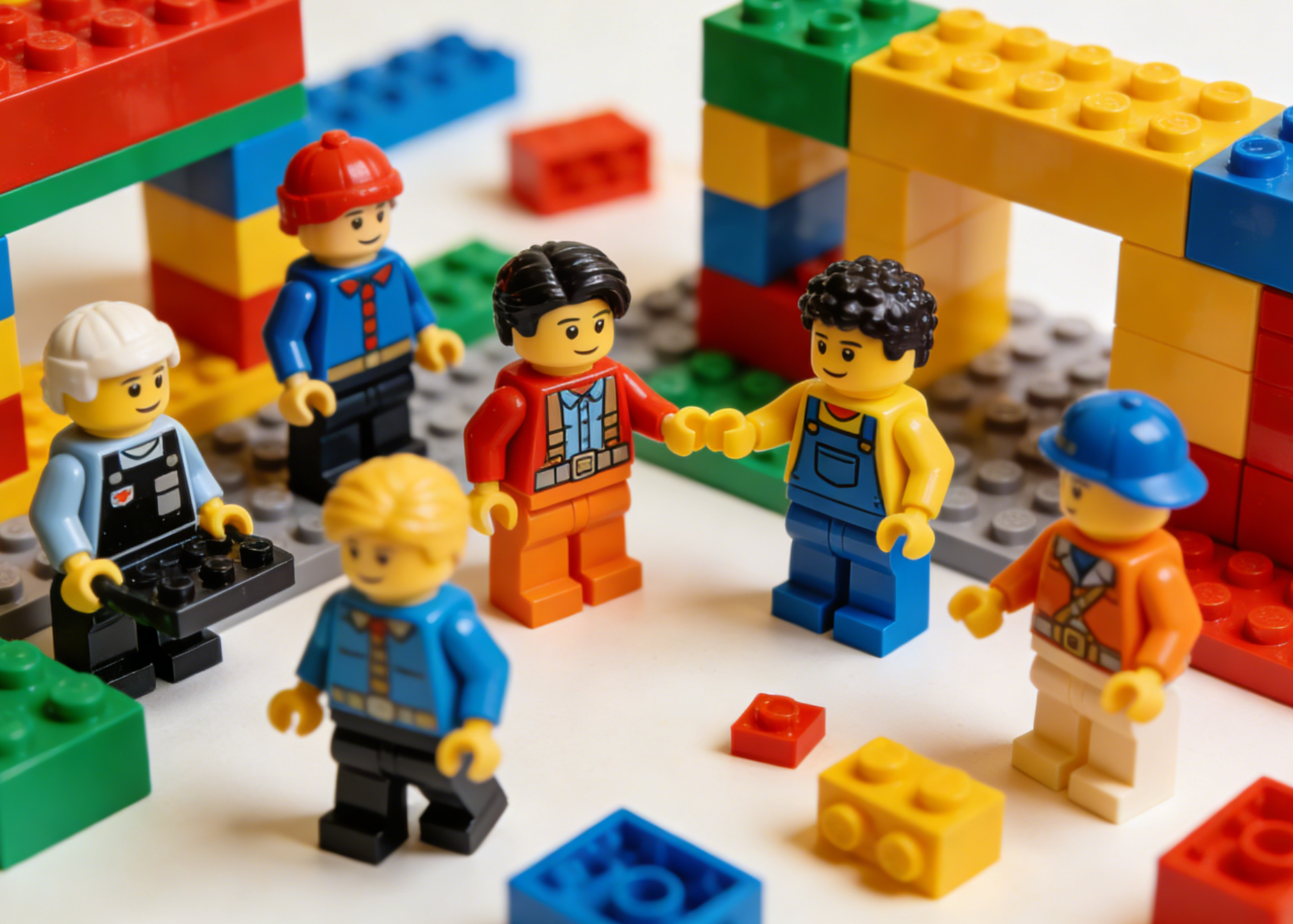

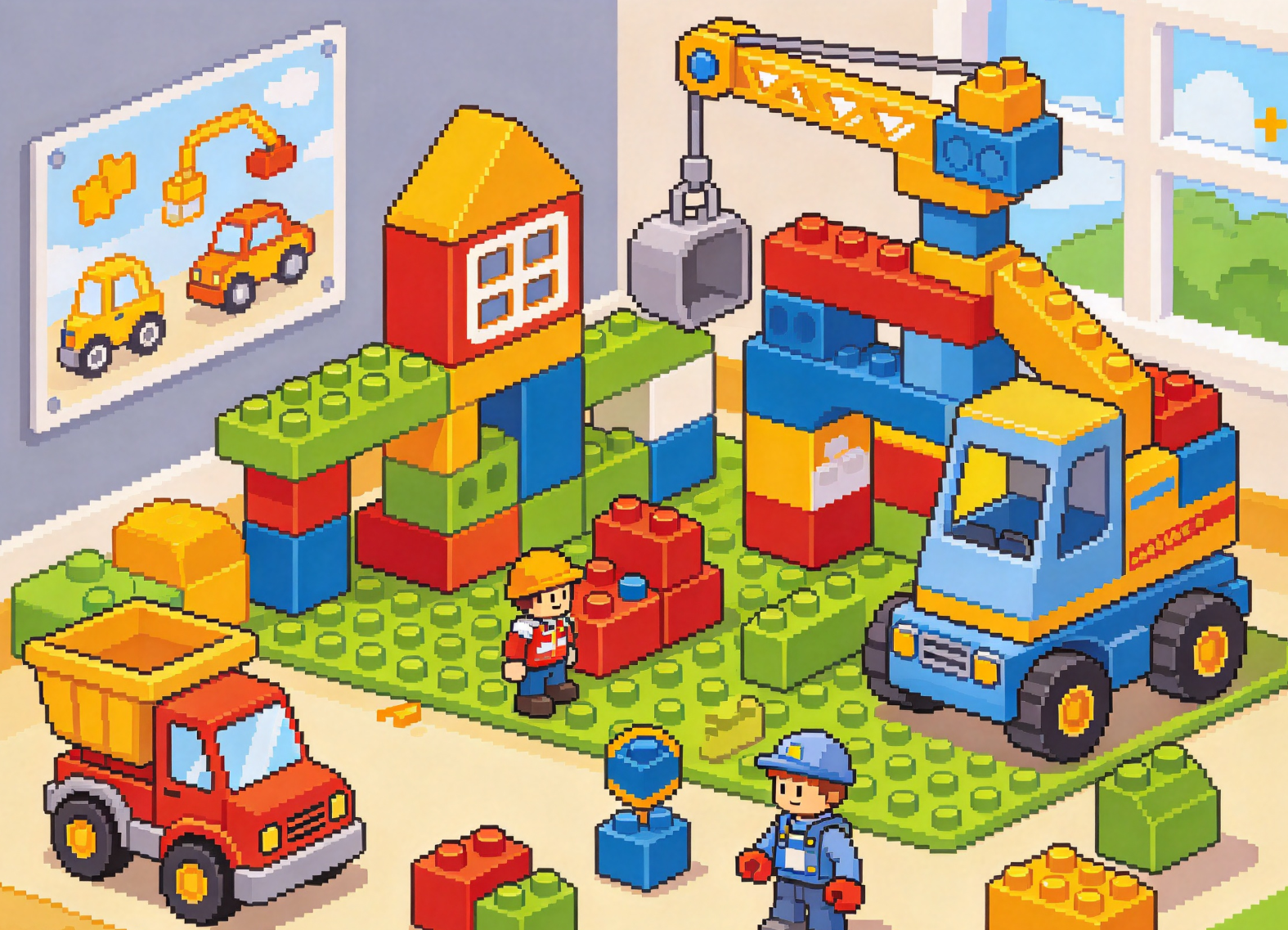
Building blocks are among the few toys that can grow with a child. A simple collection of colorful bricks can become a house, a racing car, a fantasy castle, a busy city, or an invention that has never existed before. The possibilities are limited mainly by a child’s imagination.
Yet choosing the right building set is not always straightforward. Walk into a toy store or browse an online shop and you may find products divided into categories such as building blocks for boys and building blocks for girls. Some sets focus on vehicles, robots, and engineering challenges, while others feature houses, animals, gardens, or everyday scenes.
These categories can make browsing easier, but they do not tell parents everything they need to know. A child who loves dinosaurs may also enjoy designing a modern apartment building. A child fascinated by fashion might be equally excited about constructing a mechanical vehicle. Interests are personal, and they rarely fit neatly into a single category.
So how can parents choose a building set that genuinely suits their child?
The most useful approach is to look beyond packaging and consider a child’s interests, age, building experience, preferred challenges, and opportunities for creative play. This guide explains what to look for when comparing building blocks for boys and building blocks for girls, helping families find sets that encourage curiosity and provide lasting play value.
1. Start with Your Child’s Interests, Not the Toy’s Gender Label
The first step is surprisingly simple: pay attention to what your child already enjoys.
A toy’s theme can influence whether a child feels excited about opening the box, but the theme should reflect individual interests rather than assumptions about gender.
For example, some children are fascinated by transportation. They may spend hours watching trains, identifying different types of construction vehicles, or drawing imaginary spacecraft. Others enjoy storytelling and might prefer building homes, shops, playgrounds, or miniature towns.
Here are several popular themes worth considering:
- Vehicles and transportation: Cars, trucks, trains, aircraft, and spacecraft.
- Architecture and buildings: Houses, apartments, castles, bridges, and landmarks.
- Nature and animals: Wildlife habitats, farms, gardens, and imaginary creatures.
- Fantasy and adventure: Magical worlds, exploration scenes, and imaginative structures.
- Technology and engineering: Robots, machines, moving structures, and mechanical designs.
- Everyday environments: Restaurants, schools, parks, shops, and community spaces.
These themes are not exclusive to any particular group of children. A girl who enjoys space exploration may love a spacecraft building set, while a boy who enjoys storytelling may prefer constructing a colorful animal sanctuary.
When selecting building blocks for girls, avoid assuming that every girl wants a pink-themed set or a miniature house. Likewise, choosing building blocks for boys should not automatically mean selecting vehicles or combat-inspired designs.
A better question is: What would your child be excited to build, modify, and play with after the first construction session?
2. Match the Building Set to Your Child’s Age and Experience
A building set should offer an enjoyable challenge without making construction unnecessarily frustrating.
Age recommendations provide a useful starting point, but children develop different levels of patience, coordination, spatial awareness, and problem-solving ability. A child who has built many models may be comfortable with more detailed instructions than another child of the same age.
Preschool children
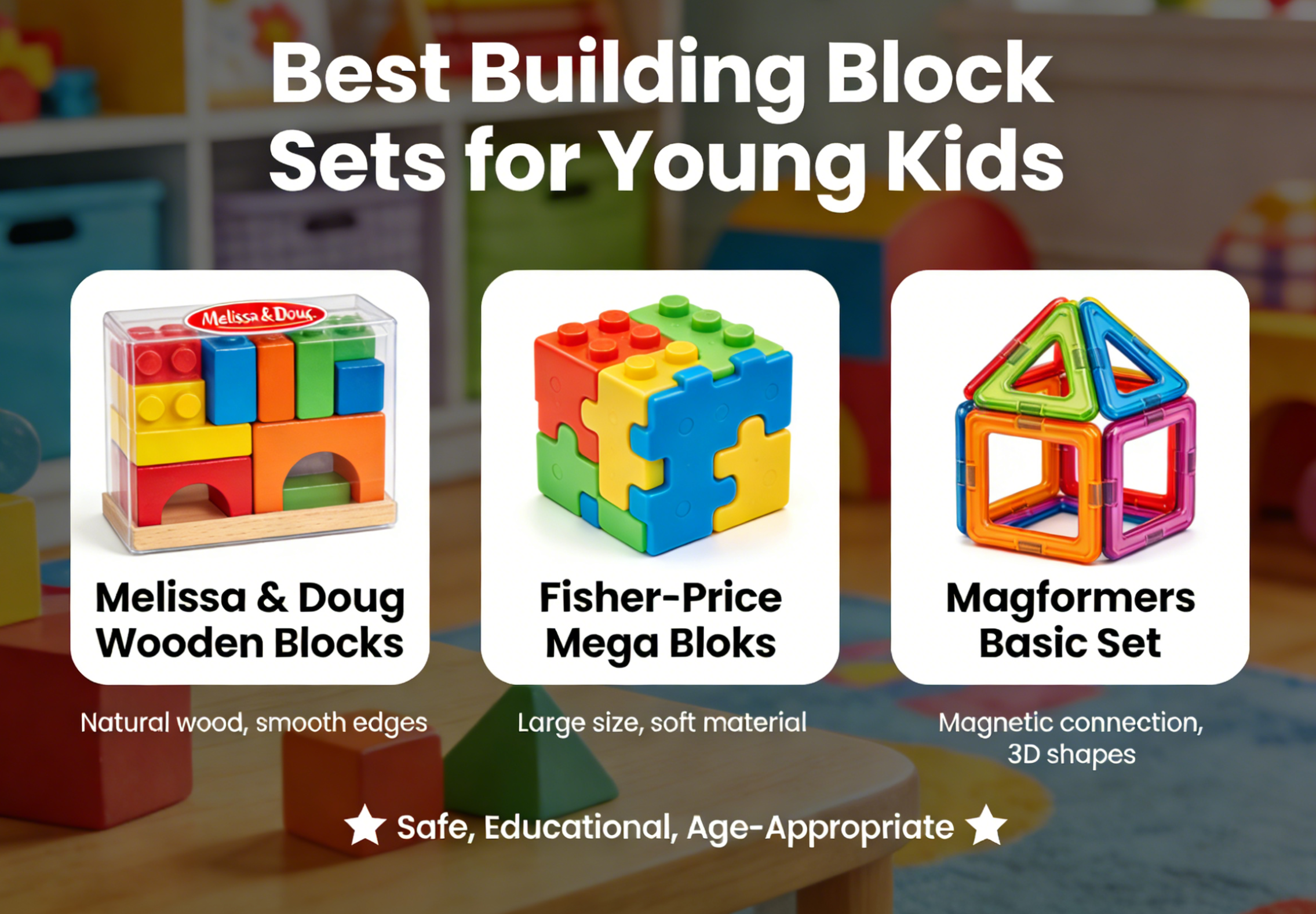
Younger children often benefit from larger, easier-to-handle pieces and simple construction activities.
At this stage, building may involve stacking, sorting, matching colors, and creating basic shapes. Parents can encourage children to make towers, bridges, animals, or simple imaginary objects.
Look for:
- Pieces that are appropriate for the child’s age.
- Simple shapes and manageable construction steps.
- Opportunities to recognize colors and basic patterns.
- Designs that encourage experimentation rather than demanding perfect results.
Always check the manufacturer’s age guidance and small-parts warnings. Standard small building bricks are not suitable for children who are still at risk of putting small objects in their mouths.
Early elementary school children
As children gain confidence with construction, they may become interested in more recognizable models and detailed designs.
They might enjoy following step-by-step instructions, building a vehicle from several components, or creating a small scene with multiple structures.
This is also a good stage to introduce simple challenges:
- Can you build a bridge that supports a small toy?
- Can you make a tower taller without making it unstable?
- Can you design a house with two floors?
- Can you create a vehicle with space for a miniature passenger?
These activities turn building into a process of testing and improvement.
Older children and experienced builders
Children with more experience may prefer sets containing a greater variety of components, more complicated construction techniques, and opportunities to customize a finished model.
They may also enjoy combining several sets to create larger environments.
For these builders, consider the complexity of the model, the usefulness of its components, and whether the finished construction offers opportunities for further experimentation.
A good set should challenge a child without making the experience feel like homework.
3. Choose Between Instruction-Led and Open-Ended Building
Not every child enjoys building in the same way. Some prefer having a clear goal, while others want to start with a pile of bricks and discover what happens.
Understanding this difference can make a significant impact on your buying decision.
Instruction-led building
Some children enjoy following a guide and watching separate components gradually become a complete model.
This style of play can help develop:
- Attention to detail.
- The ability to follow sequences.
- Patience and persistence.
- Spatial reasoning.
- Confidence in completing a multi-step project.
A finished model also gives children something tangible to display or use in imaginative play.
If your child enjoys predictable steps and clear goals, look for sets with understandable instructions and a construction process that matches their experience.
Open-ended building
Other children prefer freedom. They may build something, take it apart, and immediately use the pieces for a completely different project.
Open-ended construction encourages experimentation. Children can test unusual shapes, combine unrelated components, and create their own solutions.
This approach is especially valuable for children who enjoy asking questions such as:
- What happens if I make the base wider?
- Can I build a vehicle with six wheels?
- How can I make this tower taller?
- Can I turn this house into a shop?
When comparing building blocks for boys and girls, consider whether a set encourages this kind of independent creativity.
Some products offer a balance between the two approaches: children can follow the instructions to complete an initial model and then use the same pieces to create their own designs.
For many families, this flexibility provides more opportunities for repeated play.
4. Look at the Skills Children Can Explore Through Building
Building blocks are entertaining, but they can also introduce useful concepts through hands-on activities.
The important point is not to turn every play session into a formal lesson. Children learn naturally when they are interested in solving a problem or bringing an idea to life.
Spatial awareness
Building requires children to think about shape, position, direction, and proportion.
They learn that a structure needs a stable base, that pieces must fit together in particular ways, and that changing one part may affect the entire model.
Parents can encourage spatial thinking by asking children to recreate a simple object from a picture or build something from a different angle.
Early engineering concepts
Even a basic bridge or tower introduces ideas related to balance, support, and structure.
For example, a child might notice that a narrow tower falls easily while a wider base makes it more stable.
Rather than immediately correcting the design, parents can ask what the child thinks caused the problem and invite them to try another approach.
Creativity and storytelling
A finished model does not have to remain a finished model.
A building can become a hospital, a spaceship, a school, or the headquarters of an imaginary team. A collection of vehicles might inspire a story about a journey across an invented city.
This connection between construction and storytelling is one reason building toys can remain interesting beyond the initial assembly.
Problem-solving and persistence
Not every construction attempt works on the first try. A piece may not fit as expected, a structure may collapse, or a design may need to be changed.
These small challenges give children opportunities to reconsider their ideas and try different solutions.
The goal is not to prevent mistakes. It is to help children see that rebuilding is part of the creative process.
5. Consider the Types of Pieces Included in the Set
The number of pieces printed on a product box can attract attention, but quantity alone does not determine whether a building set is useful.
A set with fewer pieces may offer plenty of creative possibilities if it includes versatile components. Another set with a larger piece count may contain many repeated elements that are less useful for a child’s preferred projects.
Instead of focusing only on quantity, consider the variety of components.
Basic bricks
Standard rectangular bricks are useful for constructing walls, towers, platforms, and many other structures.
They are particularly helpful for children who enjoy inventing their own designs because the same pieces can be reused in countless ways.
Plates and flat elements
Flat components can create floors, roads, roofs, and foundations.
They also help children experiment with different layouts and build larger scenes.
Slopes and curved pieces
These elements introduce more varied shapes and make it easier to construct roofs, vehicle bodies, landscapes, and decorative details.
Special components
Depending on the set, special pieces may include wheels, windows, doors, hinges, or other functional elements.
These can expand the types of models children can build, especially when they enjoy vehicles, buildings, or moving structures.
Decorative details
Small decorative components can make a model feel more personal. They may include accessories, signs, plants, furniture-like elements, or other scene-building details.
When browsing ModelBuilder’s official building set collection, consider the kinds of projects your child enjoys and whether the included pieces support those interests.
6. Think About Color, Appearance, and Personal Expression
Color can influence a child’s first impression of a building set. Bright colors may attract younger builders, while more realistic color combinations may appeal to children interested in architecture, vehicles, or display models.
However, color preferences vary widely.
Some children enjoy colorful fantasy constructions. Others prefer realistic shades of gray, black, green, or brown. Many like mixing colors to create unexpected designs.
A useful approach is to consider three questions:
- Does the color scheme match something my child already enjoys?
- Can the pieces be reused in projects beyond the model shown on the box?
- Will the colors work with other building components the child already owns?
For example, a collection of neutral-colored bricks may be useful for constructing buildings, roads, and realistic vehicles. A colorful collection may be better suited to imaginative environments and playful structures.
There is no universal color scheme for building blocks for girls or building blocks for boys. The best choice is the one that encourages a child to start building.
Parents should also consider whether the child enjoys displaying finished models. If so, appearance and the overall design of the completed construction may be especially important.
7. Check Building Quality Before Making a Purchase
The building experience depends on more than the appearance of the finished model.
How pieces connect, how consistently they fit, and how clearly the instructions explain each stage can all affect a child’s enjoyment.
Here are several practical points to investigate.
Connection and fit
Building pieces should connect securely enough to support the intended construction while remaining manageable for the recommended age group.
If possible, look for product demonstrations, detailed photographs, or customer feedback that discusses how the pieces fit together.
Component consistency
Consistent dimensions and connections make construction more predictable.
This matters particularly when a child is building a large model or combining components from different sets.
Material and finish
Check the product description for information about materials, surface finish, and care recommendations.
Avoid assuming that all building sets use the same materials or manufacturing standards. Look for clear information from the seller or manufacturer.
Instructions
Instructions should be understandable for the intended age and complexity level.
Clear illustrations, logical construction stages, and accurate part identification can help children build more independently.
Customer feedback
Reviews can provide useful information about real building experiences.
Look for comments about missing pieces, connection quality, instruction clarity, and whether children continued using the set after completing the main model.
A useful review tells you more than simply saying that a product is good or bad. It explains what the buyer liked, what caused difficulties, and who might enjoy the set.
You can also explore ModelBuilder’s building toy range to compare different styles of construction and find options that match your child’s interests.
8. Decide Whether You Want a Single Model or a Building Collection
Another important decision is whether to buy a set designed around one finished model or a collection intended for repeated, open-ended construction.
Both approaches have advantages.
A model-focused set gives children a clear objective. It can be satisfying to complete a recognizable vehicle, building, or themed scene.
A broader collection of basic components provides greater freedom. Children can build something new whenever they want, without needing to follow the same instructions.
Some families find that combining these two types of sets works particularly well.
For example, a child might start with a model-focused vehicle set and later use additional basic bricks to construct a garage, road system, or imaginary city.
Before buying, consider how your child usually plays:
- Does the child prefer completing one project at a time?
- Do they frequently rebuild finished models?
- Do they enjoy creating stories around their constructions?
- Do they already own other building components?
- Would additional pieces make existing sets more useful?
These questions help parents avoid purchasing several sets that offer nearly identical experiences.
9. Make Building a Shared Family Activity
Building blocks do not have to be a solitary activity.
Parents, siblings, and friends can all participate, making construction a useful opportunity for conversation and cooperation.
A shared project might involve designing a miniature town, building a bridge across a pretend river, or creating a collection of vehicles for an imaginary rescue team.
Each participant can take responsibility for a different part of the project.
One person might design the main structure, another could create the surrounding environment, and someone else could add decorative details.
This type of play encourages children to explain their ideas, listen to suggestions, and negotiate how different parts of a project should fit together.
Parents do not need to take control of the construction. In fact, children often benefit more when adults ask questions and let them make important decisions.
Try prompts such as:
- What would you like to build next?
- How could we make this structure stronger?
- What else would belong in this environment?
- Is there another way to solve that problem?
- What would happen if we changed the design?
These conversations can make an ordinary building session more engaging without turning it into a lesson.
10. Organize Building Blocks to Encourage More Play
A building set can be exciting when it first arrives, but an organized collection makes it easier for children to return to construction later.
If pieces are difficult to find or mixed together without any system, children may spend more time searching than building.
A simple storage approach can make a difference.
Sort by component type
Separate basic bricks, plates, wheels, slopes, and special elements into different containers.
You do not need an elaborate storage system. A few clearly labeled boxes may be enough.
Keep instructions accessible
Store instruction booklets or digital instructions where children can find them.
This makes it easier to rebuild completed models or revisit a favorite project.
Create a building area
A small table, floor mat, or designated shelf can provide a place for construction.
A consistent building space also helps prevent pieces from spreading throughout the home.
Save unfinished projects
Some children enjoy working on a large construction over several days.
If possible, provide a safe place to keep unfinished models so that they do not have to be dismantled after every play session.
Encourage rebuilding
Children do not need to preserve every finished model forever.
Taking apart an old construction creates fresh materials for another idea. Parents can encourage this by treating rebuilding as a normal part of creative play.
11. Avoid These Common Buying Mistakes
Even with plenty of choices available, parents can make a few common mistakes when shopping for building toys.
Choosing by gender alone. A label may suggest a particular audience, but it cannot predict an individual child’s interests. Look at themes, components, and building possibilities instead.
Buying a set that is too difficult. A complicated model may look impressive, but excessive difficulty can discourage a child who is still learning basic construction techniques.
Focusing only on piece count. More pieces do not automatically mean more creative opportunities. Component variety and usefulness are equally important.
Ignoring age guidance. Always check the manufacturer’s recommended age range and safety warnings, particularly when buying sets containing small components.
Overlooking instructions. A confusing guide can make an otherwise interesting model frustrating to assemble.
Buying several similar sets. Before purchasing, consider what your child already owns and whether a new collection adds different components or building experiences.
Assuming the finished model is the only purpose. The real value of building blocks often comes from what children create after completing the original design.
12. A Simple Checklist for Choosing the Right Building Blocks
Before making a final decision, use this checklist to compare different options.
| What to check | Why it matters |
|---|---|
| Child’s interests | Makes the theme more engaging |
| Recommended age | Helps match the set to the intended user |
| Building difficulty | Supports confidence and gradual skill development |
| Component variety | Creates more construction possibilities |
| Instructions | Makes independent building easier |
| Connection quality | Influences the overall building experience |
| Creative flexibility | Encourages rebuilding and original designs |
| Storage requirements | Helps keep pieces organized |
| Customer feedback | Offers practical insights from other buyers |
| Price and value | Helps compare the complete building experience |
The best building set is not necessarily the largest, most expensive, or most complicated option. It is the one that offers a suitable balance of challenge, creativity, and enjoyment.
For families comparing building blocks for girls and building blocks for boys, the most reliable buying decision starts with the child rather than the category.
Explore ModelBuilder’s official website to discover building options, compare different themes, and find inspiration for your child’s next construction project.
Conclusion: Choose Building Blocks That Let Every Child Create
Building blocks offer children something special: the freedom to turn an idea into something they can see, touch, change, and rebuild.
When choosing a set, consider the child’s interests, age, experience, preferred building style, and the kinds of projects they might enjoy creating. Pay attention to component variety, instructions, connection quality, and opportunities for continued play.
Most importantly, do not let traditional toy categories limit your choices. A child’s curiosity can lead in many directions, from architecture and transportation to fantasy worlds, animals, technology, and completely original inventions.
The right building set is not defined by whether it is marketed for boys or girls. It is defined by whether it gives a child a reason to imagine, experiment, and build something of their own.
Frequently Asked Questions
1. Are building blocks for boys different from building blocks for girls?
Not necessarily. Many building blocks use similar construction components and skills, even when their themes and packaging differ. Some sets feature vehicles or machines, while others focus on buildings, animals, or imaginative scenes. These themes can appeal to children of any gender. Parents should choose based on individual interests rather than marketing labels.
2. What are the best building blocks for boys and girls?
The best building blocks depend on a child’s age, interests, and building experience. Children who enjoy vehicles might prefer transportation-themed sets, while those interested in architecture may enjoy houses, bridges, or city-building projects. Open-ended collections are also useful for children who like inventing their own designs.
3. At what age can children start playing with building blocks?
Children can begin exploring age-appropriate building toys during early childhood. Younger children generally need larger components and simple construction activities. Standard small building bricks should only be given when appropriate for the child’s age and developmental stage. Always follow the manufacturer’s age recommendations and safety warnings.
4. Do building blocks help develop STEM skills?
Building blocks can introduce concepts related to engineering, mathematics, and spatial reasoning. Children can explore balance, shapes, patterns, structures, and problem-solving through hands-on construction. These experiences can support early STEM learning, especially when children are encouraged to experiment and explain their ideas.
5. How can I encourage my child to keep playing with building blocks?
Offer a mixture of guided projects and open-ended challenges. Encourage children to modify completed models, create their own structures, or build environments for imaginative stories. Keeping components organized and providing a convenient building space can also make it easier for children to return to their projects.