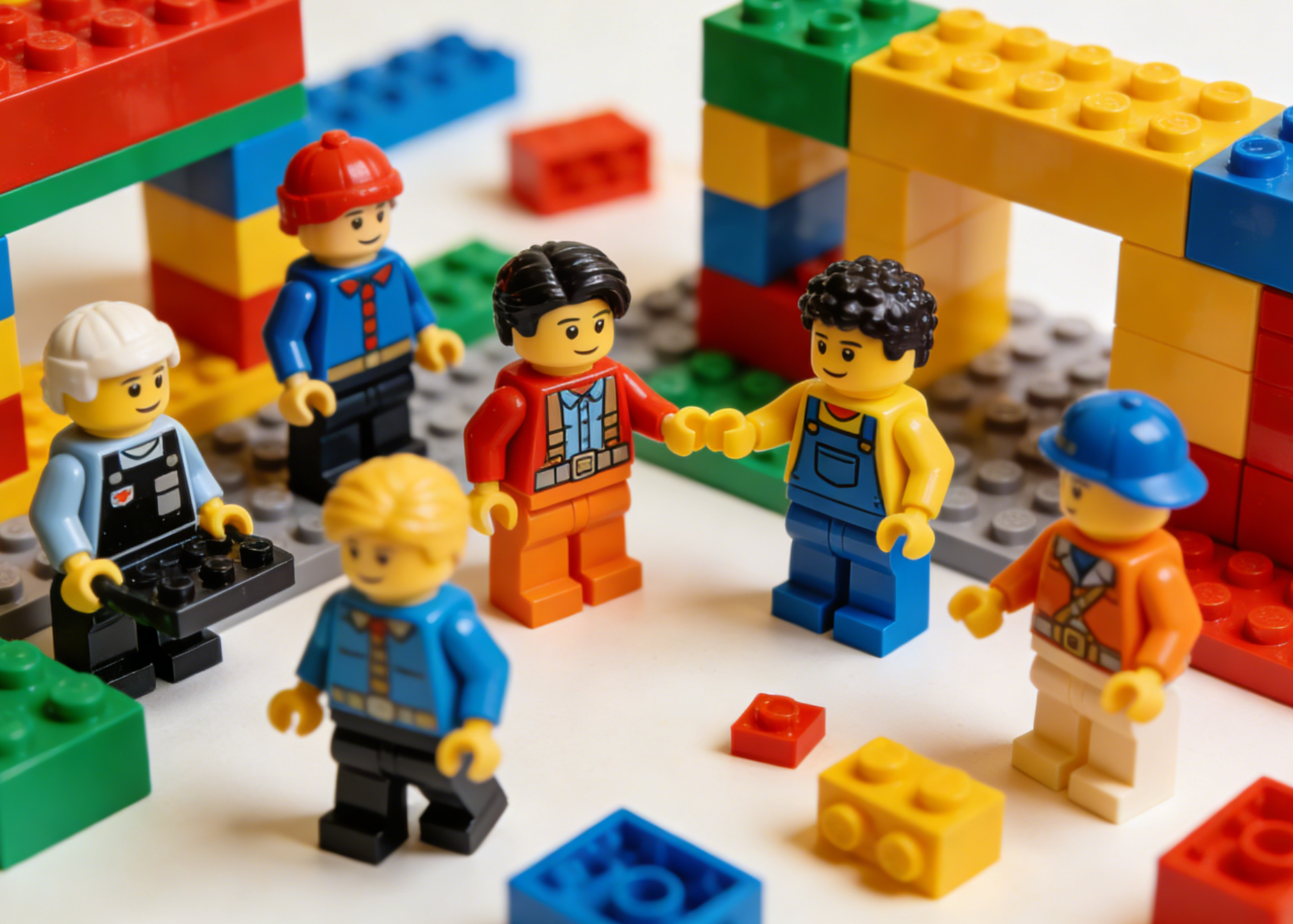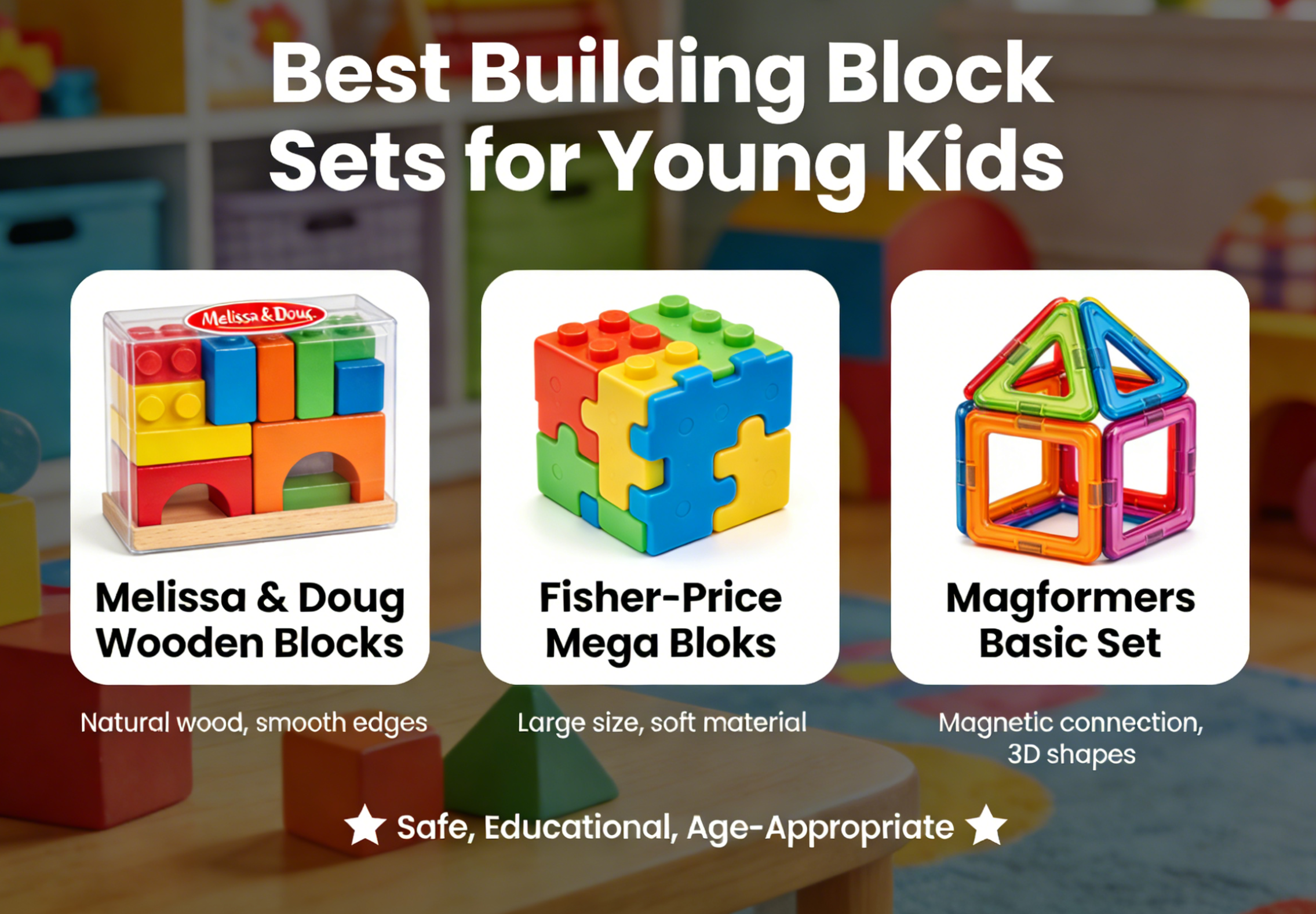

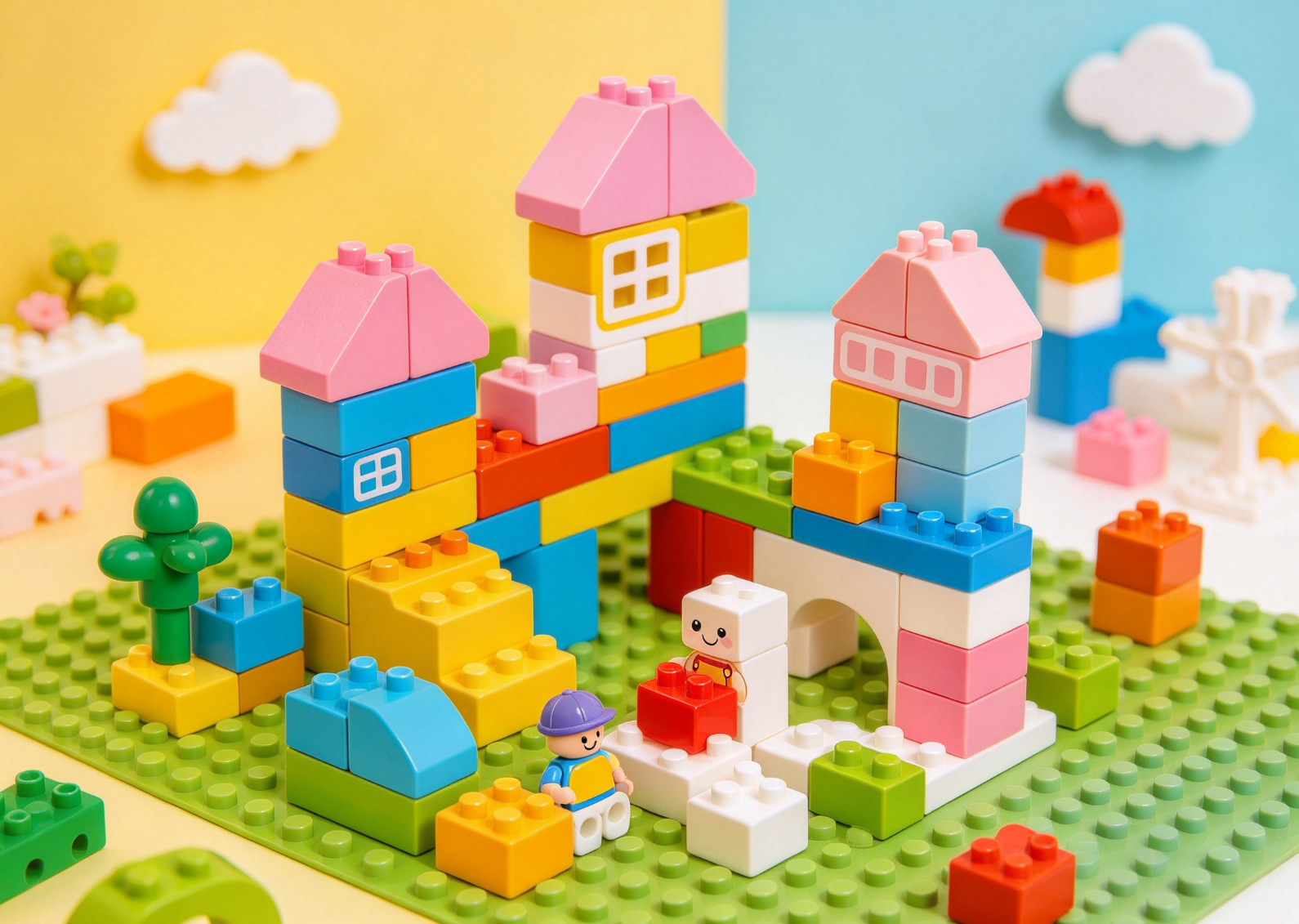
A child rarely needs a complicated reason to start building something. A few pieces on the floor can become a racing track, a secret clubhouse, a rescue station, or an imaginary world with its own rules. The fun often begins with a simple question: “What if we made this?”
That is what makes building toys so appealing. They offer more than a finished model to admire. They give children the chance to plan, experiment, solve problems, tell stories, and change their minds along the way.
But choosing the right set can be surprisingly difficult. Online searches for building toys for boys and building toys for girls bring up thousands of products, often organized around familiar themes such as vehicles, robots, houses, animals, and fantasy scenes. While these categories can help parents browse, they do not necessarily reveal which toy will suit an individual child.
A child who loves dinosaurs might enjoy designing a dinosaur park, while another who enjoys drawing may prefer creating a miniature city. Some children want to follow instructions and complete a model. Others would rather ignore the picture on the box and invent something entirely different.
The best buying decision starts with understanding how a child likes to play.
This guide explores how to choose building toys based on interests, play styles, developmental needs, and opportunities for creative challenges. Whether you are shopping for a birthday, a holiday, or an everyday surprise, these practical ideas can help you find a toy that offers more than a few minutes of excitement.
1. Think About the Experience, Not Just the Finished Model
Product photographs often show a beautifully completed vehicle, building, or fantasy scene. They help shoppers understand what is inside the box, but they can also make it easy to overlook an important question:
What will the child actually do with the toy?
There are several different experiences a building toy can offer.
A construction experience focuses on assembling a model. Children follow instructions, identify components, and gradually turn individual pieces into a recognizable object.
A creative experience gives children room to design their own structures. The finished result may look nothing like the product photograph, and that is part of the appeal.
A storytelling experience combines construction with imaginative play. A completed house might become a character’s home, while a vehicle could be part of an imaginary rescue mission.
A challenge-based experience encourages children to solve a specific problem. They might build a bridge, create a stable tower, or design a vehicle that can travel across a particular surface.
When comparing building toys for boys and girls, think about which of these experiences is most likely to capture your child’s attention.
A child who enjoys completing puzzles may appreciate a detailed construction project. A child who constantly invents stories may prefer a set with characters, accessories, and opportunities to build different environments.
The finished model is only one part of the experience. What happens before, during, and after construction matters just as much.
2. Identify the Kind of Play Your Child Naturally Enjoys
Children often reveal their preferences through everyday activities. You do not need to ask them to describe their ideal building toy. Simply notice what they choose when they have free time.
The inventor
Some children are always taking things apart, combining objects, or asking how everyday items work.
They may enjoy construction toys that offer varied components and encourage experimentation. Sets involving vehicles, machines, bridges, or unusual structures can provide a starting point for their ideas.
Look for toys that allow children to modify the original model rather than requiring them to follow one fixed design.
The storyteller
Other children enjoy creating characters, settings, and imaginary situations.
They might build a small shop, a family home, a fantasy castle, or an entire neighborhood. Once the construction is finished, they use it as the setting for a story.
For these children, a set with different building elements and recognizable details can create more opportunities for imaginative play.
The problem-solver
Some children enjoy challenges with a clear objective. They like finding out whether a structure will stand, whether two pieces will fit together, or how to make a design more stable.
Construction sets with a gradual increase in difficulty can be a good match.
Parents can also introduce simple tasks, such as asking children to build a tower using only a limited number of pieces.
The collector and display builder
Some children enjoy completing models and displaying their work. They may take pride in carefully following instructions and arranging finished constructions on a shelf.
For them, the appearance of the completed model, the building process, and the satisfaction of finishing a project may be especially important.
None of these play styles belongs to one gender. When choosing building toys for girls, do not assume every girl wants a decorative or story-focused set. When shopping for building toys for boys, do not assume every boy wants vehicles or engineering themes.
Observe the child first, then choose the toy.
3. Explore Themes Without Limiting Children’s Interests
Themes help children imagine what they might build. They also make it easier for parents to narrow down a large selection.
However, the most useful themes are those that connect with a child’s curiosity rather than traditional ideas about which toys boys or girls should enjoy.
Here are several options worth exploring.
Vehicles and transportation
Cars, trucks, trains, aircraft, and spacecraft can appeal to children who enjoy movement, design, and machines.
A vehicle-themed set can also inspire additional projects. A child might build a garage, a road, a railway station, or an entire transportation network.
Architecture and everyday environments
Houses, schools, shops, bridges, and city scenes offer opportunities to think about how people use buildings and public spaces.
Children can create different layouts, add new rooms, or design an imaginary neighborhood.
Animals and nature
Animal-themed construction can encourage children to build habitats, farms, wildlife parks, and natural environments.
Parents can extend the experience by asking where an animal might live, what it needs, and how its environment could be represented.
Fantasy and adventure
Castles, imaginary creatures, exploration scenes, and magical settings provide room for storytelling.
Children can create characters, invent missions, and expand a construction into a larger imaginary world.
Science and engineering
Robots, machines, spacecraft, and structural challenges may appeal to children who enjoy understanding how things work.
These themes can also introduce basic STEM ideas through play, especially when children are encouraged to experiment with different designs.
A good collection does not need to fit into only one theme. Sometimes the most interesting creations happen when children combine unrelated ideas.
A train station might sit next to a fantasy castle. A robot might become the guardian of an animal park. The unusual combinations are often where creativity becomes most visible.
4. Match the Challenge to the Child’s Development
A building toy should feel achievable while leaving room for progress.
If a set is too simple, an experienced builder may lose interest quickly. If it is too difficult, a beginner may become frustrated before completing the first stage.
Age recommendations are a useful starting point, but they are not the only factor. Children of the same age can have very different levels of construction experience, attention, coordination, and patience.
Younger children
Young builders generally benefit from simple construction activities and components appropriate for their age.
Look for:
- Easy-to-understand shapes.
- Manageable building steps.
- Clear visual differences between components.
- Opportunities to stack, match, and sort.
- Age-appropriate materials and safety information.
For children who are still developing fine motor skills, construction can be an opportunity to practice handling and connecting pieces.
Always follow the manufacturer’s age guidance. Small building components can present a choking hazard for younger children.
Children developing independent building skills
As children become more confident, they may enjoy projects with multiple stages.
They can begin following instructions independently, recognizing patterns, and understanding how different components contribute to a larger structure.
This is a useful time to introduce small building challenges.
For example, ask a child to construct a house with two rooms or design a vehicle that can carry a small toy.
Experienced young builders
Children who already understand basic construction may be ready for more detailed models and open-ended projects.
They might enjoy creating their own variations, combining different sets, or constructing something much larger than the original model.
For these children, component variety and creative flexibility may be more valuable than simply increasing the number of pieces.
The right challenge should encourage children to keep trying without making every construction session feel like a test.
5. Choose Between Guided Projects and Creative Freedom
One of the biggest differences between building toys is how much direction they provide.
Some sets are designed around a specific finished model. Others offer a collection of components that can be used in many different ways.
Neither approach is automatically better. The choice depends on the child and the experience you want to provide.
Why guided projects can be useful
Instructions give children a clear path from the first step to the finished construction.
Following a building guide can help children practice:
- Paying attention to visual details.
- Recognizing component shapes.
- Following a sequence.
- Planning ahead.
- Completing a longer activity.
There is also a real sense of achievement when a child finishes a model independently.
For a child who enjoys structure, a clearly explained project can be a satisfying experience.
Why open-ended building matters
Open-ended construction removes the pressure to reproduce a particular design.
Children can experiment, change their plans, and build something that reflects their own ideas.
They might start with a house and turn it into a spaceship. A simple platform could become a stage, a bridge, or a sports arena.
This kind of play can be particularly valuable for children who enjoy making decisions and exploring possibilities.
Why a combination may be ideal
Many families benefit from having both types of building experiences available.
A guided set can introduce new techniques and provide an initial project. Additional basic components can then help children experiment with their own designs.
When exploring ModelBuilder’s building toy selection, consider whether the available sets offer the kind of balance your child would enjoy.
6. Use Building Toys to Introduce Real-World Challenges
One way to make building more engaging is to connect construction activities with simple problems.
Instead of telling a child exactly what to build, give them a situation to solve.
This changes the activity from copying a model into exploring a question.
Here are five challenges parents can try at home.
Challenge 1: Build a bridge
Ask your child to build a bridge between two books or stable supports.
Once it is complete, see whether it can hold a small toy. If it bends or falls, ask what could be changed.
Children can experiment with wider bases, additional supports, or different construction patterns.
Challenge 2: Design a tall tower
Give the child a limited selection of components and ask them to build the tallest stable tower they can.
This introduces ideas about balance, weight distribution, and structural support.
Try changing the rules: Can the tower stand on a smaller base? Can it support a small object at the top?
Challenge 3: Create a mini community
Ask the child to build a small neighborhood with at least three different places.
They might include a home, a shop, a school, a park, or a transport station.
This activity can develop storytelling and encourage children to think about how different spaces connect.
Challenge 4: Build a vehicle for a purpose
Rather than simply asking for a car, give the vehicle a job.
It might transport supplies, explore an imaginary planet, or help animals reach a safe place.
The child can decide what features the vehicle needs and how to represent them.
Challenge 5: Rebuild something from memory
Show the child a simple structure, let them look at it for a short time, and then ask them to recreate it without the example.
This can encourage observation, spatial thinking, and attention to detail.
These challenges work with many different construction themes. They also show that a building toy can offer new experiences long after the original instructions have been completed.
7. Look for Toys That Encourage STEM Learning Naturally
STEM stands for science, technology, engineering, and mathematics. Building toys can introduce aspects of all four areas without requiring formal lessons.
The most effective learning often happens when children are curious about a construction problem.
For example, building a bridge introduces basic engineering ideas. Creating repeating patterns involves early mathematics. Designing a machine encourages children to think about how different parts work together.
Parents can support these experiences by asking open-ended questions.
Instead of saying, “That bridge needs another support,” try asking, “What do you think would make the bridge stronger?”
This gives the child an opportunity to observe, reason, and test an idea.
A few useful connections include:
- Science: Explore balance, weight, shapes, and stability.
- Technology: Discuss how machines and everyday objects are designed.
- Engineering: Plan, construct, test, and improve structures.
- Mathematics: Compare lengths, count components, recognize patterns, and explore symmetry.
When selecting building toys for boys and girls, think about whether the set gives children opportunities to explore these ideas through hands-on activities.
A toy does not need to be marketed as an educational product to support meaningful learning. The construction process itself can provide valuable opportunities for exploration.
8. Evaluate the Quality of the Building Experience
A creative theme may attract a child, but the actual building experience determines whether the toy is enjoyable to use.
Before buying, consider several practical factors.
Piece connection
Components should fit together as intended and provide a predictable building experience.
If you are considering a product online, look for close-up images, demonstrations, and reviews that discuss how the pieces connect.
Component variety
A set containing a useful mixture of bricks, plates, slopes, wheels, and special elements may offer more construction possibilities than a collection with many repeated pieces.
The right mix depends on the intended theme.
Instructions and clarity
Check whether the product includes instructions and whether the construction process appears suitable for the recommended age.
Clear illustrations and logical steps can make independent building easier.
Material information
Read the manufacturer’s product description for information about materials, care, and relevant safety guidance.
Avoid assuming that every building toy uses identical materials or manufacturing processes.
Customer reviews
Reviews can help reveal practical details that product photographs do not show.
Look for feedback about missing components, instruction quality, connection consistency, and how children use the set after completing the main model.
A review that explains the actual experience is more useful than a short comment that simply gives a high rating.
9. Consider How the Toy Fits Into Your Home
A building toy does not exist in isolation. It becomes part of a family’s daily routine, storage space, and play environment.
Before purchasing a large set, consider where your child will build and what happens when the project is finished.
Space for construction
Some children prefer working on the floor, while others enjoy using a table.
If a set involves a larger construction, make sure there is enough room to assemble and display it.
Storage
Small components are easier to manage when they have a designated storage location.
You can sort pieces by type, color, or project, depending on the child’s age and preferences.
The goal is to make it easy to find the parts needed for the next construction session.
Display and rebuilding
Some children enjoy keeping finished models on a shelf. Others prefer taking everything apart and starting again.
Neither approach is wrong.
If your child likes displaying models, provide a safe space where completed projects will not be easily knocked over.
If they enjoy rebuilding, make it easy to access the components after a project is finished.
Play with siblings
Building toys can also become shared family activities.
A larger project might involve one child designing a building, another constructing a road, and a third creating the surrounding environment.
This can encourage communication and cooperation while giving each child an opportunity to contribute.
10. Compare Value Beyond the Price Tag
A low-priced toy is not automatically good value, and an expensive set is not automatically the best choice.
Parents should consider what the child can do with the toy and how often it is likely to be used.
A few questions can help:
Does the set offer more than one building possibility? A model that can be rebuilt or modified may provide more opportunities for continued play.
Are the components useful for future projects? Versatile pieces can become part of a larger collection.
Does the theme match a lasting interest? A child who is currently fascinated by trains may enjoy a transportation-themed set beyond the initial unboxing.
Is the difficulty appropriate? A set that is too advanced may remain unfinished, reducing its practical value.
Can it work with existing toys? If your child already owns construction sets, consider whether the new pieces add useful variety. Do not assume different brands or product ranges are compatible without checking the manufacturer’s specifications.
For more ideas about different construction styles and themes, visit ModelBuilder’s official website.
11. Common Mistakes to Avoid When Buying Building Toys
Even with a clear idea of what a child likes, it is easy to choose a set for the wrong reasons.
Here are some mistakes worth avoiding.
Choosing according to gender stereotypes. A product category does not determine what an individual child will enjoy. Look at interests and play habits instead.
Focusing only on the box image. A finished model may look impressive, but it is important to understand what the child can build and do with the included components.
Ignoring the recommended age. Check age guidance and small-parts warnings before purchasing.
Assuming more pieces always means more fun. A smaller set with useful components may offer more creative possibilities than a larger set with repetitive parts.
Buying only complicated models. Children need opportunities to experience success as well as challenge.
Forgetting what the child already owns. A new set should ideally add a different theme, building technique, or useful group of components.
Treating construction as a one-time activity. Encourage children to modify, rebuild, and expand their creations rather than preserving every model exactly as shown.
12. A Practical Buying Checklist for Parents
Before choosing a set, use this simple checklist to make sure it suits the child and the family.
| Buying consideration | What to look for |
|---|---|
| Interests | A theme the child genuinely enjoys |
| Play style | Guided construction, open-ended play, or both |
| Age suitability | Appropriate components and complexity |
| Building challenge | Interesting but achievable projects |
| Creativity | Opportunities to modify and invent |
| Component selection | A useful mix of building elements |
| Instructions | Clear and age-appropriate guidance |
| Quality | Consistent connections and reliable product information |
| Home environment | Suitable space for building and storage |
| Long-term value | Opportunities for rebuilding and continued play |
The checklist does not need to produce a perfect score. It simply helps parents compare products using factors that matter beyond packaging and marketing.
Conclusion: The Best Building Toy Is the One That Inspires More Ideas
Choosing a building toy should not be about finding a product that matches a traditional idea of what boys or girls are supposed to enjoy.
It should be about discovering what makes a particular child curious.
Some children want to construct vehicles and machines. Others want to design houses, fantasy worlds, or animal habitats. Many enjoy moving between several different themes as their interests develop.
The most useful building toys provide a balance of achievable challenges, creative freedom, and opportunities to explore new ideas.
When shopping for building toys for boys or building toys for girls, look beyond the label. Consider how your child likes to play, what they already know, and what new experiences the toy could introduce.
A good construction project ends with a completed model. A great building toy gives a child another idea before they have even finished the first one.
Frequently Asked Questions
1. Are building toys for boys and girls actually different?
Not necessarily. Many building toys use similar construction principles and components, even when they feature different themes or packaging. Vehicles, buildings, animals, fantasy scenes, and engineering projects can appeal to children of any gender. The best choice depends on a child’s individual interests and preferred play style.
2. What are the best building toys for boys and girls?
The best options depend on age, experience, and interests. Children who enjoy machines may prefer vehicle or engineering-themed sets, while children who enjoy storytelling may like buildings, animals, or imaginative environments. Open-ended construction collections can also be useful for children who enjoy inventing their own designs.
3. Are building toys educational?
Building toys can support the development of spatial awareness, problem-solving, creativity, fine motor skills, and early STEM concepts. Children can explore shapes, patterns, balance, and basic engineering principles through hands-on construction. The learning experience is often most effective when children are free to experiment.
4. How do I choose building toys for different age groups?
Start with the manufacturer’s recommended age range and safety guidance. Younger children generally need simpler, age-appropriate components and easier construction activities. Older or more experienced builders may enjoy detailed models, more complex instructions, and open-ended design challenges.
5. How can I make building toys more interesting after the model is finished?
Encourage children to modify the original construction, create a new setting, or complete a building challenge. They could design a bridge, build a miniature town, or invent a vehicle for a specific purpose. Rebuilding and storytelling can help extend the play experience beyond the original instructions.