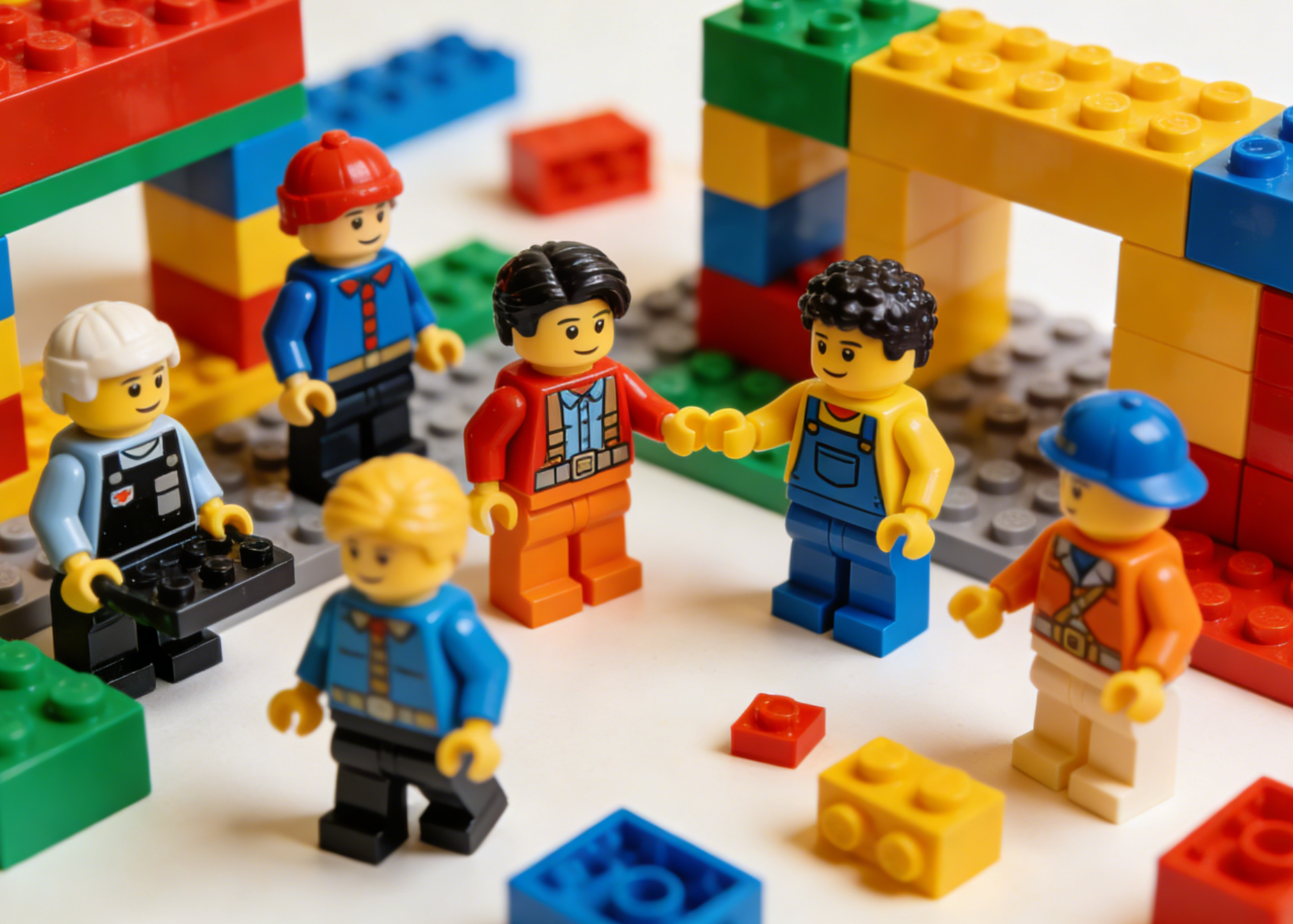

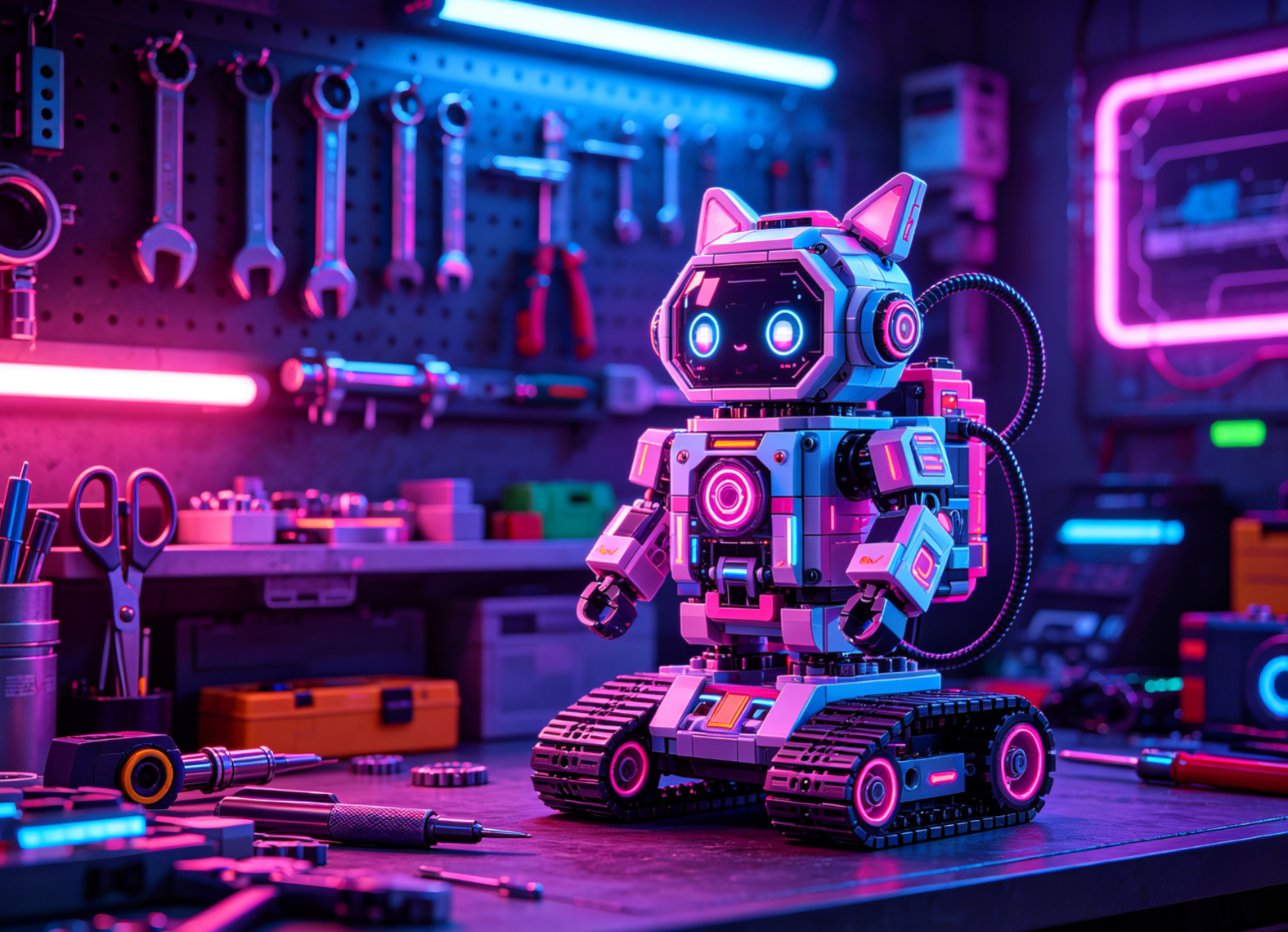
A child opens a new construction toy, tips the pieces onto the floor, and immediately starts building. Maybe it becomes a racing car. Maybe it turns into a castle, a robot, a wildlife rescue centre, or something nobody has ever seen before.
That is part of the magic of building toys: the same collection of pieces can lead to completely different adventures.
Yet choosing the right set is not always straightforward. Walk through a toy shop or browse an online store in the US, UK, or Europe, and you will find products divided into age groups, themes, colors, skill levels, and sometimes separate boys’ and girls’ categories. With so many choices, parents can easily end up buying a toy based on its packaging rather than the child’s actual interests.
A better approach is to start with the builder, not the label.
Whether you are shopping for a birthday, Christmas, a classroom activity, or an ordinary weekend surprise, this guide explains how to choose construction toys for boys and construction toys for girls based on personality, play style, age, and building experience. You will also discover how to create challenges that keep children interested long after the first model is complete.
1. Start With the Child’s Interests, Not the Gender Label
The first step is to forget the idea that a particular building theme belongs exclusively to boys or girls.
Some boys love designing houses, decorating miniature rooms, and creating fantasy gardens. Some girls are fascinated by racing vehicles, mechanical systems, and engineering challenges. Plenty of children enjoy all these things.
Interests are much more useful than stereotypes when choosing a toy.
Before buying, think about what your child already enjoys outside construction play.
Notice what they draw
Children’s drawings can offer surprisingly useful clues.
A child who frequently draws buildings may enjoy architectural construction sets. Someone who sketches animals, imaginary creatures, or fantasy landscapes may prefer pieces that allow creative storytelling.
If your child draws machines, vehicles, or robots, look for sets with wheels, joints, moving parts, and different structural components.
Pay attention to the stories they invent
Some children naturally create characters and adventures.
They might build a home for an imaginary creature, a hospital for toy animals, or a secret headquarters for superheroes.
For these children, a construction set with different shapes, accessories, and reusable components may offer more possibilities than a single finished model.
Watch how they solve everyday problems
Other children enjoy figuring out how things work.
They may ask why a bridge stays up, how a door opens, or why one tower falls while another remains standing.
These children may enjoy construction sets that introduce balance, movement, symmetry, and simple mechanical ideas.
Let children change their minds
Interests are not permanent.
A child who spends one month building vehicles may become fascinated by architecture the next. Another might move between fantasy, nature, and mechanical designs.
Choose building toys that leave room for changing interests instead of limiting the child to one narrow theme.
This is the most useful starting point when comparing construction toys for boys and girls: look for the experience a child wants, not the category a retailer assigns.
2. Identify Your Child’s Building Personality
Children approach construction in different ways. Understanding these differences can help you choose a set they will actually use.
Here are five common building personalities. They are not fixed personality types, and one child may fit several.
The Storyteller
The Storyteller builds places where imaginary events happen.
A simple group of bricks might become a restaurant, a space station, a school, or a village inhabited by tiny characters.
Look for:
- Doors and windows
- Different building shapes
- Decorative pieces
- Accessories and small details
- Components that can be reused in different scenes
A flexible collection is especially useful because the child can keep changing the setting as the story develops.
The Designer
The Designer cares about how a finished model looks.
They may enjoy arranging colors, creating balanced shapes, and adding decorative details.
Architectural sets, themed buildings, and collections with a variety of slopes, plates, and tiles can be appealing.
Try offering a simple challenge: build two houses that use the same number of pieces but look completely different.
The Problem-Solver
The Problem-Solver enjoys figuring things out.
They might experiment with tower stability, bridge construction, moving components, or different ways to connect pieces.
Useful features include:
- Structural connectors
- Beams and plates
- Wheels and axles
- Hinges
- Gears or other age-appropriate mechanical components
For this builder, the most satisfying part may be discovering why a design works.
The Inventor
The Inventor likes making things that do not necessarily exist in the real world.
A vehicle might have six wheels and a rotating roof. A building could float above an imaginary ocean. A robot might have an unusual shape and a completely invented purpose.
Open-ended building sets with varied components are often a good choice.
Avoid judging every creation by whether it looks realistic. Original ideas are part of the fun.
The Careful Builder
The Careful Builder enjoys following a sequence and seeing a model gradually take shape.
They may prefer clear instructions, numbered bags, recognizable designs, and a satisfying finished result.
The best choice is usually a set with instructions that match the child’s experience level, perhaps with enough spare or reusable pieces to encourage later modifications.
A child does not have to fit only one category. The aim is simply to understand what makes building enjoyable for them.
3. Choose a Construction Theme That Encourages Exploration
Once you understand a child’s interests, you can narrow down the type of building toy.
Rather than selecting a theme based on gender, consider the different experiences each theme offers.
<escape>###</escape> Architecture and City Building
<text>Architecture sets can appeal to children who enjoy designing places and imagining how people use them.</text>
<escape> </escape>
<text>They might create a house, a shop, a school, a hospital, or an entire street. The activity can also introduce simple ideas about space, shape, and how buildings fit together.</text>
Look for sets with:
- Different wall and roof components
- Windows and doors
- Plates for floors and platforms
- Decorative details
- Pieces that allow extensions or alternative layouts
A particularly enjoyable family activity is to build a miniature neighborhood, with each person responsible for one building.
Vehicles and Transportation
Vehicles offer opportunities to explore shape, movement, and practical design.
A child might build a sports car, delivery truck, aircraft, train, or imaginary exploration vehicle.
Consider whether the set includes wheels, axles, steering elements, and enough structural pieces to create variations.
After the first model is complete, ask the child to redesign it for a different purpose. A delivery truck could become a rescue vehicle, for example.
Space and Science Fiction
Space-themed construction toys can encourage imaginative engineering.
Children can design spacecraft, research stations, satellites, robots, and unfamiliar machines.
These projects are especially interesting when the pieces allow unusual shapes and different color combinations.
You can introduce a simple design question: what would this vehicle need if it were exploring a planet with very low gravity?
Animals and Nature
Not every construction project needs to be a building or machine.
Animal models, habitats, gardens, and nature-inspired scenes can encourage children to combine construction with storytelling.
A child might create a wildlife rescue centre, an underwater research station, or a miniature forest.
Sets with varied shapes and decorative components are useful because natural forms are rarely made from simple rectangles alone.
Fantasy and Adventure
Castles, magical houses, dragons, imaginary cities, and adventure scenes give children plenty of room to invent stories.
The finished model is only one part of the experience. Children can keep adding characters, changing the setting, and inventing new challenges.
The strongest choice is a theme that connects with something the child already enjoys while leaving enough freedom to create something new.
4. Match the Building Set to the Child’s Age and Experience
Age recommendations matter, but children of the same age can have very different building skills.
One six-year-old may comfortably follow detailed instructions, while another may prefer simple free-building activities.
Use the manufacturer’s age guidance first, then consider the child’s experience and interests.
Toddlers and Preschoolers
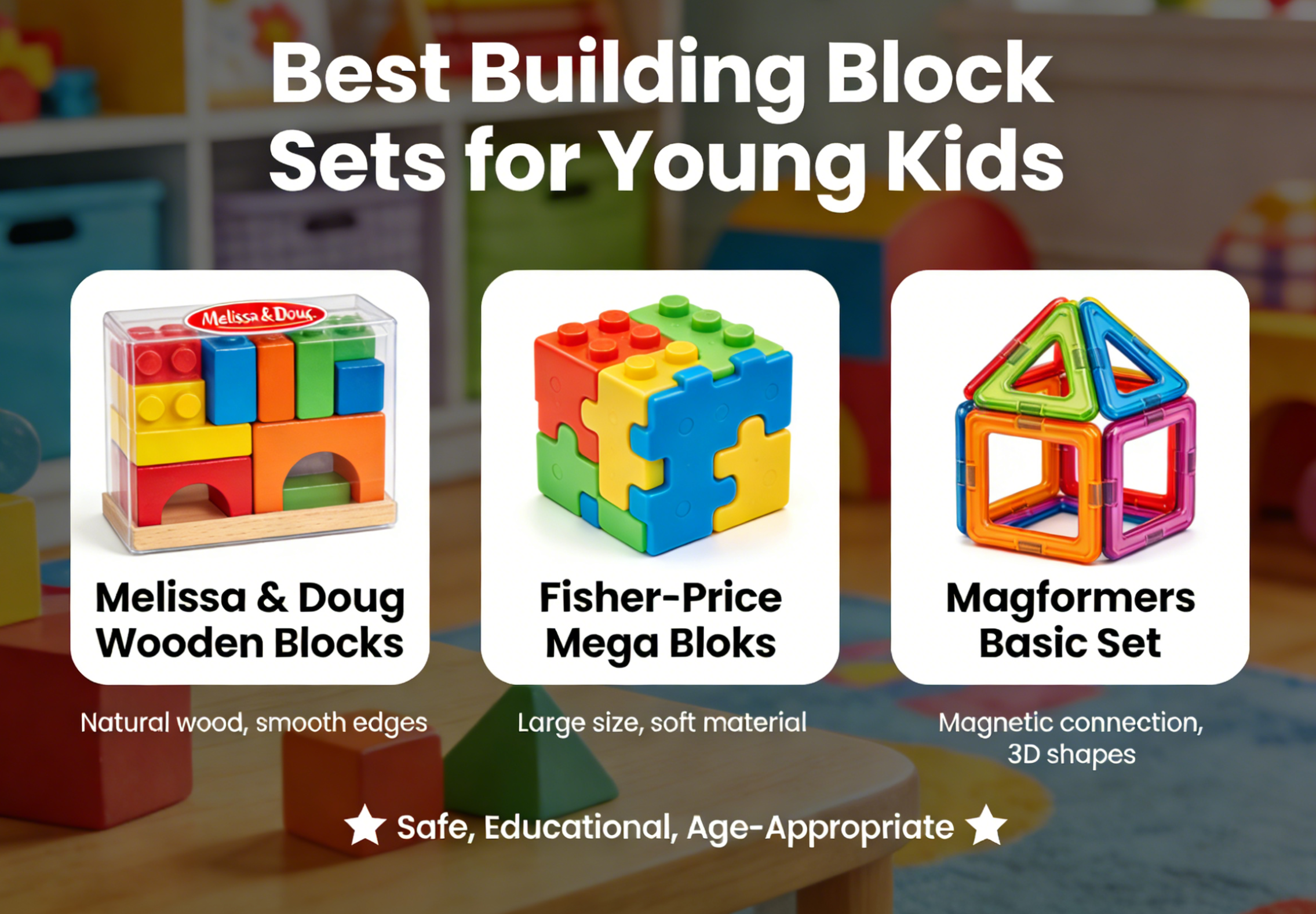
Young children usually benefit from larger, easy-to-handle construction pieces.
At this stage, the focus is on stacking, connecting, separating, and exploring simple shapes.
Look for:
- Large components suitable for the child’s age
- Easy connections
- Rounded or smooth edges
- Simple colors and shapes
- Clear safety information
Avoid small detachable components that could present a choking risk. Always follow the age warning and supervise play as appropriate.
Ages 4–6
Children in this age group may begin creating recognizable objects and simple scenes.
They might build a house, a vehicle, a small shop, or a playground.
Sets with basic instructions can help them understand how pieces connect, while open-ended components give them opportunities to change the design.
Keep early projects manageable. A child who finishes a small model independently may feel more confident about trying something larger.
Ages 7–9
Many children become more comfortable with multi-step instructions and more detailed structures.
They may enjoy combining several small builds into a larger project, experimenting with symmetry, or creating their own versions of familiar models.
Consider sets with more varied components, additional building possibilities, and slightly more complex challenges.
Ages 10 and Above
Older children may enjoy advanced architecture, vehicles, mechanical construction, and large creative projects.
They may also be ready to plan their own builds before assembling them.
A useful gift at this stage could be a versatile collection rather than a model that has only one intended result.
The important thing is to choose a challenge that feels achievable without being boring.
5. Use a Five-Point Checklist Before Buying
Product photographs can make almost any construction set look exciting. A practical checklist helps you look beyond the packaging.
Before purchasing, consider these five factors.
1. Variety of components
Does the set include different shapes and useful structural elements?
A collection of identical bricks can be excellent for simple stacking, but more varied components may provide greater flexibility for detailed projects.
2. Building flexibility
Can the pieces be used to create more than one model?
A set with reusable components may continue to offer value after the original instructions have been completed.
3. Instruction quality
Are the diagrams clear? Are the building stages easy to follow?
For children who are new to construction toys, unclear instructions can make an otherwise suitable set frustrating.
4. Appropriate difficulty
Does the set match the child’s current skills?
Consider the number of steps, the size of the pieces, and the patience required to complete the model.
5. Safety and material information
Are the age recommendations, warnings, and manufacturer details easy to find?
For toys sold in the US and Europe, check that the product is intended for the relevant market and has the required safety information.
You can score each category from 1 to 5 if you are comparing several products. This will not identify a perfect toy automatically, but it can make the decision more objective.
6. Turn Building Time Into a Creative Challenge
A construction set becomes much more interesting when children are encouraged to do more than follow the instructions.
You do not need complicated educational activities or expensive additional pieces. A small challenge can be enough to give a familiar collection a new purpose.
Here are five activities to try at home.
Challenge One: Build a Place for Someone
Ask your child to create a place where an imaginary character could live or work.
It could be a house for a dragon, a laboratory for a scientist, or a shop for a toy animal.
Instead of giving them a model to copy, ask what the character would need.
Would it need a bedroom? A vehicle? A garden? A secret entrance?
This combines construction with storytelling.
Challenge Two: Make the Tallest Stable Structure
Give the child a selection of pieces and ask them to build the tallest structure they can.
The challenge is not simply reaching the greatest height. The structure must remain standing.
If it falls, encourage them to investigate the reason.
Was the base too narrow? Were the upper sections too heavy? Would a different arrangement improve the balance?
Challenge Three: Redesign an Existing Model
Take a completed vehicle, building, or other model and give it a new purpose.
A house might become a library. A car could become a rescue vehicle. A spaceship could become an underwater research submarine.
The child must think about which parts need to change and which can stay.
Challenge Four: Build With a Limited Color Palette
Choose two or three colors and ask the child to create something using only those colors.
This encourages planning and makes the activity different from an ordinary free-building session.
Older children may enjoy adding a second rule, such as using a particular number of pieces.
Challenge Five: Build Together Without a Master Plan
Each family member adds one section to a shared construction.
The first person might create a building. The next adds a road. Someone else creates a vehicle or a park.
Nobody knows exactly what the finished project will look like.
This is a fun way to encourage communication and cooperation without turning playtime into a competition.
7. Encourage Boys and Girls Without Limiting Their Ideas
Parents sometimes worry about whether they are choosing the right kind of toy for a child.
A common mistake is to assume that children need different construction toys simply because they are boys or girls.
In reality, children benefit from having opportunities to explore different interests.
A girl who enjoys mechanical construction should have access to gears, vehicles, and engineering challenges. A boy who enjoys designing houses or creating fantasy scenes should be encouraged to explore those interests too.
When choosing construction toys for girls, do not overlook engineering, vehicles, architecture, or open-ended building sets just because the packaging looks less traditionally feminine.
Likewise, when shopping for construction toys for boys, consider creative storytelling, interior design, nature-inspired models, and imaginative construction.
There is no reason to limit either group.
Give children different kinds of challenges
Instead of assigning toys by gender, offer a range of experiences.
One weekend could involve building a vehicle. The next could focus on designing a house or creating an imaginary animal habitat.
Children may discover interests they did not know they had.
Praise the process, not just the result
A finished model is worth celebrating, but so are the decisions made along the way.
Notice when a child tries a different connection, solves a stability problem, or changes an idea after something goes wrong.
Comments such as “I noticed you found another way to make that stand up” can be more encouraging than simply saying that the model looks nice.
Let children choose their own projects
Offer a few options, then allow the child to decide.
Choice creates a sense of ownership. It also makes it more likely that they will return to the project later.
8. Choose Construction Toys That Encourage Shared Play
Building does not have to be a solitary activity.
Some of the most enjoyable projects happen when children work together with siblings, friends, parents, or grandparents.
Shared construction can also introduce practical social challenges.
Children may need to agree on a design, decide who builds each section, and find a way to connect separate structures.
Try these activities.
Create a Family City
Give each person responsibility for one part of a miniature city.
One person builds a house, another creates a shop, and someone else designs a road or public space.
Once the separate sections are finished, connect them into one shared environment.
Design a Rescue Mission
Create a fictional situation that requires a building solution.
Perhaps a toy animal needs to cross a river, or a vehicle needs a safe place to park during a storm.
Children can design bridges, shelters, vehicles, and other structures.
Build a Shared Fantasy World
Let each person create a different part of an imaginary world.
One person might design a castle, another builds a forest, and someone else creates a transportation system.
The final result becomes a setting for stories and further play.
For families comparing construction toys for boys and girls, a versatile set that supports shared projects can be especially useful. It allows siblings with different interests to work with the same collection without needing identical projects.
9. Check Safety and Quality in the US and Europe
A construction toy should be enjoyable, but it must also be appropriate for the child who will use it.
This is especially important when buying alternative building-block products from international retailers.
United States
For toys sold in the US, relevant requirements may include the Consumer Product Safety Improvement Act (CPSIA) and applicable toy safety requirements under ASTM F963.
Depending on the product and its intended use, third-party testing and a Children’s Product Certificate may be required.
Parents should look for clear manufacturer information and age-appropriate warnings rather than relying on vague marketing language.
European Union
Toys placed on the EU market must comply with applicable toy safety legislation.
CE marking indicates that the manufacturer declares conformity with relevant EU requirements. It should not be treated as an independent product review or a general award for quality.
Check that the product listing and packaging provide the relevant age warnings and manufacturer or responsible-person information.
United Kingdom
The UK has its own applicable toy safety and product conformity requirements.
If purchasing from an overseas seller, check whether the product is intended for the UK market and whether the required information is provided.
A practical checklist for parents
Before buying, check:
- The manufacturer’s recommended age range
- Whether small parts create a choking risk
- The material and product information
- Any relevant safety markings or documentation
- Whether the seller provides clear support for product questions
Do not assume that every product from a particular brand has the same safety documentation. Check the specific set.
10. Make the Building Area Easy to Use
A construction toy is more likely to become part of a child’s routine if the pieces are easy to access.
You do not need a dedicated playroom. A small, organized space can work perfectly well.
Keep the pieces visible
Use shallow containers or divided trays so children can see what is available.
For younger builders, sorting by broad categories may be easier than using complicated storage systems.
Make room for unfinished projects
Some children enjoy returning to the same model over several days.
A small display surface can keep unfinished projects safe without requiring the entire table to remain occupied.
Rotate the available pieces
If a child has a large collection, make a smaller selection available at a time.
Introducing different components every few weeks can create fresh interest without buying another set.
Photograph finished creations
Take photographs of interesting builds before they are dismantled.
Children can look back at previous projects, explain how they made them, and use the photographs as inspiration for new ideas.
This is also a nice way to recognize their effort without making every creation a permanent display piece.
11. Choose Gifts That Match the Occasion and the Child
Construction toys can make useful gifts for birthdays, holidays, school achievements, and family celebrations.
But the best gift depends on the occasion.
Birthday gifts
For birthdays, think about the child’s current interests and experience level.
A themed model can create an exciting opening moment, while a versatile collection may offer more opportunities for future projects.
Christmas and holiday gifts
During the holiday season in the US, UK, and Europe, families often have more time for shared activities.
A construction set that can become a family project may be particularly enjoyable.
Consider the time needed to complete the model and whether the finished creation can be displayed.
Educational rewards
A construction set can also be a meaningful reward for completing a school project or learning a new skill.
Choose something that connects with the child’s interests rather than making the gift feel like another assignment.
Gifts for siblings
If buying for siblings, consider a shared collection rather than automatically purchasing a different theme for each child.
You can also choose separate smaller projects that can eventually connect into one larger creation.
The key is to avoid assuming that boys and girls need different products. A thoughtful gift reflects the individual child.
12. Explore Alternative Building Sets With ModelBuilder
Families in the US and Europe have more construction-toy options than ever before.
Alternative building-block brands give shoppers additional choices across themes, model styles, and building experiences.
ModelBuilder focuses on alternative building solutions, including custom brick sets and themed collections. The brand’s website describes a design process that moves through concept development, material selection, prototype development, and production.
For parents, the important thing is to compare individual products based on their specifications and the child’s interests.
You can explore the ModelBuilder collection to discover available building styles and themed options.
If you want more general advice on choosing suitable products for different ages and interests, see the guide to choosing construction toys for kids.
You can also read the complete guide to building block sets for children for additional ideas about creating enjoyable building experiences.
As with any alternative building-block brand, check each product’s age guidance, component details, compatibility information, and current safety documentation before purchasing.
Final Thoughts: Choose for the Child, Not the Category
The best construction toy is not determined by whether it is marketed for boys or girls.
It is determined by what the child enjoys doing.
Some children want to design machines. Others want to create imaginary homes, detailed cities, fantasy worlds, or unusual objects that have never existed before. Many enjoy moving between all these activities.
When choosing construction toys for boys or construction toys for girls, start with the child’s interests, consider their building experience, and look for products that offer more than one possible outcome.
Choose age-appropriate components, check safety information, and provide a space where children can experiment without worrying about making mistakes.
A good construction toy gives a child something to build today. A great one gives them a reason to imagine what they might build tomorrow.
Frequently Asked Questions
1. Are construction toys for boys and girls actually different?
The building experience does not need to be different. Children of any gender can enjoy vehicles, architecture, mechanical construction, fantasy models, and open-ended building. The most useful way to choose is to consider individual interests, age, and experience rather than relying on gender-based packaging.
2. What are the best construction toys for girls?
The best choice depends on the individual child. Some girls enjoy architecture, creative storytelling, and fantasy scenes, while others prefer vehicles, engineering, and mechanical challenges. Versatile building sets that allow different types of construction can be a good starting point.
3. What are the best construction toys for boys?
Look for sets that match the child’s interests. Vehicles, robots, architecture, space models, and open-ended brick collections can all be suitable. Consider the child’s building experience and whether they prefer following instructions or inventing their own designs.
4. What age can children start playing with construction toys?
Age suitability depends on the size and design of the pieces. Young children should use products specifically designed for their age group, with larger components where appropriate. Sets containing small detachable parts should only be used according to the manufacturer’s age guidance and warnings.
5. How can parents encourage children to build more creatively?
Offer simple challenges rather than always providing a finished model to copy. Ask children to build a place for an imaginary character, redesign an existing creation, or solve a simple construction problem. Give them time to experiment and let them decide how their projects should develop.