

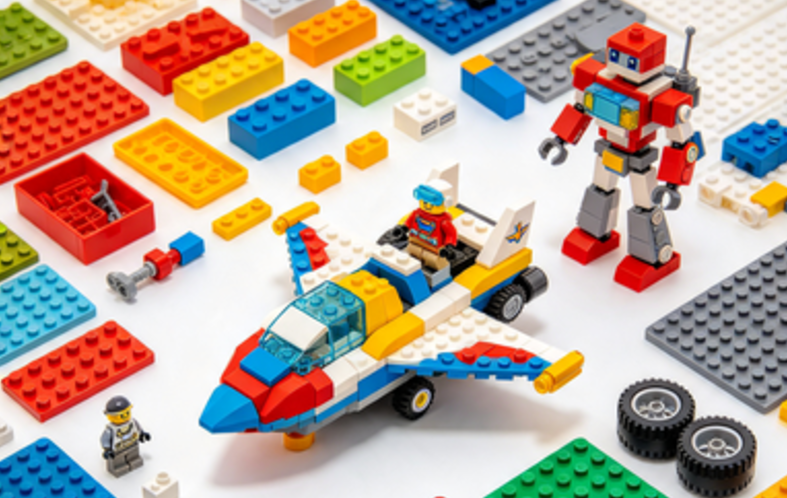
Walk into any toy store today and you’ll find aisles of flashing lights, talking gadgets, and screens disguised as toys. Yet somehow, a simple box of plastic bricks still holds its own against all that noise. There’s a reason for that. Block building toys don’t just entertain kids — they teach them how to think, problem-solve, and create something from nothing, one connection at a time.
If you’re a parent trying to figure out which sets are worth the investment, how to set your child up for genuine engagement (not just five minutes of interest before the box gets shoved under the bed), and how to use these toys to actually support learning, this guide walks you through it step by step. We’ll also look at why brands like ModelBuilder have become a smart, budget-friendly alternative to traditional big-name brick sets for families across the US and Europe.
Why Block Toys Still Matter in a Screen-Heavy World
It’s easy to assume that in an age of tablets and interactive apps, physical toys are losing relevance. The opposite is true. Occupational therapists and child development specialists consistently point to hands-on building play as one of the most effective ways to develop fine motor skills, spatial reasoning, and patience in young children.
Unlike passive screen time, block toys for kids demand active participation. A child has to decide what to build, figure out how pieces fit together, troubleshoot when something collapses, and adjust their plan on the fly. That’s a lot of problem-solving packed into what looks like simple play. And because building sets scale in complexity, they grow with your child instead of being outgrown in a matter of months.
There’s also a social dimension worth mentioning. Building blocks invite collaboration in a way that most digital games don’t. Siblings negotiate who gets which pieces. Friends combine their collections to build something bigger than either could alone. Parents get pulled into the process, too, often without realizing they’ve just spent 40 minutes constructing a spaceship with their eight-year-old.
How to Choose the Right Block Building Toys for Your Child’s Age and Skill Level
Not all building sets are created equal, and matching the right product to your child’s developmental stage makes a measurable difference in how much they enjoy — and benefit from — the experience.
Toddlers (Ages 1–3)
At this stage, look for oversized, chunky blocks that are easy to grip and impossible to swallow. Simplicity is the goal here. Toddlers are mostly interested in stacking, knocking down, and sorting by color or shape. Sets with fewer than 20 pieces and rounded edges are ideal.
Preschoolers (Ages 4–6)
This is where block building toys start to introduce real structure. Children in this range can follow basic visual instructions and enjoy building recognizable shapes like houses, cars, or animals. Sets with 50–150 pieces, bright colors, and simple step-by-step guides work best. This is also a good age to introduce themed sets, since preschoolers respond well to narrative play — building a “fire station” is far more exciting than building an abstract structure.
School-Age Kids (Ages 7–12)
Kids in this bracket are ready for complexity. They can manage sets with hundreds of pieces, follow multi-step instructions, and start designing original creations without a guide. This is the sweet spot for introducing sets that incorporate moving parts, gears, or interchangeable pieces that connect to other collections.
Tweens and Teens (13+)
Older kids often gravitate toward detailed, display-worthy builds — architectural replicas, vehicles, or large-scale models that take hours to complete. If your child has outgrown basic sets but still enjoys building, this is the point to look at advanced or collector-grade options.
A good rule of thumb: check the recommended age range on the box, but also pay attention to your own child’s patience level and fine motor development. A mature five-year-old might handle a set built for seven-year-olds just fine, while an easily frustrated eight-year-old might need something simpler to start with.
How to Set Up the Perfect Building Environment at Home
Even the best block toys for kids won’t get much use if the setup around them makes building a hassle. A few small adjustments to your home environment can dramatically increase how often your child reaches for their blocks instead of a screen.
Designate a flat, low-traffic surface. A corner of a playroom, a low table, or even a large tray on the living room floor works well. The key is consistency — kids build more when they don’t have to set up and tear down every single time.
Store pieces by type or color, not by set. It might be tempting to keep every kit in its original box, but mixed storage bins actually encourage more creative, open-ended building. Clear, stackable bins with lids work particularly well and make cleanup painless.
Keep instruction booklets accessible but not mandatory. Let your child choose whether to follow the guide or freestyle. Research on creative play suggests that alternating between structured building (following instructions) and open-ended building (inventing from imagination) develops both discipline and creativity.
Protect against the dreaded step-on-a-brick moment. A simple rug or play mat under the building area saves feet and keeps pieces contained. If you want to browse storage solutions and building mats designed specifically for brick-style sets, ModelBuilder’s shop carries accessories built with family use in mind.
How to Use Block Toys to Support STEM Learning and Creativity
Building blocks are often described as “STEM toys,” but that label only means something if you actually use them with intention. Here’s how to turn ordinary building sessions into genuine learning opportunities.
Introduce basic engineering concepts. Ask your child why a tall tower keeps falling over. Guide them toward discovering that a wider base creates more stability. These small, hands-on lessons in physics stick far better than anything read from a textbook at this age.
Incorporate math naturally. Counting pieces, measuring height, calculating how many blocks are needed to double the size of a structure — these are all math exercises disguised as play. You don’t need to announce it as a “lesson.” Just ask curious questions while you build alongside them.
Encourage storytelling. Creativity isn’t only about construction — it’s about imagination. Encourage your child to build a setting for a story, then act it out with the finished structure. This blends literacy and narrative skills with spatial design.
Set creative constraints. One of the simplest ways to boost problem-solving is to give a limited number of pieces and a specific challenge — “build a bridge that can hold this toy car” or “build the tallest tower using only 30 pieces.” Constraints force creative thinking in a way that open-ended building sometimes doesn’t.
Rotate between guided and freeform building. As mentioned earlier, following instructions builds patience and sequencing skills, while freeform building nurtures original thinking. A healthy mix of both keeps block building toys valuable well beyond the novelty phase.
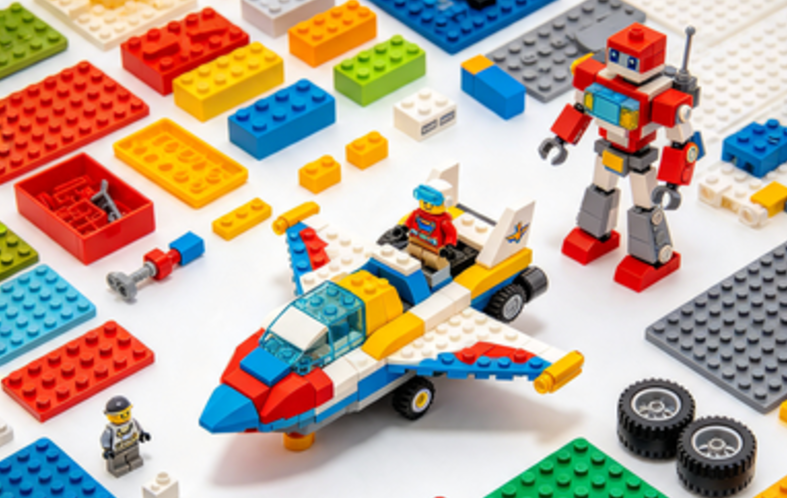
How to Keep Kids Engaged with Block Building Toys Long-Term
Every parent knows the frustration of watching an expensive toy get abandoned after a week. Keeping block sets in regular rotation takes a bit of strategy.
Introduce new pieces gradually instead of all at once. Rather than dumping a huge new set into the mix, add smaller batches over time. This keeps the building experience feeling fresh without overwhelming your child with too many options.
Set up building challenges or family competitions. A weekend challenge — “who can build the tallest free-standing tower” or “design a dream treehouse” — turns solo play into a shared family activity and gives kids a reason to revisit their collection.
Mix brands and collections. Many building brick systems are designed to be compatible with one another, meaning your child isn’t limited to pieces from a single product line. Combining collections opens up far more creative possibilities and extends the life of every set you own.
Display finished builds. A simple shelf for completed creations gives kids a sense of pride and accomplishment, which in turn motivates them to keep building new things rather than disassembling everything immediately.
Let interests guide new purchases. If your child is into dinosaurs, space, or race cars this month, lean into it. Thematic relevance keeps engagement high, whereas generic sets chosen at random are more likely to go untouched.
Why ModelBuilder Is a Smart LEGO Alternative
For many families in the US and Europe, the biggest barrier to building block toys isn’t interest — it’s cost. Name-brand sets can add up quickly, especially if you’re trying to build a varied collection that keeps a child engaged over several years. This is where ModelBuilder has carved out a strong reputation as a high-quality, more affordable alternative.
ModelBuilder offers custom brick sets tailored to different skill levels, along with themed collections designed to spark imagination across a wide range of interests. Every set goes through a deliberate design process — from concept sketching to prototype testing — to ensure pieces are durable, safe, and compatible with standard building brick systems already in your child’s collection.
What stands out most is the brand’s attention to both creativity and quality control. Rather than mass-producing generic kits, ModelBuilder develops themed collections and workshops aimed at building real problem-solving skills, not just assembling plastic pieces. For parents who want the educational and developmental benefits of block toys for kids without paying premium brand pricing, it’s worth exploring ModelBuilder’s full range of building sets to see which collection fits your child’s current interests and skill level.
Families who’ve made the switch often mention the same thing: their kids don’t notice — or care — that the bricks aren’t a famous name brand. What they care about is whether the pieces click together smoothly, whether the designs are fun, and whether there’s always something new to build. On all three counts, ModelBuilder has positioned itself as a legitimate contender for families looking to stretch their toy budget further without compromising on quality. If you’re curious about where to start, this guide to building a family brick collection is a useful next step.
Bringing It All Together
Choosing the right block building toys isn’t just about picking whatever’s trending or cheapest on the shelf. It’s about matching complexity to your child’s stage of development, creating a home environment that invites regular play, and using building time with intention to develop real skills — spatial reasoning, patience, engineering logic, and creativity. Done well, a simple bin of bricks can occupy a child far longer, and far more meaningfully, than most screen-based alternatives.
If you’re ready to build (pun intended) a collection that grows with your child and doesn’t break the bank in the process, it’s worth exploring ModelBuilder’s themed sets and custom collections designed specifically with family play in mind.
Frequently Asked Questions
1. What age should kids start playing with block building toys?
Most children can begin with large, chunky blocks around 12–18 months. As fine motor skills develop, you can gradually introduce smaller, more complex pieces, typically starting around age 4.
2. Are LEGO alternatives like ModelBuilder compatible with existing brick collections?
Yes. Most alternative brick brands, including ModelBuilder, are designed to be compatible with standard interlocking brick systems, allowing kids to mix and match pieces across different collections.
3. How many building sets does a child actually need?
There’s no fixed number, but variety matters more than volume. A handful of sets across different themes and complexity levels tends to keep engagement higher than one large, single-purpose collection.
4. Can block building toys really help with academic skills?
Yes. Studies on hands-on construction play link it to improved spatial reasoning, early math comprehension, and problem-solving skills — all foundational for STEM subjects later in school.
5. How do I know if a building set is too advanced for my child?
If your child becomes frustrated rather than challenged, or needs constant help to complete even small sections, the set may be above their current skill level. Scaling back to simpler builds and working up gradually usually resolves this.


