

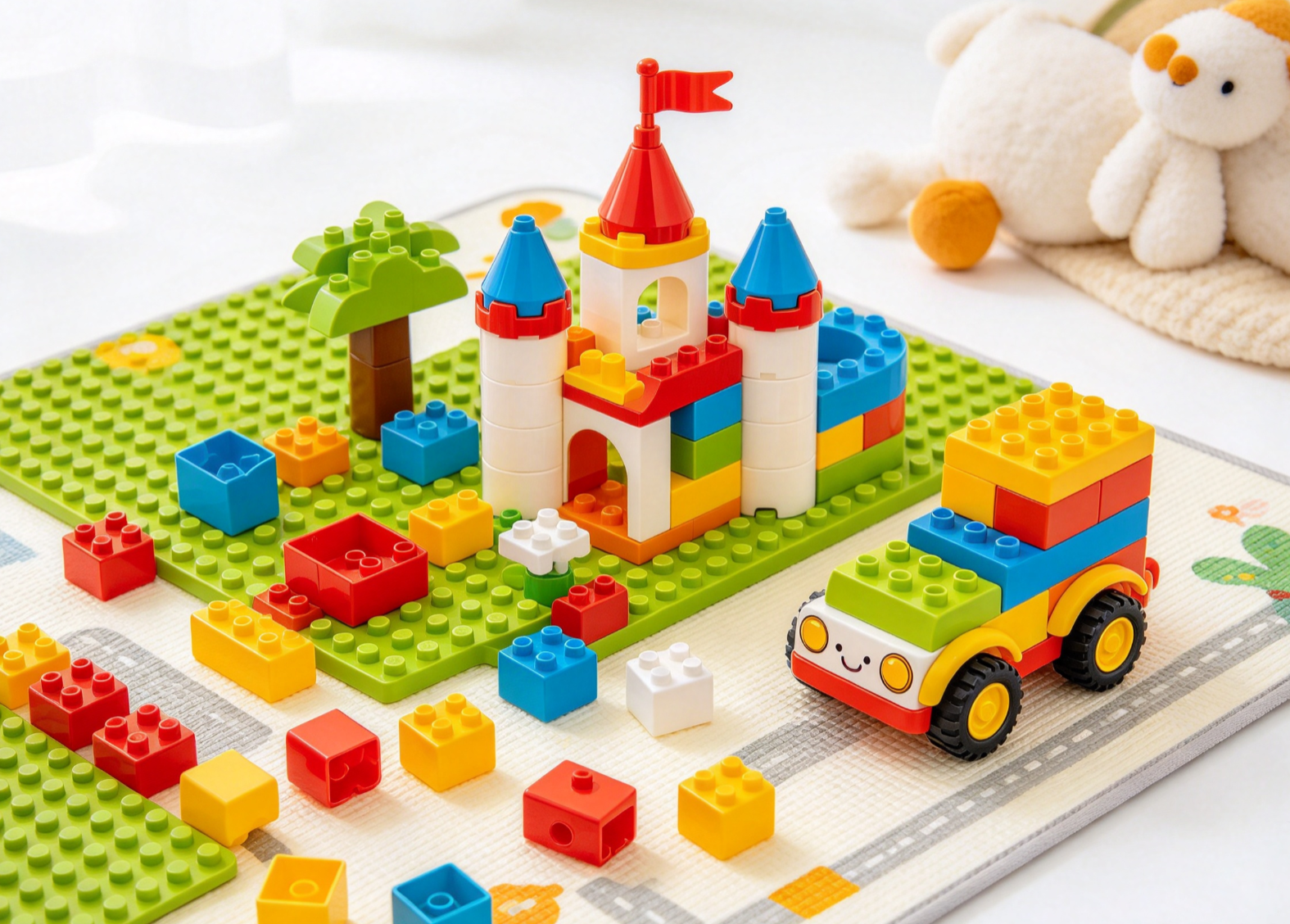
Quick answer: The best way to start with brick building toys for kids is to match set complexity to your child’s age, choose a brand with wide piece compatibility, and set up a dedicated building space at home. Starter sets with large, simple pieces work best for ages 3-6, while detailed, high-piece-count sets suit ages 7 and up.
Building blocks have been a childhood staple for generations, but the market has changed a lot since the days of a single plastic tub in the corner of the playroom. Parents today can choose from themed collections, STEM-focused kits, glow-in-the-dark pieces, and dozens of brands that all promise to spark creativity. With so many options, it’s easy to feel overwhelmed before you’ve even opened the box.
This guide breaks down exactly what to look for when shopping for kids brick building toys, how to match a set to your child’s age and skill level, and how to create a play environment that keeps them coming back to build. Whether your child is stacking their first tower or working through a 500-piece set solo, you’ll find practical steps to guide the process without the guesswork.
Why Brick Building Toys for Kids Are Worth the Investment
Brick sets aren’t just a way to pass a rainy afternoon. Research on early childhood development has long linked open-ended construction play to gains in spatial reasoning, fine motor control, and problem-solving skills. When a child figures out how two pieces fit together, or works backward to fix a wobbly structure, they’re practicing the same logical thinking that shows up later in math and science classes.
There’s also a practical case for parents. Unlike many electronic toys, brick sets don’t need batteries, software updates, or screens. A well-made set can be reassembled hundreds of times, which means the cost per hour of play drops steadily the longer a child owns it. Many families also find that brick building toys for kids hold their value well — pieces get passed down between siblings or even reused across entirely new sets years later.
For households trying to cut down on screen time, building blocks offer a genuine alternative that still holds a child’s attention. It’s tactile, it’s visual, and it produces something the child can point to and say, “I made that.”
How to Choose the Right Brick Building Toys by Age
Age recommendations on packaging are a good starting point, but they’re not the whole story. Here’s a general breakdown to help you shop with more confidence:
Ages 3-5: Look for oversized pieces that are easy for small hands to grip and snap together. Sets with fewer than 50 pieces and simple designs — cars, animals, basic houses — help build early confidence without frustration.
Ages 6-8: Children in this range can usually handle standard-sized bricks and instructions with numbered steps. Sets between 100 and 300 pieces, often themed around vehicles, buildings, or characters, strike a good balance between challenge and achievability.
Ages 9-12: Kids at this age often want more detail and realism. Sets with 300 to 800 pieces, moving parts, or multi-stage builds keep them engaged for longer stretches and reward patience with a more impressive finished model.
Ages 13 and up: Older kids and teens often gravitate toward display-worthy builds — architecture, vehicles with intricate detailing, or large-scale sets designed more for the building process than for imaginative play afterward.
If you’re shopping for a child who’s new to building, it’s usually better to choose a set slightly below their age recommendation. A quick early win builds the confidence needed to tackle harder projects later.
What to Look for in Quality Kids Brick Building Toys
Not all sets are created equal, even when the piece count looks similar on the box. A few factors matter more than marketing claims:
Safety
Check for compliance with safety standards relevant to your region — ASTM F963 in the US or EN71 in the EU. These certifications test for choking hazards, toxic materials, and structural durability. For younger children, confirm that pieces meet minimum size requirements to avoid swallowing risks.
Compatibility
One of the most overlooked factors when buying kids brick building toys is whether the pieces are compatible with sets your child already owns. Many alternative brick brands are designed to connect with the same stud-and-tube system used across the industry, which means kids can mix sets from different lines and brands to build bigger, more creative projects instead of being locked into a single ecosystem.
Piece Variety
A set with a good mix of basic bricks, specialty pieces, and connectors gives kids more room to experiment beyond the instructions. Sets that only include highly specific molded pieces for one particular model tend to get used once and then shelved.
Build Quality
Bricks that snap together with a firm, consistent click tend to hold up better over years of play than looser-fitting alternatives. If you can, check reviews for mentions of piece durability and color consistency across batches.
How to Set Up a Play Environment That Encourages Creativity
The right building set is only half the equation. Where and how a child builds matters just as much for keeping them engaged.
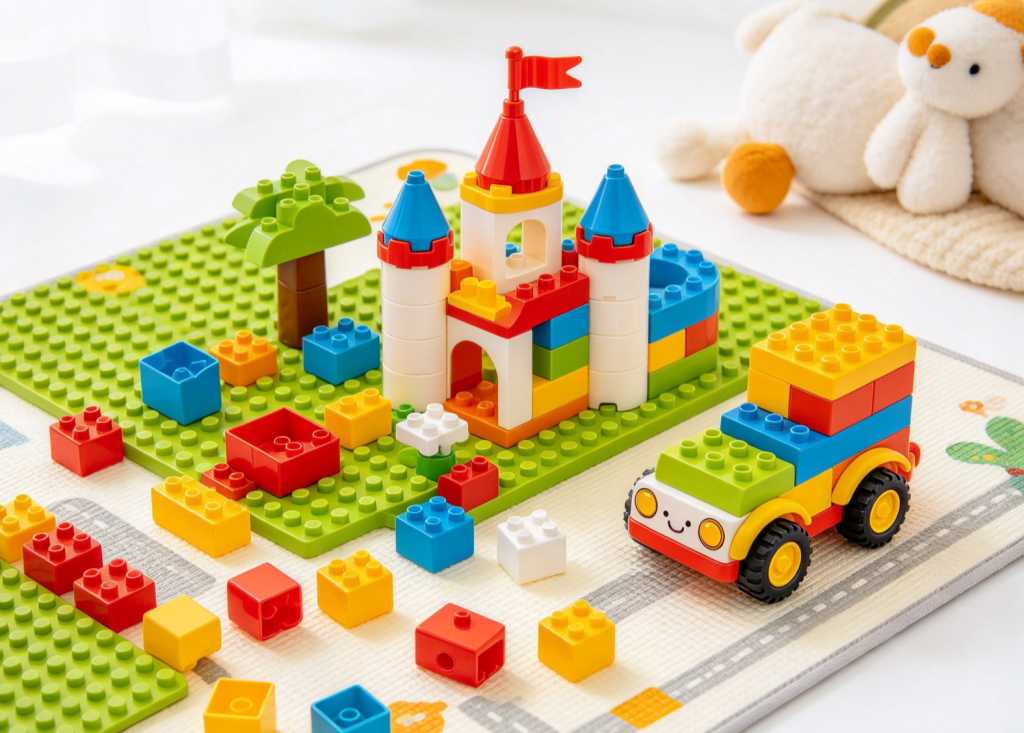
Start with a flat, stable surface at a comfortable height — a low table or a building mat on the floor both work well. A dedicated building mat also makes cleanup faster, since pieces can be gathered up in one motion rather than picked out of carpet fibers one by one.
Storage matters more than most parents expect. Clear bins sorted loosely by piece type (not color) help kids find what they need without dumping every set into one giant pile. For families with multiple sets, labeled bins by theme or size can prevent the frustration of hunting through thousands of pieces for one specific part.
Lighting is another small but meaningful detail. A well-lit space reduces eye strain during longer building sessions and makes it easier to spot small pieces on light-colored bricks.
Finally, leave a “finished” shelf or display area nearby. Kids are far more motivated to complete a build when they know it will be displayed rather than dismantled the same day.
Step-by-Step: Getting Your Child Started with Brick Building
If your child is brand new to building sets, here’s a simple process to ease them in:
- Start with free building. Before introducing instructions, let your child experiment with loose bricks to understand how pieces connect. This removes the pressure of “getting it right” on the first try.
- Choose a small, age-appropriate set. Pick something with a clear, achievable outcome — a simple vehicle or small building works well as a first project.
- Sit with them for the first build. Guide them through reading instructions, matching piece shapes, and following steps in order. This is where many kids learn how to interpret diagrams, a skill that carries over to future sets.
- Let them finish independently where possible. Step back once they’ve got the hang of it. Struggling through a tricky step and figuring it out solo builds real confidence.
- Celebrate the finished build. Display it somewhere visible. This small step reinforces the sense of accomplishment and makes them more likely to ask for the next set.
- Introduce more complex sets gradually. Increase piece count and build difficulty incrementally rather than jumping straight to the most advanced set available.
Tips for Keeping Kids Engaged Long-Term
The novelty of a new set fades faster than parents might hope. A few strategies help sustain interest over months and years rather than weeks:
- Rotate sets instead of leaving everything out. Too many options at once can be overwhelming. Store some sets away and rotate them back into circulation every few weeks.
- Encourage mash-up builds. Once your child owns a few sets, challenge them to combine pieces from different kits into something entirely new. This shifts the focus from following instructions to open-ended design.
- Set small challenges. “Build something that can hold a book” or “make a vehicle with wheels that actually turn” pushes kids to problem-solve rather than default to familiar builds.
- Join or start a build-sharing habit. Photographing finished models and sharing them with family, or comparing builds with friends, adds a social element that keeps motivation high.
- Tie builds to their current interests. A child who loves space, dinosaurs, or racing will stay more engaged with sets themed around what they already care about, rather than whatever happens to be on sale.
Why ModelBuilder Is a Smart LEGO Alternative
Parents comparing brands quickly discover that traditional big-name sets come at a premium price, and that premium doesn’t always translate to more play value. ModelBuilder offers an alternative worth considering for families building out a collection of brick building toys for kids without stretching the budget on every new set.
ModelBuilder’s building sets are designed with piece compatibility in mind, so kids can combine ModelBuilder sets with bricks from other collections instead of starting a separate, isolated pile of parts. The brand’s custom brick sets give families more flexibility to choose builds that match a child’s specific interests, rather than settling for whatever themed set happens to be available. For parents who want to go a step further, ModelBuilder also runs educational workshops that reinforce the same problem-solving and design skills kids pick up through independent building.
Community matters here too. ModelBuilder positions itself around builders sharing designs and finished projects rather than treating each purchase as a one-off transaction — a detail that matters for families who want their child’s interest in building to grow into an ongoing hobby rather than a single afternoon activity.
Getting Started Is Simpler Than It Looks
Choosing the right brick building toys for kids doesn’t require an engineering degree or a big budget. Match the set to your child’s age and current skill level, prioritize safety and piece compatibility over flashy packaging, and set up a space that makes building easy to start and easy to clean up. From there, the habit tends to build itself — one brick at a time.
If your child is just getting started, pick one small set this week rather than a large collection. A single successful build does more for long-term engagement than a shelf full of unopened boxes.
Frequently Asked Questions
What age should kids start with brick building toys?
Most children can start with oversized, simplified brick sets around age 2 to 3. Standard-sized bricks and more complex instructions typically become appropriate around age 6, depending on the child’s fine motor development.
Are LEGO alternatives like ModelBuilder safe for kids?
Reputable LEGO alternative brands, including ModelBuilder, manufacture pieces to meet the same general safety standards as major brands, such as choking hazard testing and non-toxic materials. Always check the specific certification listed on the packaging for your region.
How many pieces should a beginner set have?
For a child building for the first time, a set with 50 to 150 pieces is usually enough to feel achievable without becoming frustrating. Piece count can increase gradually as their skills and patience develop.
Do different brick brands work together?
Many brick brands, including ModelBuilder, use a compatible stud-and-tube connection system, which allows pieces from different sets and brands to be combined. It’s worth checking product details before assuming full compatibility, as not every brand uses the same standard.
How can I keep my child interested in building over time?
Rotating sets, setting small design challenges, and tying new sets to your child’s current interests all help sustain long-term engagement. Displaying finished builds also reinforces a sense of accomplishment that encourages kids to start their next project.


