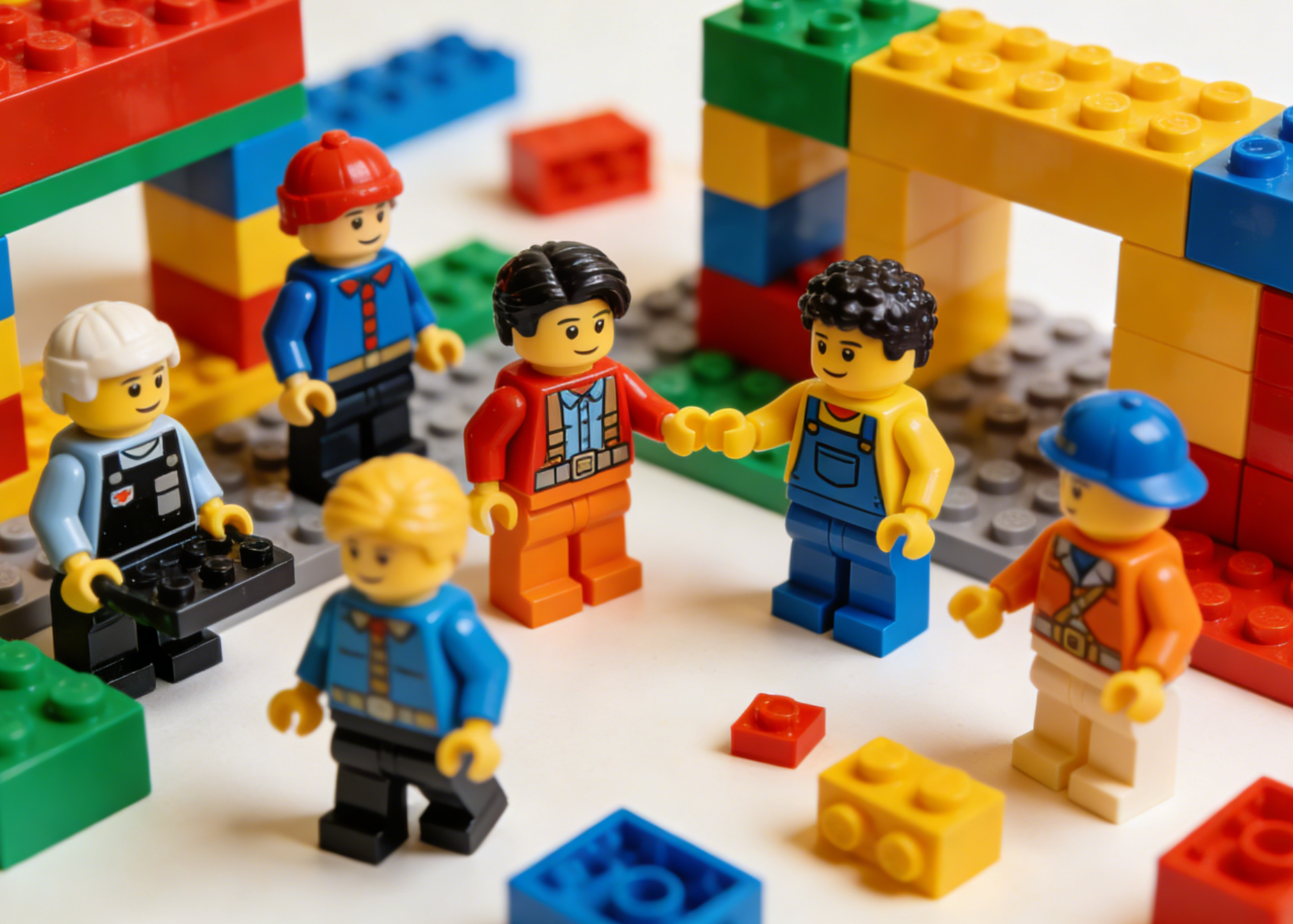


STEM learning does not have to begin with a textbook, a science worksheet, or an expensive robotics kit. Sometimes, it starts with a handful of building bricks, a curious question, and a structure that refuses to stay upright.
A child who tries to build a bridge across two stacks of books is already exploring engineering. Someone who compares two tower designs is experimenting with variables. And when a young builder changes a design after watching it collapse, they are practising one of the most important habits in science: learning from evidence.
That is the real potential of well-chosen STEM toys. They give children something they can touch, change, test, and improve. For parents and educators in the United States and Europe, construction-based learning toys offer a particularly accessible way to introduce science, technology, engineering, and mathematics without making play feel like another school lesson.
But how do you get more educational value from a building set? And how can you choose activities that engage different children without relying on outdated ideas about what boys or girls are supposed to enjoy?
This guide takes a practical approach. Instead of simply listing toy categories, it explains how to turn building sessions into small engineering projects, how to introduce meaningful challenges, and how to recognise genuine STEM learning in everyday play.
1. Start with a Question, Not a Toy
One common mistake when buying educational toys is focusing too heavily on the product label. A box might say STEM, engineering, or educational, but those words alone do not guarantee a meaningful learning experience.
A more useful starting point is a question that gives a child something to investigate.
For example:
- Can you build a tower that stands taller than a water bottle?
- How can you make a bridge strong enough to support a small toy car?
- Can you design a vehicle that moves without being pushed by hand?
- What happens if you change the shape of the base?
- Can you create a building that uses fewer pieces but remains stable?
These questions turn construction into an investigation. Children are no longer simply following instructions to reproduce a finished model. They have a problem to solve, and there may be several possible answers.
This is where STEM toys for boys and STEM toys for girls can offer genuine educational value. The learning opportunity comes from the activity itself, not from whether a product is marketed towards one gender.
A building set that allows children to experiment with shapes, balance, connections, and mechanical movement can support a wide range of interests. One child may approach a challenge like an architect, another like an inventor, and another like a scientist testing a theory.
The important thing is to give each child room to explore.
2. Understand the Four STEM Skills Behind Building Play
A construction set can introduce several areas of STEM learning at once. Parents do not need to explain every scientific term while a child is playing. However, understanding the underlying skills makes it easier to create activities with a clear purpose.
Science: Observe What Happens
Science begins with observation. Children notice patterns, compare results, and ask why something happened.
A simple example is building two towers with different bases. One has a narrow foundation, while the other has a wider one. After comparing their stability, children can begin to understand how the distribution of weight affects a structure.
Useful questions include:
- Which tower moves more easily when the table is gently shaken?
- Does adding weight at the top change its stability?
- What happens when the base becomes wider?
- Can you predict which design will remain standing?
The adult does not need to provide an immediate explanation. Allowing children to make predictions and then compare them with the result is often more valuable.
Technology: Understand How Parts Work Together
Technology is not limited to computers, tablets, and coding. It also includes tools and systems designed to solve practical problems.
Building toys can introduce this idea through moving parts, mechanical connections, wheels, axles, gears, and other functional components where available.
For example, a child building a simple vehicle can investigate how the position of the wheels affects movement. They might compare a model with freely rotating wheels against one where the wheels rub against the body.
The key learning point is that a finished object is a system. Its individual components need to work together.
Engineering: Design, Test, and Improve
Engineering is one of the most natural connections to construction toys.
A child starts with a goal, creates a design, tests it, identifies weaknesses, and makes changes. This process can happen in a few minutes or over several days.
It is worth encouraging children to think of their first attempt as a prototype rather than a final result. A model that falls apart has not necessarily failed as a learning activity. It has revealed something about the design.
Mathematics: Measure and Compare
Building provides plenty of opportunities to use numbers in a practical setting.
Children can count pieces, compare lengths, estimate heights, identify symmetrical shapes, and measure distances. Older children can record results in tables or calculate differences between attempts.
For instance, a child testing tower stability might record how many seconds each design remains standing after a gentle movement. The activity introduces measurement and comparison without requiring a formal maths exercise.
3. Use the Engineering Design Cycle at Home
A useful way to organise STEM building activities is to follow a simple engineering design cycle.
It does not need to be complicated. Five stages are enough to turn an ordinary building session into a purposeful project.
Stage 1: Ask
Introduce a clear challenge.
For example: “Can you build a bridge that spans 30 centimetres and supports a small toy?”
The challenge should be specific enough to give the child direction, but open enough to allow different solutions.
Stage 2: Imagine
Before touching the bricks, ask the child to think about possible designs.
They might sketch a quick idea, arrange a few pieces on the table, or explain their plan aloud.
Avoid correcting every unusual suggestion. A child who proposes an unconventional structure may discover a useful solution through experimentation.
Stage 3: Build
Now the child can create the first version.
For younger builders, a smaller selection of pieces can make the task easier to manage. Older children may enjoy working with a larger collection and more detailed design requirements.
The goal is to create a testable model, not necessarily a perfect one.
Stage 4: Test
Put the design through a consistent test.
For the bridge challenge, place the same small objects on the bridge one at a time. Record how many it supports before bending, shifting, or collapsing.
Consistency matters. If the test changes between attempts, it becomes harder to understand why the result changed.
Stage 5: Improve
Ask the child what they would change.
Perhaps the bridge needs a stronger middle section. Maybe the supports are too far apart. The next version can test one of those ideas.
This final stage is particularly important. Children begin to see that good designs often emerge through repeated improvement rather than one brilliant first attempt.
4. Five Practical STEM Building Challenges to Try
The best activities do not always require specialist equipment. A basic construction set, a ruler, paper, and a few household objects can provide plenty of opportunities for investigation.
Here are five challenges that work well at home, in clubs, or in classroom settings.
Challenge 1: The Strongest Bridge
<text>Main learning areas: Engineering, mathematics, structural design</text>
<text>Materials: Building bricks, two stable supports, a ruler, and small identical objects for testing</text>
Set two supports a fixed distance apart. Ask the child to build a bridge that connects them without touching the surface underneath.
Once the bridge is complete, add the test objects one at a time. Record how many it can support.
Then invite the child to create a second design.
To make the experiment more meaningful, keep the distance between the supports and the test objects the same. Change only one feature of the bridge, such as the shape of its underside or the arrangement of its supports.
What children learn: Different structural arrangements distribute weight differently. They also discover that using more pieces does not automatically produce a stronger design.
Challenge 2: The Tallest Freestanding Tower
<text>Main learning areas: Physics, geometry, balance, measurement</text>
Give each child the same number of building pieces and a fixed amount of time.
The objective is to build the tallest tower that can stand independently for at least 30 seconds.
Measure each tower and record the results. Then ask children to explain what made their structures stable or unstable.
For a second round, introduce a new condition: the tower must have a wider base, use only a particular group of shapes, or support a small object at the top.
This challenge is useful because children quickly discover the relationship between height, balance, and the shape of a foundation.
Challenge 3: Design a Vehicle for a Journey
<text>Main learning areas: Technology, engineering, measurement</text>
Ask children to build a vehicle that can travel down a gently sloping ramp.
If the building set includes wheels and suitable mechanical components, they can experiment with different arrangements. If not, the activity can focus on designing the vehicle body and investigating how its shape and weight affect movement using an appropriate rolling base.
Mark a starting line and measure how far the vehicle travels.
Try changing one feature at a time. Does a different wheel position affect its movement? Does the vehicle travel differently when its body is heavier?
Make sure the ramp is stable and that children test their models in a clear area.
Challenge 4: Build a Model of an Accessible Community
<text>Main learning areas: Design, geometry, problem-solving, social awareness</text>
Invite children to design a small community containing several buildings and shared spaces.
Rather than focusing only on appearance, give the project a practical design brief:
“Create a community where people can move safely between the important places.”
Children might include homes, a school, a library, a park, or a healthcare building. They can then consider pathways, entrances, open spaces, and how different structures connect.
For older children, introduce an accessibility requirement. Can they create routes that are wide and clear enough for a wheelchair model or small toy vehicle?
This activity introduces an important engineering principle: good design considers the people who will use it.
Challenge 5: The Limited-Materials Invention
<text>Main learning areas: Creative engineering, resource planning, problem-solving</text>
Give children a limited selection of building pieces and ask them to invent something that solves a simple everyday problem.
It could be a desk organiser, a holder for a small object, a miniature shelter, or a device that helps move something from one place to another.
The restriction is deliberate. Children must think about how to use available materials rather than simply adding more pieces whenever a design becomes difficult.
At the end, ask each builder to explain:
- What problem does the invention solve?
- Which part of the design is most important?
- What was difficult to build?
- What would they improve with another attempt?
This final explanation helps children connect practical construction with communication and design thinking.
5. How to Choose STEM Toys That Encourage Real Investigation
Not every building set offers the same learning opportunities. A useful purchase should provide more than a short assembly experience.
When comparing STEM toys for boys and STEM toys for girls, look beyond the packaging and consider what children can actually do with the pieces.

Look for More Than One Possible Build
A set that produces only one finished model may still teach useful construction skills. However, sets with reusable pieces and opportunities for modification can support a longer sequence of experiments.
Ask whether the child can dismantle the model, change its structure, combine pieces, and create something new.
The ability to rebuild is particularly valuable because it allows children to test ideas repeatedly.
Check the Quality of the Connections
Building experiences can become frustrating when pieces do not connect consistently or structures fall apart unexpectedly.
Look for clear product information about materials, construction quality, and the intended building system.
If you already own bricks from another manufacturer, do not assume that every alternative set will fit them. Compatibility depends on the specific product and connection design. Check the manufacturer’s specifications before mixing collections.
Consider the Instructions
Instructions can help children understand how a model is assembled, but they should not be the only way to use a set.
A good learning experience often moves between guided construction and independent experimentation.
For example, a child might first follow the instructions to build a vehicle, then modify it to carry a heavier load or travel a longer distance.
Choose a Suitable Level of Challenge
A set that is too simple may lose its appeal quickly. One that is too complicated can make a child feel overwhelmed.
Consider the manufacturer’s recommended age, the number and size of the pieces, the complexity of the instructions, and the child’s experience with similar activities.
The aim is not to find the most complicated set. It is to find one that offers a manageable challenge with room to progress.
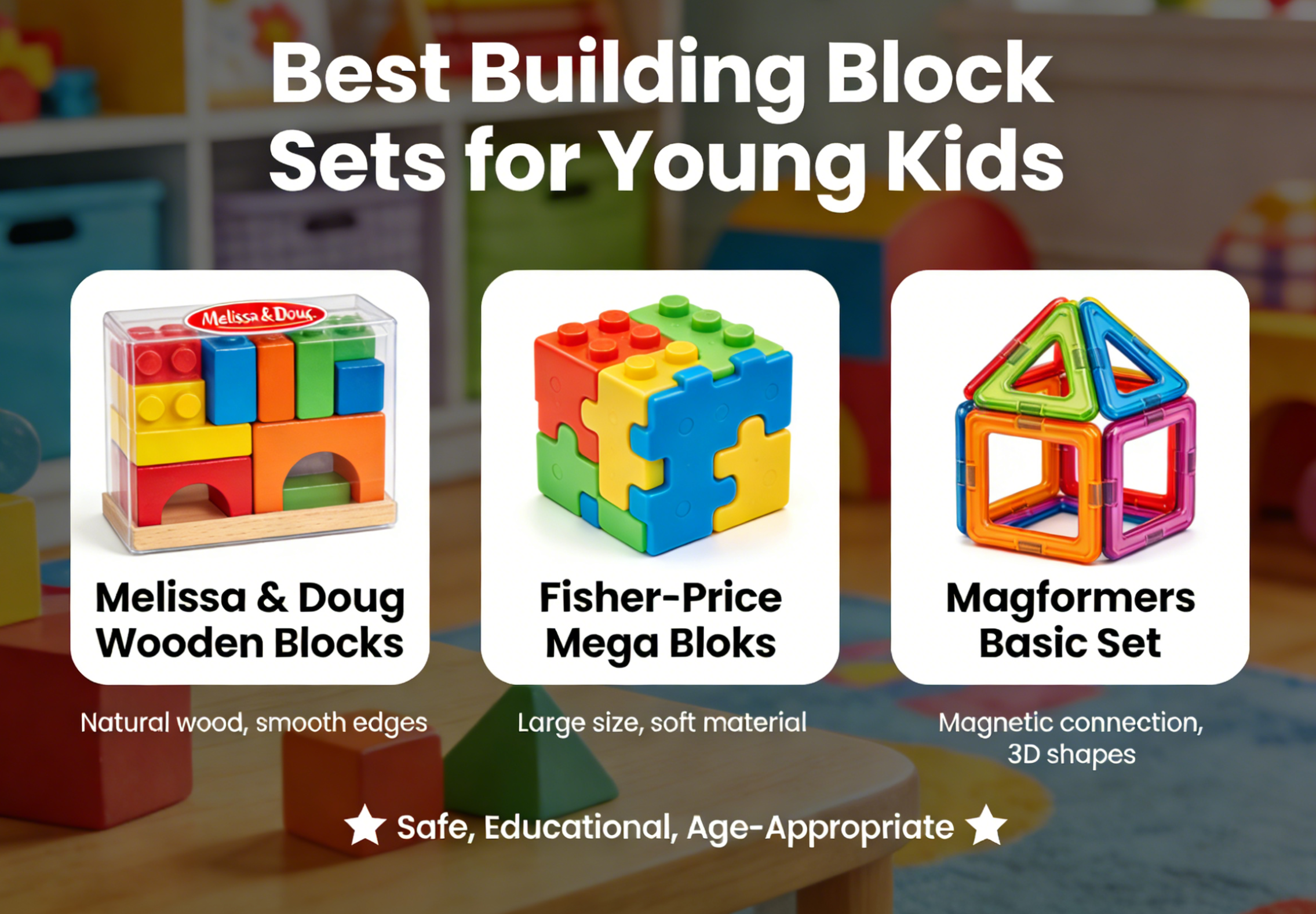
For a broader look at how different construction formats support learning and play, explore ModelBuilder’s guide to block building toys.
6. Make STEM Activities Inclusive Without Making Them Complicated
There is no reason to divide engineering, construction, or scientific exploration into separate activities for boys and girls.
Children have individual interests. Some enjoy designing buildings, some prefer vehicles, and others are fascinated by mechanical systems or imaginative inventions. These preferences are not determined by gender.
When selecting STEM toys for boys or STEM toys for girls, parents and educators should focus on the opportunities a toy provides rather than the colour of its packaging or the audience suggested by its advertising.
A few simple approaches can help.
Offer a variety of project themes. Include architecture, transport, nature, space, everyday inventions, and creative structures. A broad selection gives children more ways to find a project that interests them.
Rotate leadership roles. During group activities, allow different children to take responsibility for planning, building, testing, and recording results. Avoid assigning roles based on assumptions about personality or gender.
Celebrate the thinking process. Praise a child for noticing a weakness in a design, explaining a decision, or trying a different approach. Do not focus only on who builds the tallest or most impressive model.
Make room for different solutions. Two children may solve the same challenge in completely different ways. That is a strength of open-ended engineering activities, not a problem to correct.
An inclusive building environment does not need a special formula. It needs varied opportunities, fair encouragement, and the freedom to experiment.
7. Turn a Building Session into a Small STEM Project
For parents and teachers who want to go beyond occasional challenges, a simple project record can make a noticeable difference.
Children do not need a complicated science notebook. A single sheet of paper is enough.
Try using this format:
| Project stage | What to record |
|---|---|
| The problem | What are we trying to build or solve? |
| First idea | What do we think will work? |
| Materials | Which pieces and tools are needed? |
| First test | What happened when we tried it? |
| Observation | What worked, and what did not? |
| Improvement | What will we change next time? |
| Final result | What did we discover? |
This record helps children see progress across several attempts. It also gives parents and teachers something more meaningful to discuss than whether a model looks good.
For example, a child might discover that a bridge with a triangular support arrangement performs better in their chosen test than an earlier flat design. They can draw both versions, compare the results, and explain what changed.
For older children, the project record can include measurements, labelled diagrams, and simple charts.
For younger children, photographs and short spoken explanations may be more appropriate.
The purpose is not to turn play into paperwork. It is to help children recognise their own thinking.
8. How Parents and Teachers Can Support Learning Without Taking Over
Adults play an important role in STEM activities, but there is a difference between supporting a child and doing the thinking for them.
If a tower collapses, the immediate temptation may be to show the child exactly how to rebuild it. Sometimes that is useful, particularly when a child is frustrated or needs help understanding a basic connection.
However, it is often better to begin with a question.
Try asking:
- What do you think caused it to fall?
- Which part moved first?
- Would changing the base make a difference?
- How could we test that idea?
- What would you keep the same in your next attempt?
These questions encourage children to explain their reasoning.
It is also important to give them time. A child may need several minutes to examine a model before deciding what to change. Resist the urge to fill every quiet moment with instructions.
In a classroom, teachers can use a shared project brief while allowing students to develop individual designs. This creates a common learning objective without requiring every child to produce an identical result.
At home, parents can participate as fellow problem-solvers. Build your own version, make a prediction, and let children challenge your design. A little friendly competition can make the activity more engaging, provided the focus stays on discovery rather than winning.
9. Why Construction-Based STEM Toys Deserve a Place in Everyday Learning
Digital tools have an important role in modern education, but hands-on building offers a different kind of experience.
Children can physically see when a connection is too weak, feel when two pieces do not fit, and observe how a change in structure affects the whole model.
That immediate feedback makes abstract ideas easier to explore.
Construction activities can also be revisited. A set used for a simple tower challenge today might become part of a bridge project next week and a miniature city later in the month.
This flexibility is one reason many families and educators consider building sets a practical addition to their learning resources.
ModelBuilder focuses on alternative building block products, including custom brick sets, themed collections, and educational workshops. Its approach includes concept development, material selection, prototype development, and production.
For families and educators exploring construction-based learning, ModelBuilder’s website provides a starting point for discovering its building solutions.
You can also explore the existing guide to building block sets for children for further ideas about using construction play in children’s learning environments.
The most useful STEM toy is not necessarily the one with the most components or the most impressive packaging. It is the one that encourages children to ask questions, test possibilities, and return with a better idea.
10. A Simple Four-Week STEM Building Plan
If you are not sure where to begin, try introducing one project each week. This gives children time to explore different engineering ideas without making the activity feel like a formal course.
Week 1: Explore structure
Build towers, walls, and simple bridges. Compare different foundations and notice which designs remain stable.
Week 2: Investigate movement
Create vehicles or moving structures using suitable building components. Explore how the arrangement of parts affects movement.
Week 3: Solve a design problem
Introduce a practical brief, such as creating a shelter for a small toy or designing a route through a miniature community.
Week 4: Improve an earlier design
Ask children to choose one previous project and make it better. They can use their notes or photographs to explain what they changed and why.
At the end of the month, invite each child to present one creation. They can describe the original challenge, explain the most difficult part, and show how their final design differs from the first attempt.
This presentation does not need to be formal. A short explanation to family members or classmates is enough to practise communication and reflection.
Most importantly, let children choose what they want to build next. A successful STEM activity should leave them with another question, not just a completed task.
Conclusion: Build Curiosity, One Experiment at a Time
STEM learning is not reserved for specialist classrooms or children who already know they love science and engineering. It can begin with an ordinary building set and a question that has more than one possible answer.
By introducing simple design challenges, encouraging repeated testing, and helping children explain their decisions, parents and educators can turn construction play into a meaningful learning experience.
The best approach is flexible. Start with a problem that feels interesting, provide suitable materials, and allow children to experiment. Some projects will work immediately. Others will collapse, wobble, or need several redesigns. All of those outcomes can provide useful learning opportunities.
Whether families are searching for STEM toys for boys or STEM toys for girls, the most important qualities remain the same: room to explore, opportunities to solve problems, and the freedom to create something that belongs to the child.
A box of bricks may look simple. The ideas children build with it can be anything but.
Frequently Asked Questions
1. What are the best STEM toys for boys and girls?
The best STEM toys are those that encourage children to explore, experiment, and solve problems. Construction bricks, engineering kits, robotics sets, magnetic building systems, and science activity kits can all provide useful learning opportunities. Choose based on the child’s interests, age, abilities, and the type of activity they enjoy rather than gender-based marketing.
2. Can building block toys really help children learn STEM?
Yes. Building activities can introduce spatial reasoning, geometry, measurement, structural design, and basic engineering concepts. Children can also practise planning, testing, and improving their ideas. The learning value is usually greater when they are encouraged to modify designs and investigate how different choices affect the result.
3. At what age should children start using STEM building toys?
There is no single starting age for every type of building toy. Younger children can begin with age-appropriate, larger construction pieces under suitable supervision. More detailed brick sets, mechanical components, and complex engineering challenges are generally better suited to older children. Always follow the manufacturer’s recommended age range and safety guidance.
4. How can parents make building toys more educational?
Introduce a practical challenge rather than asking children only to copy a model. For example, ask them to build a stable tower, design a bridge, or create a vehicle that can travel a certain distance. Encourage them to predict what will happen, test their design, and explain what they would change. Simple measurements and drawings can make the activity even more valuable.
5. Are alternative building block brands suitable for STEM activities?
They can be, provided the sets offer suitable construction opportunities and are appropriate for the child’s age. When comparing alternative building block brands, consider connection quality, material information, instructions, available components, and the potential for rebuilding or modifying models. Do not assume that different brands are compatible; check the specifications of individual products before combining them.