

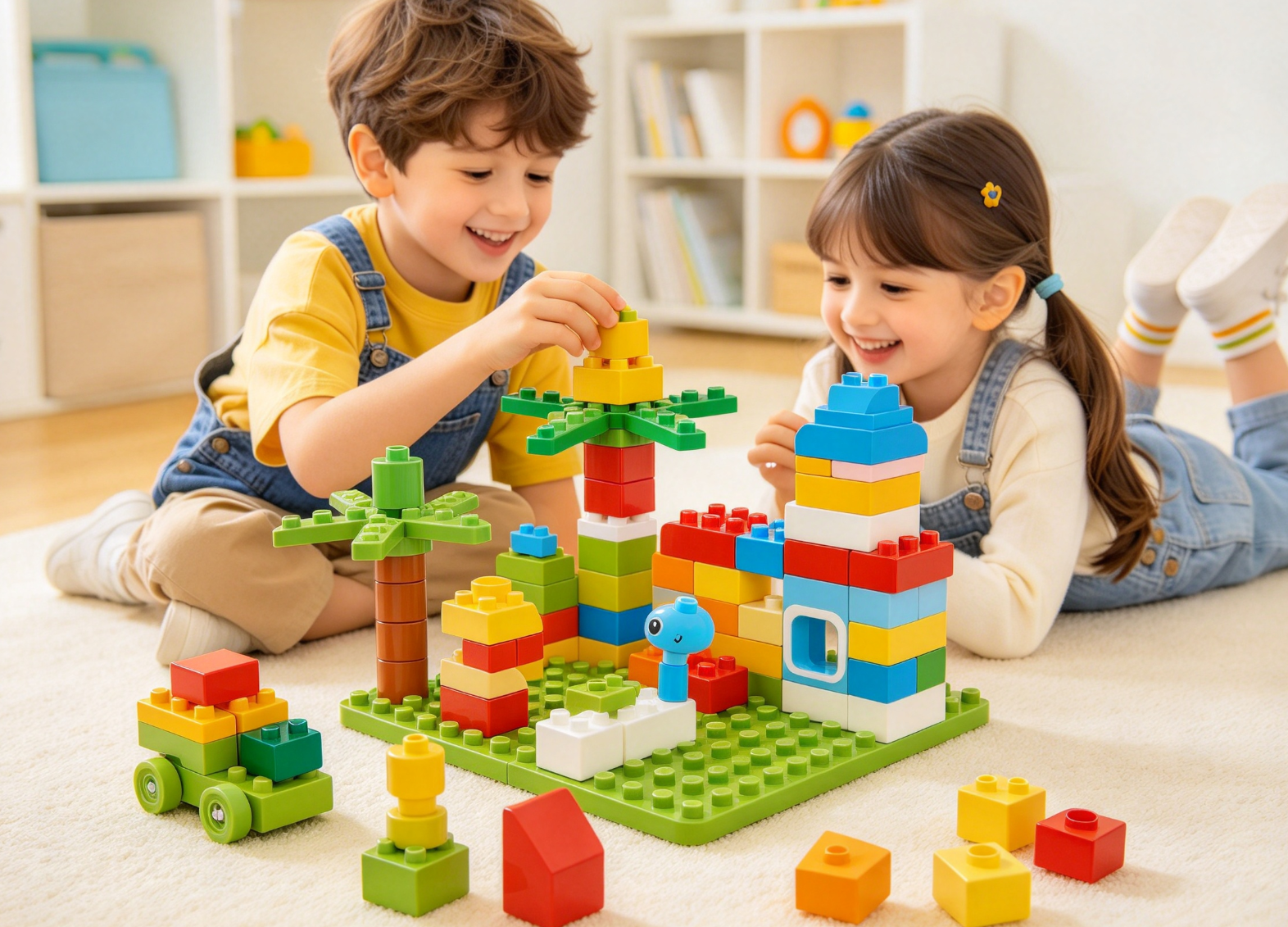
TL;DR: The best creative building toys for kids combine age-appropriate piece sizes, open-ended designs, and compatibility with other sets so children can keep building as their skills grow. Look for brands offering creative building blocks for kids that balance guided instructions with free-form play, like ModelBuilder’s compatible brick systems. Pair the right set with a dedicated play space and consistent encouragement to keep kids engaged for years, not weeks.
Few toys hold a child’s attention quite like a pile of building blocks. There’s something about snapping pieces together, watching an idea take shape, and tearing it all down to start again that never seems to get old. But walk into any toy aisle today and you’ll find dozens of brands promising the same thing: creativity, learning, fun. So how do you actually pick the right set, and more importantly, how do you turn a one-time purchase into a toy your child reaches for again and again?
This guide walks through exactly that. We’ll cover why building toys matter developmentally, what to look for when buying a set, how to set up a space that invites play, and how to guide your child through their first big build without taking over the project yourself. Along the way, we’ll also look at where ModelBuilder fits into the picture as a practical, budget-conscious option for families exploring alternatives to traditional brick brands.
Why Creative Building Toys Matter for Kids’ Development
Building blocks aren’t just a way to pass an afternoon. Decades of child development research point to construction play as one of the most effective tools for building cognitive and physical skills in young children.
Fine motor development comes first. Pinching, twisting, and snapping small pieces together strengthens the hand muscles kids need for writing, using utensils, and other everyday tasks.
Spatial reasoning improves with every build. Figuring out how a flat instruction diagram translates into a three-dimensional structure trains the brain to think in multiple dimensions, a skill that carries directly into math and engineering later in life.
Problem-solving skills get a workout too. A tower that keeps collapsing forces a child to test theories, adjust, and try again. That loop of trial and error builds resilience in a low-stakes, genuinely fun way.
Social and emotional growth happens when building becomes a shared activity. Siblings negotiating who gets which pieces, or a parent and child working through a tricky step together, teaches patience, turn-taking, and collaboration.
This is exactly why creative building blocks for kids have earned a permanent place in classrooms and homes across the US and Europe. They aren’t a passing trend. They’re a developmental tool disguised as a toy.
How to Choose the Right Creative Building Blocks for Kids
Not all building sets are created equal, and the “best” one depends heavily on your child’s age, interests, and current skill level. Here’s what to actually look for.
Match the Set to Your Child’s Age and Skill Level
Younger children (ages 3-5) need larger pieces that are easy to grip and impossible to swallow, with simple instructions or none at all. Kids aged 6-9 can usually handle smaller standard-sized bricks and basic instruction booklets. For ages 10 and up, look for sets with hundreds or even thousands of pieces, moving parts, or thematic complexity.
Prioritize Open-Ended Play Over One-Time Builds
A set that can only ever become one thing loses its appeal fast. The most valuable creative building toys for kids are the ones that can be rebuilt into dozens of different creations using the same pieces. Choose brands that encourage freeform construction alongside guided instructions, rather than sets that become shelf decorations the moment they’re assembled.
Check for Cross-Compatibility
One underrated factor: does the brand’s brick system work with other popular building sets? Compatible systems let your child combine new purchases with their existing collection instead of starting from scratch every time. This single factor can dramatically extend the life and value of a building toy collection.
Look at Material Quality and Safety Certifications
In the US and Europe, legitimate toy brands will list compliance with safety standards like ASTM F963 (US) or EN71 (EU). Don’t skip this step, especially for sets intended for children under 6.
Consider Theme and Personal Interest
A child who loves dinosaurs will engage far more with a building set themed around prehistoric creatures than a generic block set, even if the piece count and quality are identical. Letting your child pick a theme they’re excited about increases the odds the toy actually gets used.
How to Set Up an Engaging Building Play Space at Home
Even the best building set won’t get much use if there’s nowhere comfortable to use it. A dedicated building zone, even a small one, makes a measurable difference in how often kids engage with construction toys.
Choose a flat, stable surface. A dedicated table, a section of carpet, or a building mat keeps pieces contained and prevents frustrating collapses mid-build.
Store pieces by type or color. Clear bins with labels help kids find what they need without dumping every piece onto the floor. This also teaches basic sorting and organizational skills as a side benefit.
Keep instructions accessible. Whether it’s a printed booklet or a tablet propped on a stand, kids build with more confidence when they’re not constantly asking for help finding the right diagram page.
Display finished builds. A shelf or windowsill dedicated to completed projects gives kids a sense of accomplishment and a reason to keep building new things to add to the collection.
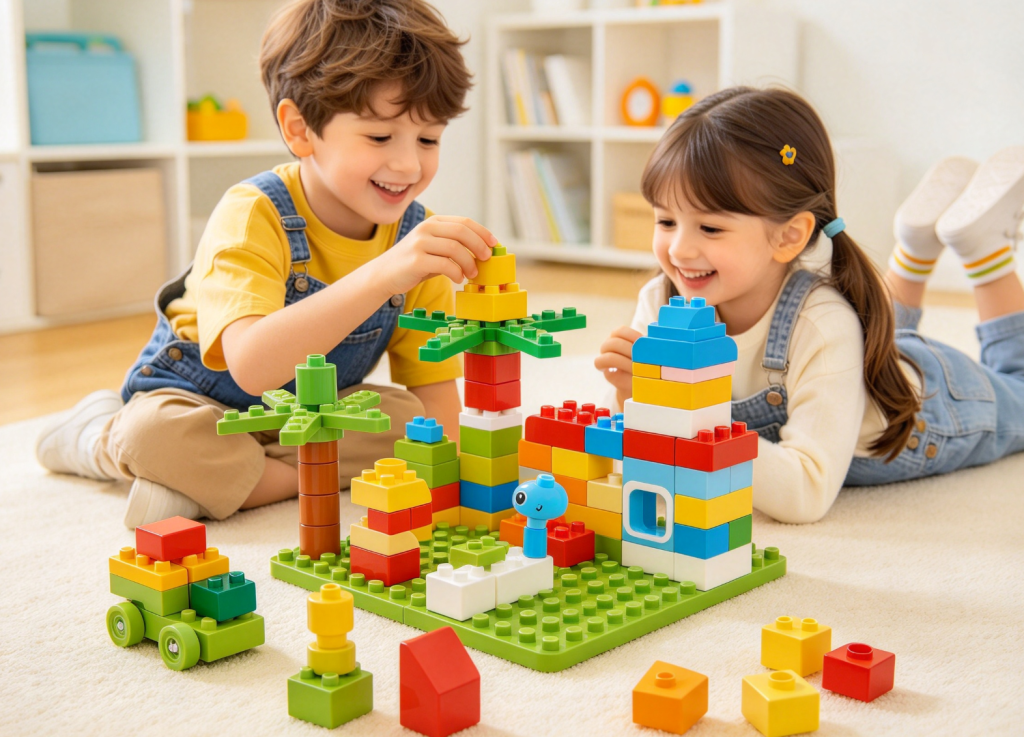
Step-by-Step: How to Guide Your Child Through Their First Big Build
If your child is tackling a larger or more complex set for the first time, a little guidance goes a long way, without taking over the fun.
Step 1: Sort the pieces together. Before opening the instructions, spend a few minutes grouping pieces by color or size. This cuts down on frustration later and gives you a natural starting conversation about the project ahead.
Step 2: Read through the instructions as a team. Flip through the booklet together first so your child has a sense of what they’re building toward. For younger kids, this can simply mean looking at the pictures.
Step 3: Let your child lead, and step back. Resist the urge to snap pieces into place yourself. Offer verbal guidance (“try turning that piece around”) instead of physically taking over.
Step 4: Build in short sessions. Attention spans are limited, especially for younger children. Breaking a 200-piece build into three or four shorter sessions keeps the experience enjoyable rather than exhausting.
Step 5: Celebrate the finished product. Take a photo, find a spot to display it, or let your child show it off to family. This reinforces the sense of achievement that keeps kids coming back for the next build.
How to Keep Kids Motivated and Coming Back to Their Building Toys
A building set that gets used once and then forgotten isn’t doing its job. Here’s how to keep the momentum going.
Rotate sets instead of leaving everything out at once. Novelty matters. Putting a few sets away and reintroducing them a month later often reignites interest more effectively than buying something brand new.
Introduce building challenges. Set a timer and challenge your child to build the tallest tower, the fastest car, or a structure using only ten pieces. Challenges turn familiar bricks into a fresh activity.
Mix sets together. Combining pieces from different sets (as long as they’re compatible) opens up entirely new creative possibilities and resets a child’s interest in toys they might have otherwise outgrown.
Join the conversation online. Many families now share builds in online communities, trading ideas and getting inspiration from other kids’ creations. This kind of peer engagement can be a powerful motivator, especially for children aged 8 and up.
ModelBuilder: A Smart LEGO Alternative Worth Considering
Traditional brick brands dominate the shelves, but they’re far from the only option, and often not the most practical one for budget-conscious families. ModelBuilder has built a reputation as a reliable source for creative building toys for kids, offering compatible brick sets, themed collections, and even educational workshops designed to build problem-solving and hands-on skills.
What sets ModelBuilder apart is the focus on accessible creativity. The brand’s custom brick sets are designed for builders of varying skill levels, while themed collections give kids a reason to get excited about a specific project. For families newer to building toys, ModelBuilder’s educational workshops offer structured guidance that helps kids develop confidence before tackling bigger, more independent builds.
If you’re comparing options for your family, it’s worth taking a look at ModelBuilder’s full range before committing to a set. Quality, compatibility, and price all vary significantly across brands, and a little research upfront can save you from buying a toy that ends up forgotten in a closet within a month.
Building Skills That Last Beyond the Playroom
Choosing the right building toy comes down to matching the set to your child’s age, prioritizing open-ended creativity over single-use designs, and creating an environment that makes building easy and fun. The skills kids develop at the building table, patience, problem-solving, spatial reasoning, stick with them far longer than the toy itself.
Start small if you’re unsure where to begin. Pick one set that matches your child’s current interests, set aside a regular time to build together, and let their curiosity guide the rest.
Frequently Asked Questions
What age should kids start using building toys?
Most children can begin with large, simple building blocks around age 2 to 3. Standard-sized brick sets with basic instructions are typically appropriate starting around age 6, while complex, high-piece-count sets suit children aged 10 and older.
Are LEGO alternatives like ModelBuilder safe for kids?
Reputable LEGO alternative brands, including ModelBuilder, are manufactured to meet recognized safety standards such as ASTM F963 in the US and EN71 in Europe. Always check a product’s packaging or listing for safety certification before purchasing, especially for children under 6.
How do I know if a building set is compatible with other brick brands?
Check the product description or manufacturer’s website for compatibility information. Many LEGO alternative brands, including ModelBuilder, design their bricks to connect with other popular building systems, allowing kids to combine sets from multiple brands.
What’s the difference between guided building sets and open-ended building sets?
Guided sets come with step-by-step instructions leading to one specific model, which is great for following directions and building confidence. Open-ended sets encourage freeform creativity without a fixed outcome. The most versatile creative building blocks for kids typically allow for both styles of play within the same set.
How can I get my child more interested in building toys?
Rotate sets regularly, introduce timed building challenges, combine pieces from different sets, and display finished creations. Letting your child choose themes they’re genuinely excited about also makes a significant difference in long-term engagement.


