

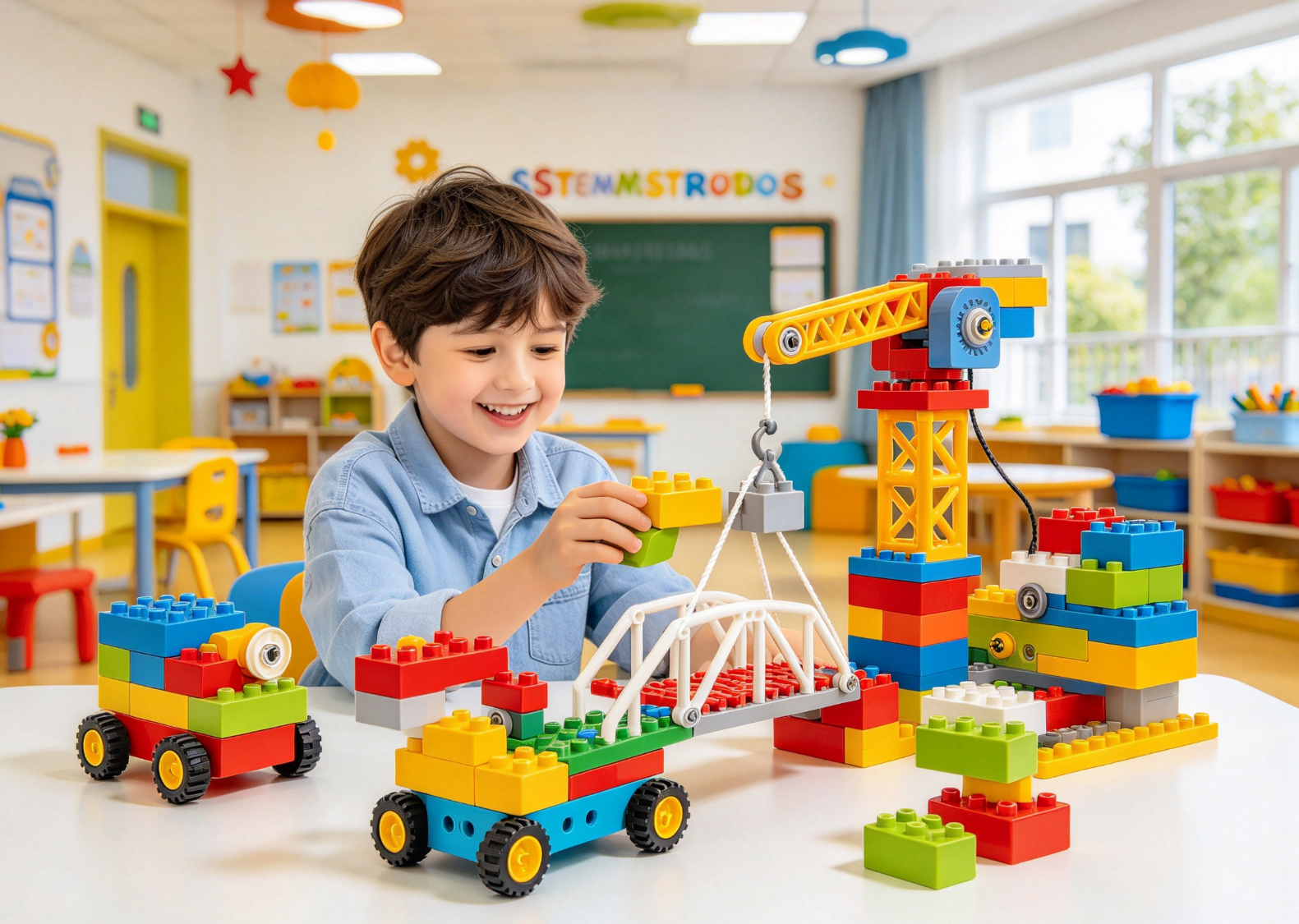
TL;DR: Choosing the right STEM building sets for kids comes down to matching complexity to age, creating a dedicated build space, and letting kids struggle through problems instead of handing them solutions. ModelBuilder’s STEM construction sets offer graduated difficulty levels, detailed instructions, and brick compatibility that make them a practical, budget-friendly alternative to traditional building brands.
Building toys look simple on the surface. Snap a brick here, follow a diagram there, and eventually you get a spaceship or a castle. But the real value of STEM building sets for kids isn’t the finished model sitting on a shelf. It’s everything that happens during the forty-five minutes of frustration, trial, and small victories that lead up to it.
Parents in the US and across Europe are increasingly choosing construction toys over screens, and for good reason. A 2021 study published in the Journal of Research in Childhood Education found that block play improves spatial reasoning skills that directly correlate with later math performance. Add in the engineering logic kids absorb from following multi-step build instructions, and you’ve got a toy category that quietly does a lot of educational heavy lifting while looking like pure fun.
This guide walks through how to pick age-appropriate sets, build an environment where kids actually want to sit down and build, and use construction play to teach skills that stick. We’ll also look at why ModelBuilder has become a popular choice for families looking for quality STEM construction sets without the premium brand markup.
How Do You Choose the Right STEM Construction Sets for Your Child’s Age and Skill Level?
Not every building set belongs in every child’s hands. A set that’s too advanced leads to frustration and abandoned boxes in the closet. A set that’s too simple gets solved in ten minutes and never touched again. Getting the match right is the single biggest factor in whether a building set becomes a favorite toy or a forgotten one.
Ages 4-6: Big Pieces, Simple Logic
At this stage, kids are developing fine motor skills and basic cause-and-effect thinking. Look for sets with larger bricks, fewer than 100 pieces, and simple, symmetrical designs. The goal isn’t precision. It’s confidence. A child who completes a build independently at this age is far more likely to ask for another set next birthday.
Ages 7-10: Multi-Step Builds and Light Mechanics
This age group can handle instructions with 15-30 steps and basic mechanical elements like gears, wheels, or simple levers. This is also the sweet spot for introducing STEM building sets for kids that incorporate real engineering concepts, such as pulley systems or working hinges. Kids at this stage want to understand why something moves, not just that it does.
Ages 11+: Advanced Engineering and Customization
Older kids and preteens are ready for sets with hundreds of pieces, more complex instructions, and room for creative modification. This is where building moves from “follow the steps” to “design your own version.” Sets that support motorized add-ons or modular expansion keep kids engaged far longer, because the building experience doesn’t end when the instruction booklet does.
Across every age bracket, STEM construction sets that use standard brick dimensions offer a quiet long-term advantage: compatibility. A child who outgrows beginner sets but keeps the same brick system can combine pieces from old and new kits, effectively building a personal collection rather than a pile of disconnected toys.
How Do You Set Up an Engaging Build Environment at Home?
The physical space where a child builds matters more than most parents expect. A kitchen table that gets cleared for dinner every night sends a clear signal: this activity is temporary and low-priority. A dedicated corner, even a small one, signals the opposite.
Give Builds a Permanent Home
Set aside a table, shelf, or bin specifically for building projects. A build that’s still in progress after bedtime should be able to stay exactly as it is, not get swept into a box because the dinner table is needed. Unfinished builds that survive the night are far more likely to get finished.
Sort Pieces Before Kids Start
Loose piece bins turn building time into searching time. A simple parts organizer, sorted by color or size, cuts down on the frustration that causes younger kids to quit early. For kids working with larger STEM construction sets, this step alone can save 20-30 minutes of frustrated digging per session.
Keep Instructions Visible and Accessible
Whether it’s a printed booklet or a tablet propped against a stand, instructions need to be easy to glance at without losing the current step. Kids under 8 especially benefit from large, clear diagrams rather than dense technical manuals.
Add Lighting That Actually Helps
Detailed building work strains young eyes under dim lighting. A simple desk lamp positioned to avoid shadows on the workspace makes fine detail work noticeably easier, particularly for evening build sessions.
How Do You Use STEM Building Sets to Teach Real Engineering and Problem-Solving Skills?
The educational value of building toys doesn’t happen automatically. It happens when kids are given the chance to think through problems rather than have problems solved for them.
Let Them Fail Before You Help
When a structure collapses or two pieces won’t connect the way the diagram shows, resist the urge to step in immediately. Ask questions instead: “What do you think went wrong?” or “What else could we try?” This single habit turns a building session from passive assembly into active problem-solving, which is the actual engineering skill being developed.
Introduce Vocabulary Alongside the Build
Use real terms as they come up: torque, axle, load-bearing, symmetry. Kids don’t need a lecture, just exposure. Hearing “this needs a wider base for better load distribution” while building a tower does more for long-term STEM literacy than any flashcard.
Encourage Modification After Completion
Once a model is finished, the real learning opportunity is just beginning. Ask: “How would you make this taller without it falling over?” or “What would happen if we removed this support?” This pushes kids from execution into design thinking, which is a far more valuable skill than following instructions correctly.
Connect Builds to the Real World
A bridge model becomes more meaningful when a child understands that real bridges use the same triangular supports for strength. A simple gear mechanism becomes more interesting when connected to how a bicycle or a clock works. These connections are what turn STEM building sets for kids from a standalone activity into a gateway for broader curiosity.
How Do You Keep Kids Motivated and Progressing with Building Sets?
Interest in building sets often spikes right after a new kit arrives, then fades within a week. Sustaining engagement requires a bit of structure.
Rotate Sets Instead of Overwhelming Kids
Having every toy available at once leads to decision fatigue and shallow engagement with each one. Rotating two or three sets every few weeks keeps novelty alive without requiring constant new purchases.
Set Small, Achievable Goals
Instead of “build this entire 400-piece set,” break it into sessions: “let’s finish the base today.” Kids who hit smaller milestones stay motivated longer than kids facing one giant, undefined task.
Display Finished Builds
A shelf for completed models gives kids a visible sense of progress and pride. This also makes it easier for parents to notice when a child has outgrown their current collection and is ready for more advanced STEM construction sets.
Build Alongside Them Occasionally
Parental involvement doesn’t need to be constant, but a shared build session once in a while reinforces that this is a valued activity, not just a way to keep kids occupied.
Why Is ModelBuilder a Smart LEGO Alternative for STEM Building Sets?
For families comparing building brick brands, price is often the first consideration, but it shouldn’t be the only one. ModelBuilder was built specifically to give parents and hobbyists an alternative to traditional building brands without cutting corners on design quality or piece compatibility.
ModelBuilder’s custom brick sets are designed with graduated difficulty in mind, which matters for the age-matching strategy outlined earlier in this guide. Rather than offering one-size-fits-all kits, ModelBuilder structures its catalog around skill progression, so a child can move from a beginner set into more advanced builds using a familiar brick system.
The brand’s themed collections also give families variety without forcing a jump to an entirely new brick format every time interest shifts toward a new subject, whether that’s vehicles, architecture, or fantasy builds. This kind of continuity supports the piece-compatibility advantage that matters so much for long-term engagement.
ModelBuilder also offers educational workshops designed to build on the problem-solving habits parents can reinforce at home, giving kids structured exposure to engineering concepts beyond what a single instruction booklet can teach.
For parents weighing cost against quality, ModelBuilder positions itself as a middle ground: detailed, durable sets at a price point that makes it realistic to rotate collections and support a child’s progression through increasingly complex builds, rather than committing to one expensive set and hoping it holds a child’s attention for years.
Building Skills That Outlast the Toy Box
The real measure of a good building set isn’t how long it entertains a child on a rainy afternoon. It’s whether the habits formed, patience, spatial reasoning, willingness to troubleshoot, show up later in a math class, a science fair project, or a kid’s determination to figure out why something isn’t working.
Choosing age-appropriate STEM building sets for kids, creating a space where building feels welcome, and resisting the urge to solve every problem for them turns an ordinary toy into a quiet, consistent teacher. Pair that approach with sets designed for genuine skill progression, like those found in ModelBuilder’s collection, and building time becomes time well spent, for kids and parents alike.
Frequently Asked Questions
What age should kids start using STEM building sets?
Most children can begin with simple building sets around age 4, when fine motor skills and basic cause-and-effect understanding start to develop. Sets with larger pieces and fewer than 100 components work best for this age group.
How much do quality STEM construction sets typically cost?
Pricing varies widely by brand and set complexity, ranging from $15 for beginner sets to over $150 for advanced, large-piece-count kits. Brands like ModelBuilder typically price their sets lower than premium brands while maintaining comparable piece quality and compatibility.
Are LEGO alternatives like ModelBuilder compatible with existing brick collections?
Many LEGO alternative brands, including ModelBuilder, manufacture bricks using standard dimensions that connect with most major building brick systems. This allows families to combine sets from different brands without needing to replace an entire existing collection.
How long should kids spend on building activities each day?
There’s no strict rule, but 30-45 minute sessions tend to work well for sustained focus without causing fatigue or frustration, particularly for younger children. Older kids working on advanced sets may naturally extend sessions as they get absorbed in more complex builds.
What’s the difference between STEM building sets and regular building toys?
STEM-focused sets are intentionally designed to incorporate engineering concepts, such as gears, levers, pulleys, or structural principles, rather than purely decorative assembly. Regular building toys may still offer creative value but typically don’t emphasize the mechanical or structural learning that defines STEM-oriented sets.


