

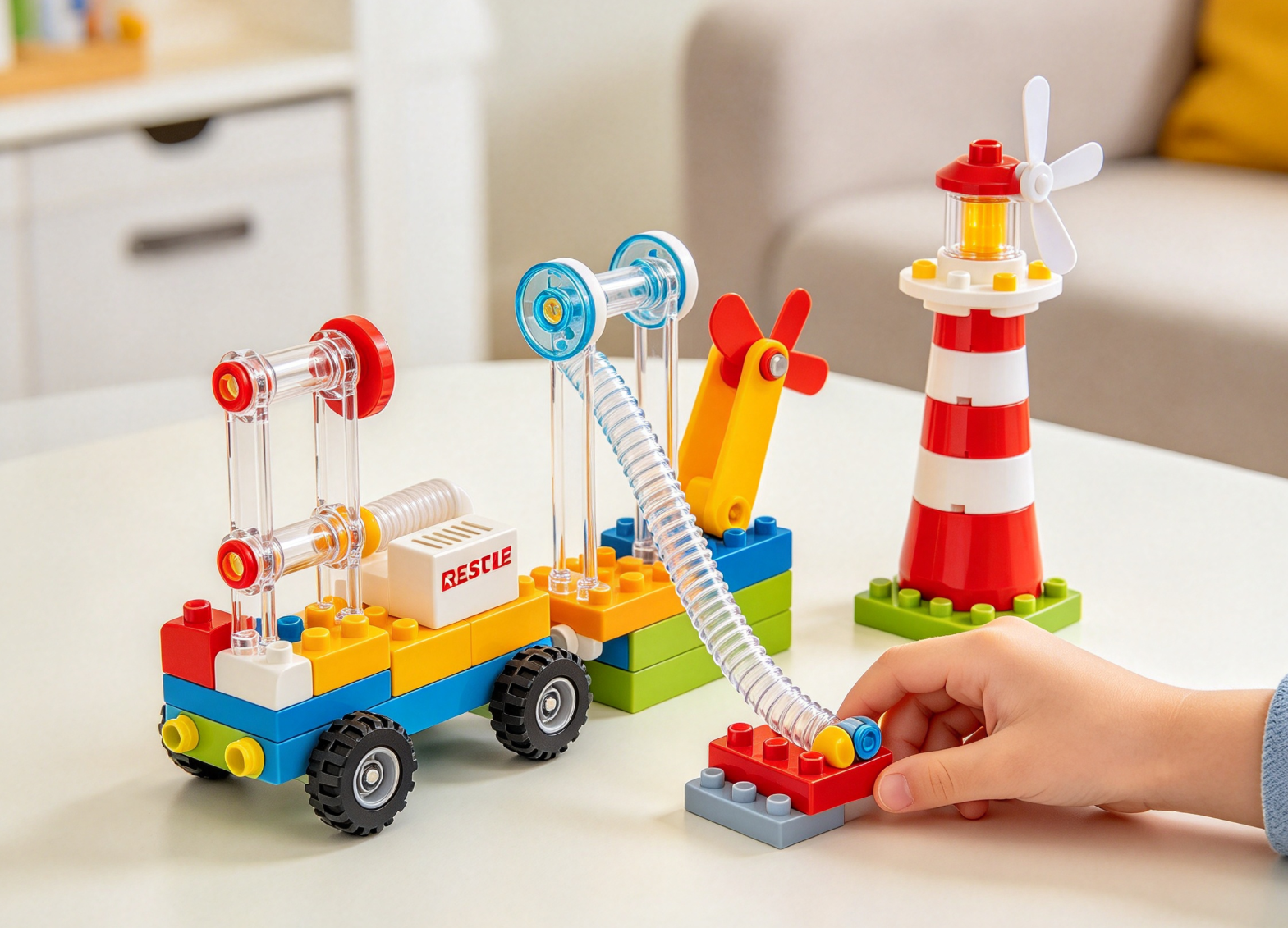
Quick answer: STEM building blocks and STEM building toys help kids develop problem-solving, spatial reasoning, and fine motor skills by turning abstract science, technology, engineering, and math concepts into something they can touch and build. Parents can support this growth by choosing age-appropriate sets, setting up a dedicated building space, introducing projects step by step, and rotating challenges to keep kids engaged over time.
Building blocks have been a staple of childhood for generations, but their role has changed. What once looked like simple stacking toys has evolved into structured learning tools that teachers, pediatric therapists, and education researchers now recommend for developing critical thinking skills. STEM building toys give kids a hands-on way to experiment with balance, symmetry, cause and effect, and basic engineering principles — all while they think they’re just having fun.
For parents, the challenge isn’t convincing kids to play with blocks. It’s knowing which sets to buy, how to introduce them in a way that sticks, and how to keep that initial excitement from fading after the first week. This guide walks through exactly that: why STEM building blocks matter, how to choose the right set for your child’s age and interests, how to build a space that invites regular play, and how to keep the momentum going long after the novelty wears off.
Why STEM Building Toys Matter for Kids
STEM stands for science, technology, engineering, and math — and building toys naturally touch all four. When a child stacks blocks to create a stable tower, they’re testing physics concepts like gravity and balance. When they follow a set of instructions to build a vehicle or structure, they’re practicing sequencing and spatial reasoning. When their first attempt collapses and they try again with a different approach, they’re learning the engineering design process: build, test, fail, adjust, repeat.
Beyond the technical skills, STEM building blocks support development in several other ways:
- Fine motor skills: Connecting small pieces strengthens hand-eye coordination and dexterity.
- Problem-solving: Kids learn to troubleshoot when a design doesn’t work as planned.
- Patience and focus: Multi-step builds teach kids to stay with a task until it’s finished.
- Creativity: Open-ended sets encourage kids to design their own creations rather than follow a single correct answer.
- Social skills: Group builds with siblings or friends teach collaboration and communication.
These benefits matter more than ever as schools place growing emphasis on STEM curriculum and digital literacy. Giving kids a physical, screen-free outlet to practice these same skills at home reinforces what they’re learning in the classroom, without adding more screen time to their day.
How to Choose the Right STEM Building Blocks
Not all building sets are created equal, and picking the right one depends on your child’s age, interests, and current skill level.
What age-appropriate complexity should you look for?
Younger children (ages 5–7) do best with larger pieces, simpler instructions, and shorter build times. Look for sets with fewer than 200 pieces and clear step-by-step diagrams. Older kids (ages 8–14) can handle smaller pieces, multi-stage builds, and sets that take several hours — or even days — to complete.
Should you choose instruction-based sets or open-ended sets?
Instruction-based sets are great for teaching kids to follow sequential steps and understand how individual pieces come together to form a whole. Open-ended sets, on the other hand, encourage free-form creativity and design thinking. A strong collection of STEM building toys includes both: structured builds for learning precision, and open bins of blocks for imaginative, unstructured play.
Does the set connect to a theme your child already loves?
Kids are far more likely to stay engaged with a build when it connects to something they already love — whether that’s space exploration, dinosaurs, vehicles, or architecture. Matching a set to an existing interest turns a generic building exercise into a project your child is motivated to finish.
Are the materials safe and durable?
Check for non-toxic materials, smooth edges, and age-appropriate piece sizes to avoid choking hazards for younger children. Durable blocks that can withstand repeated building and rebuilding will hold up far longer than cheaper alternatives, which matters if you’re building a long-term collection your child will return to for years.
How to Set Up a STEM-Friendly Play and Learning Space
A dedicated building space makes a bigger difference than most parents expect. Kids are more likely to return to STEM building blocks regularly when the setup process doesn’t start with “where did we put that box.”
Here’s how to create a space that invites consistent play:
- Designate a flat, clear surface. A table, desk, or even a large tray works well. Avoid carpeted areas where small pieces can get lost.
- Store pieces by type or color. Clear bins or drawer organizers make it easy for kids to find what they need without dumping everything onto the floor.
- Keep instructions accessible. Store manuals in a binder or folder near the building area so kids can reference them independently.
- Add good lighting. Natural light or a desk lamp helps kids see fine details, especially when working with smaller pieces.
- Leave builds on display. Instead of requiring kids to tear down a finished project immediately, give them a shelf or corner to showcase completed work. This builds pride and motivates the next project.
A well-organized space doesn’t just reduce frustration — it signals to your child that building is a valued, ongoing activity in your home, not a one-time novelty.
Step-by-Step: How to Introduce STEM Building Toys to Your Child
If your child is new to STEM building toys, easing them in with a clear process will set the tone for future builds.
Step 1: Start with a short, simple build. Choose a set that can be completed in 20–30 minutes to give your child an early win and build confidence.
Step 2: Build alongside them the first time. Sit with your child during their first few builds. Narrate what you’re doing (“Let’s check the instructions to see which piece comes next”) to model problem-solving out loud.
Step 3: Ask open-ended questions. Instead of giving answers, ask questions like “What do you think will happen if we add this piece here?” This encourages independent thinking rather than relying on you to solve problems.
Step 4: Let them make mistakes. Resist the urge to fix a wobbly structure immediately. Letting a build fail — and then rebuilding it — is where much of the learning happens.
Step 5: Celebrate the finished product. Take a photo, display the build, or simply point out something specific you liked about how they approached the project. Positive reinforcement makes kids more likely to pick up the next set on their own.
Step 6: Introduce more complexity gradually. Once your child has completed a few simple builds successfully, move on to sets with more pieces, longer build times, or less guided instructions.
How to Keep Kids Engaged with STEM Building Toys
The biggest challenge most parents face isn’t the first build — it’s the tenth. Here’s how to keep interest from fading:
- Rotate sets regularly. Swapping out which sets are accessible keeps the options feeling fresh, even if you’re not buying something new every time.
- Set building challenges. Try timed builds, “build the tallest tower” competitions, or themed challenges tied to what your child is learning in school.
- Involve the whole family. A weekend build session with siblings or parents turns building into a shared activity rather than solo screen-time replacement.
- Connect builds to real-world concepts. Talk about how bridges, skyscrapers, or machines in real life relate to what your child just built.
- Let them teach you. Ask your child to explain their design choices. Teaching back what they’ve learned reinforces the concepts and builds confidence.
Consistency matters more than variety. A child who builds for 20 minutes several times a week will develop stronger STEM skills than one who gets an elaborate set that sits untouched after the first weekend.
ModelBuilder: A Smart LEGO Alternative for STEM Learning
If you’re shopping for STEM building blocks that combine detailed design with real educational value, ModelBuilder is built for exactly that. ModelBuilder offers an alternative to traditional building brick brands, with sets designed to challenge young builders without sacrificing fun.
Here’s what sets ModelBuilder apart for family builders:
- Custom Brick Sets: Choose from sets tailored to different skill levels, so you can match the build to your child’s age and experience.
- Themed Collections: Designs span a range of interests, making it easier to find a set that connects to what your child already loves.
- Educational Workshops: Interactive sessions are designed to strengthen problem-solving and creativity alongside the physical build itself.
ModelBuilder sets use durable, carefully selected materials, so builds hold up to repeated handling and rebuilding. Explore the full range of ModelBuilder’s building sets to find the right starting point for your child’s next project. Parents looking for guidance on where to begin can also check out ModelBuilder’s full product lineup for options across every age and skill level.
Build Skills One Block at a Time
STEM building toys give kids a hands-on way to practice the same skills that matter most in school and beyond: problem-solving, patience, creativity, and critical thinking. The key is starting with the right set, creating a space that invites regular use, and staying involved as your child grows more confident with each build.
Start small, build consistently, and let your child’s curiosity guide which projects come next. The skills they pick up along the way will stick with them far longer than the blocks themselves.
Frequently Asked Questions
What age should kids start with STEM building blocks?
Most children can begin with large, simple building blocks as early as age 3 or 4. More structured STEM building blocks with smaller pieces and multi-step instructions are typically better suited for ages 5 and up.
How much time should kids spend on STEM building toys each week?
There’s no strict requirement, but consistency matters more than duration. Three to four sessions of 20–30 minutes per week tend to build stronger skills than a single long session.
Are STEM building toys actually better than screen-based learning apps?
Both have value, but STEM building toys offer hands-on, screen-free practice with fine motor skills, spatial reasoning, and physical problem-solving that apps can’t replicate. Many parents use building toys specifically to balance out screen time.
What should I do if my child loses interest in a building set?
Try rotating which sets are accessible, introducing a themed challenge, or involving a sibling or parent in the build. Interest often returns once the activity feels fresh or social rather than repetitive.
Can STEM building blocks help with learning differences like ADHD?
Many parents and educators report that hands-on building activities help children with attention differences stay focused longer than passive activities. Individual results vary, so it’s worth starting with shorter, simpler builds and adjusting based on your child’s response.


