

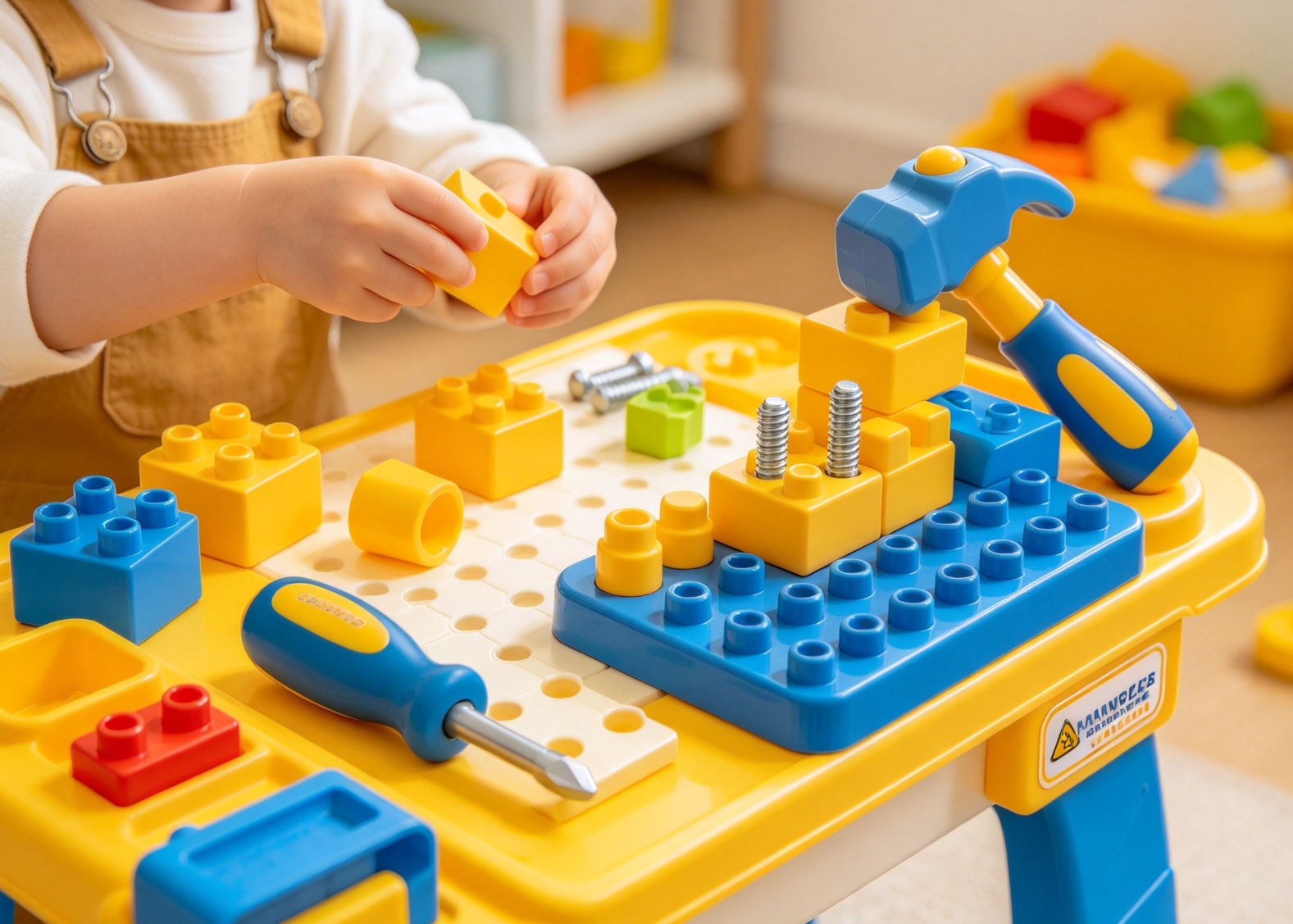
Quick answer: The best construction toys for kids match the child’s age, skill level, and interests — not just the box’s suggested age range. Look for high-quality pieces, safety certifications, and compatibility with sets your child already owns. Start with open-ended designs for younger builders and introduce instruction-based kits as skills grow. ModelBuilder offers both formats across multiple price points and themes.
Every parent has been there: a brand-new building set sits untouched in the closet within a week, while an older, well-worn box of bricks gets pulled out every weekend. The difference usually isn’t the toy’s quality. It’s the fit.
Choosing the right kids construction toys takes more than picking whatever’s trending or matching the age label on the box. It means understanding what your child is ready for, what keeps them engaged, and what will hold up to years of building, rebuilding, and the occasional foot-stepped-on-a-brick incident.
This guide walks through what construction toys actually do for child development, how to choose the right set by age, what separates a well-made kit from a flimsy one, and how to get a reluctant builder to actually pick up the pieces. Whether you’re buying your child’s first set or the fiftieth, these steps will help you make a purchase that gets played with — not shelved.
Why Do Construction Toys Matter for Child Development?
Building toys aren’t just a way to pass an afternoon. They give kids a hands-on way to practice skills that carry over into school, sports, and everyday problem-solving.
Fine motor skills. Snapping small pieces together, twisting connectors, and sorting bricks by shape or color all strengthen hand-eye coordination and finger dexterity — skills that also support handwriting and other precision tasks.
Spatial reasoning. Following a 3D design, or inventing one from scratch, teaches kids to think in dimensions. This kind of spatial thinking is directly tied to later success in math and engineering coursework.
Problem-solving. A collapsed tower or a missing piece forces a child to troubleshoot. They learn to test, fail, adjust, and try again — a pattern that builds resilience far beyond the playroom.
Focus and patience. Multi-step builds require kids to stick with a task until it’s finished. Even a 20-minute build teaches sustained attention in a way that fast-paced screen entertainment doesn’t.
Creativity. Open-ended sets in particular give kids permission to invent, rather than follow. There’s no wrong way to build a spaceship out of loose bricks.
None of these benefits require an expensive or elaborate kit. They come from consistent, hands-on building — which is exactly why choosing a set your child will actually use matters more than choosing the flashiest one on the shelf.
How to Choose Kids Construction Toys by Age
Age recommendations on packaging are a starting point, not a rule. Some 5-year-olds are ready for 500-piece builds; some 8-year-olds still prefer big, chunky pieces. Use these general guidelines, then adjust based on your child’s actual experience with building toys.
Ages 3–5: Big Pieces, Simple Wins
At this age, kids are still developing fine motor control. Larger bricks that snap together easily, with minimal small parts, work best. Look for sets with fewer than 50 pieces and simple, recognizable shapes — cars, animals, small houses. The goal is a quick sense of accomplishment, not architectural complexity.
Ages 6–9: Guided Structure, Growing Independence
This is the age where kids can follow illustrated instructions on their own and start to appreciate more detailed designs. Sets in the 100–300 piece range, with moderately complex builds, hit the sweet spot. This is also a good age to introduce construction toys for kids with moving parts, like wheels, hinges, or simple mechanisms, since curiosity about “how things work” tends to peak here.
Ages 10 and Up: Complexity and Customization
Older kids and tweens are ready for larger sets, intricate details, and multi-stage builds that can take hours or days. This is also when open-ended, creator-style sets become more appealing, since kids at this age often want to modify or combine sets rather than follow instructions exactly. Explore age-appropriate building sets to find options that match your child’s current skill level rather than just their birthday.
What Should You Look for in Quality Construction Toys for Kids?
Not all building sets are made the same, and the difference shows up fast — in how well pieces click together, how the set holds up over time, and whether it’s actually safe for the child using it.
Safety certifications. Confirm any set meets relevant safety standards for your region — ASTM F963 in the US, or EN 71 in Europe. These certifications test for choking hazards, toxic materials, and structural safety, and they matter most for sets aimed at younger children.
Piece durability. Cheap plastic warps, cracks, or loses its grip after repeated use. Higher-quality ABS plastic, used in most reputable building brands, holds its shape and connection strength over years of play.
Compatibility. If your child already owns building sets, check whether a new set’s pieces are compatible in size and connection style. This lets kids combine collections and build bigger, more ambitious projects instead of keeping every set siloed.
Age-appropriate complexity. A set that’s too simple gets boring fast; one that’s too advanced gets frustrating and abandoned. Read reviews or check piece counts against your child’s current experience level before buying.
Quality doesn’t have to mean expensive. It means the set is built to survive real play — being dropped, disassembled, rebuilt, and stored in a bin for months before coming back out again.
How Do You Introduce Construction Toys to a Reluctant Builder?
Some kids take to building instantly. Others need a nudge — especially if they’re used to more passive entertainment. A few approaches can help:
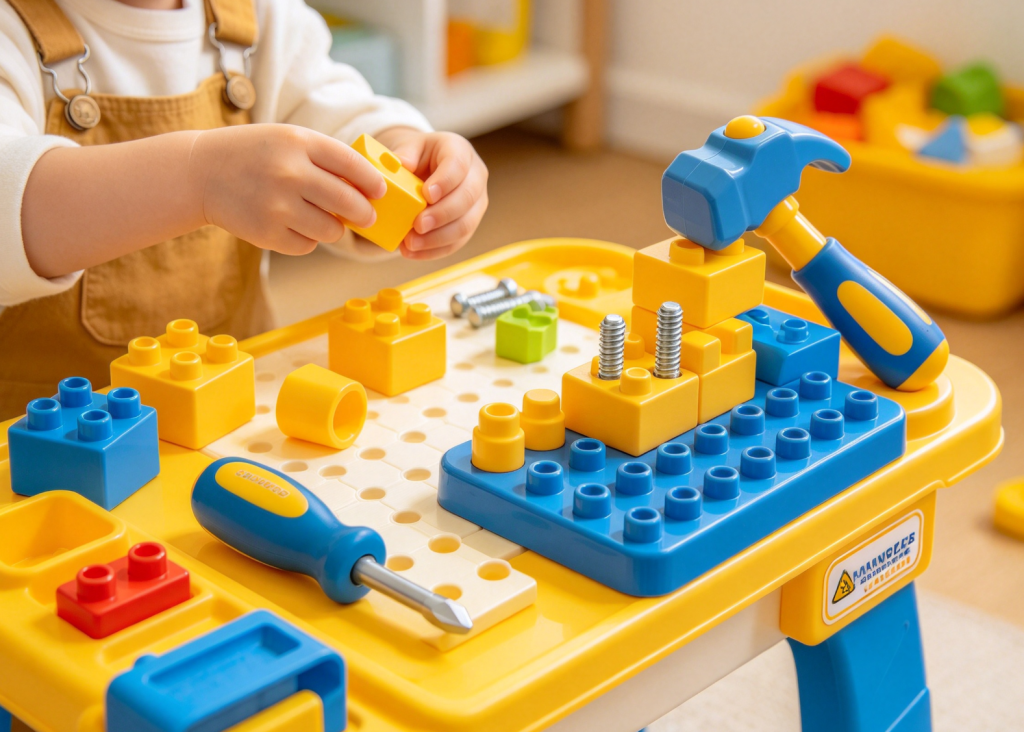
Start with a shared build. Sit down and build alongside your child, rather than handing them a box and walking away. Kids are more likely to engage when an adult shows genuine interest in the process.
Pick a theme they already love. A construction set tied to a favorite show, animal, or vehicle type has a much higher chance of holding a reluctant builder’s attention than a generic set.
Keep the first build short. A 15-minute win builds confidence. A two-hour project can overwhelm a first-time builder before they’ve had a chance to enjoy it.
Let them deviate from the instructions. If a child wants to build something different from what’s pictured on the box, let them. The goal at this stage is engagement, not precision.
Make it social. Building with a sibling, friend, or during a scheduled “build night” turns the activity into an event rather than a chore.
What Mistakes Do Parents Make When Buying Construction Toys for Kids?
A few recurring missteps lead to sets that end up unused:
Buying for the age on the box, not the child. As covered above, age labels are a rough guide. A child with prior building experience can often handle a set well above their printed age range, while a first-time builder might need something simpler.
Choosing based on piece count alone. More pieces doesn’t always mean more value. A 1,000-piece set that’s too advanced will sit untouched, while a well-designed 200-piece set gets built repeatedly.
Ignoring compatibility. Buying sets that can’t connect with what a child already owns limits creative combinations and makes each new purchase feel disconnected from the last.
Overlooking storage and organization. Loose pieces scattered across the floor are a fast way to kill enthusiasm (and step on bricks in the middle of the night). Sets that come with, or pair well with, sorting bins tend to get used more consistently.
Skipping safety checks. Especially for younger children, skipping a quick check of safety certifications or minimum age recommendations can create real hazards, not just play problems.
Open-Ended vs. Instruction-Based Sets: Which Should You Choose?
This is one of the most common questions parents ask when shopping for kids construction toys, and the honest answer is: it depends on the child and the goal.
Choose instruction-based sets if your child is newer to building, enjoys following clear steps, or wants the satisfaction of completing a specific model, like a vehicle, building, or character. These sets are great for teaching sequencing and patience.
Choose open-ended sets if your child already has some building experience, gravitates toward inventing their own designs, or gets frustrated following step-by-step diagrams. These sets are better for pure creativity and long-term replay value, since there’s no single “finished” state.
Many families find the best approach is a mix of both. Instruction-based sets teach the mechanics of building, while open-ended pieces let kids apply those mechanics to their own ideas. Browse both formats to build a collection that supports both structured learning and free-form creativity.
Build a Collection That Grows With Your Child
The right construction toys don’t just entertain — they build skills that stick. Choosing sets that match your child’s age, interests, and current abilities is the single biggest factor in whether a toy becomes a favorite or a forgotten box in the closet.
Start with a set that fits where your child is now, prioritize quality and safety over piece count, and don’t be afraid to mix instruction-based kits with open-ended pieces as your child’s skills grow. Explore ModelBuilder’s full range of building sets to find options built for real, repeated play — not just the shelf.
Frequently Asked Questions
What age should kids start using construction toys?
Most children can start with large-piece building sets around age 3, once they have enough hand strength and coordination to snap pieces together. Sets with smaller pieces are generally recommended starting around age 6, depending on the child’s fine motor development.
How many pieces should a first construction set have?
For a first-time builder, a set with 20 to 50 pieces is usually enough to create a sense of accomplishment without overwhelming them. Piece counts can increase gradually as the child gains confidence and experience.
Are construction toys good for kids who don’t like building?
Yes, though the approach matters. Starting with a themed set tied to an existing interest, keeping the first build short, and building alongside the child can help turn a reluctant builder into an engaged one over time.
What’s the difference between open-ended and instruction-based construction toys?
Instruction-based sets guide a child to build one specific model using step-by-step diagrams, which helps teach sequencing and patience. Open-ended sets have no fixed design, encouraging free-form creativity and imaginative play.
Do construction toy brands need to be compatible with each other?
Not strictly, but compatibility allows kids to combine pieces from different sets into bigger, more creative builds. Checking piece size and connection style before buying can help avoid a fragmented collection.


