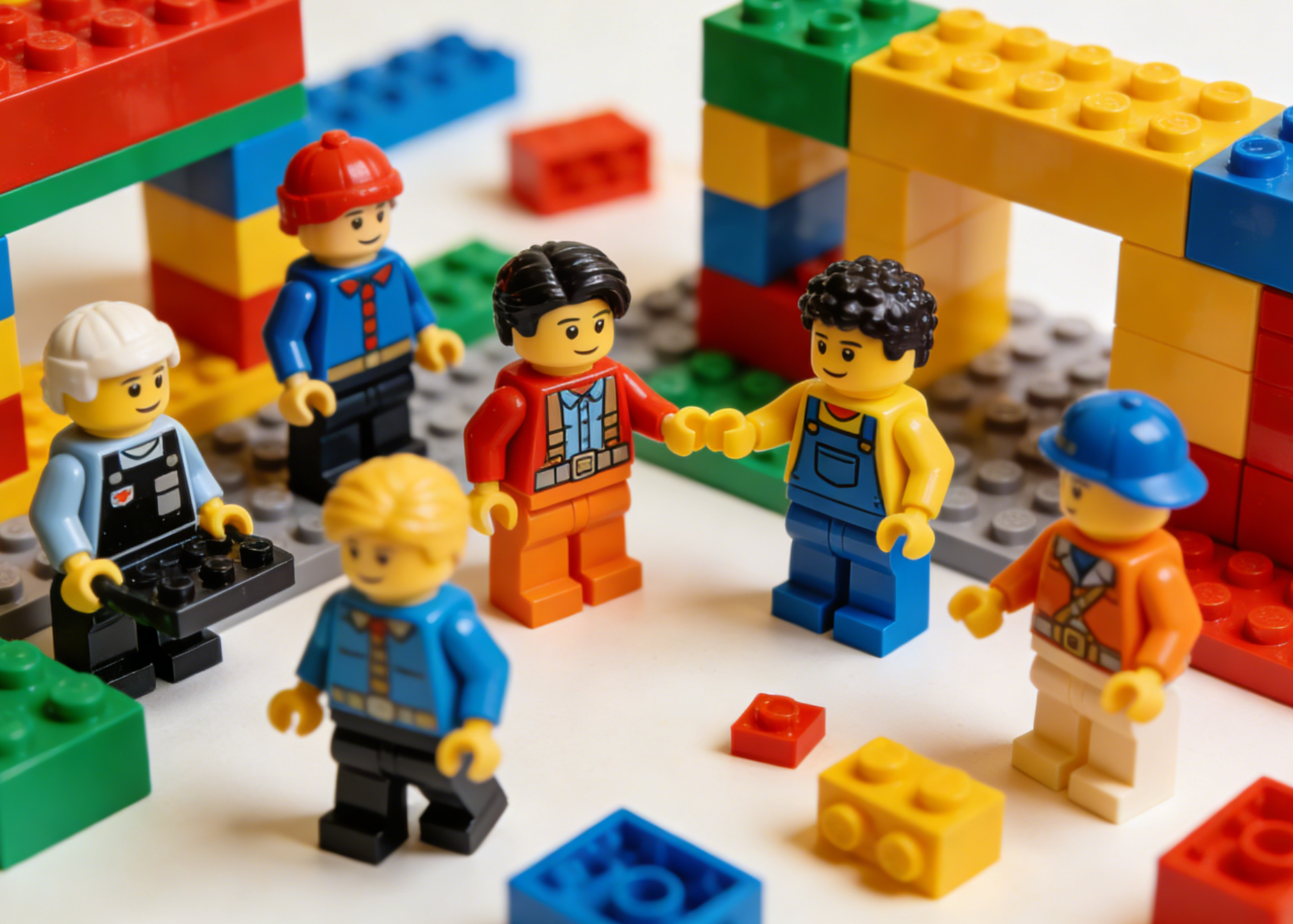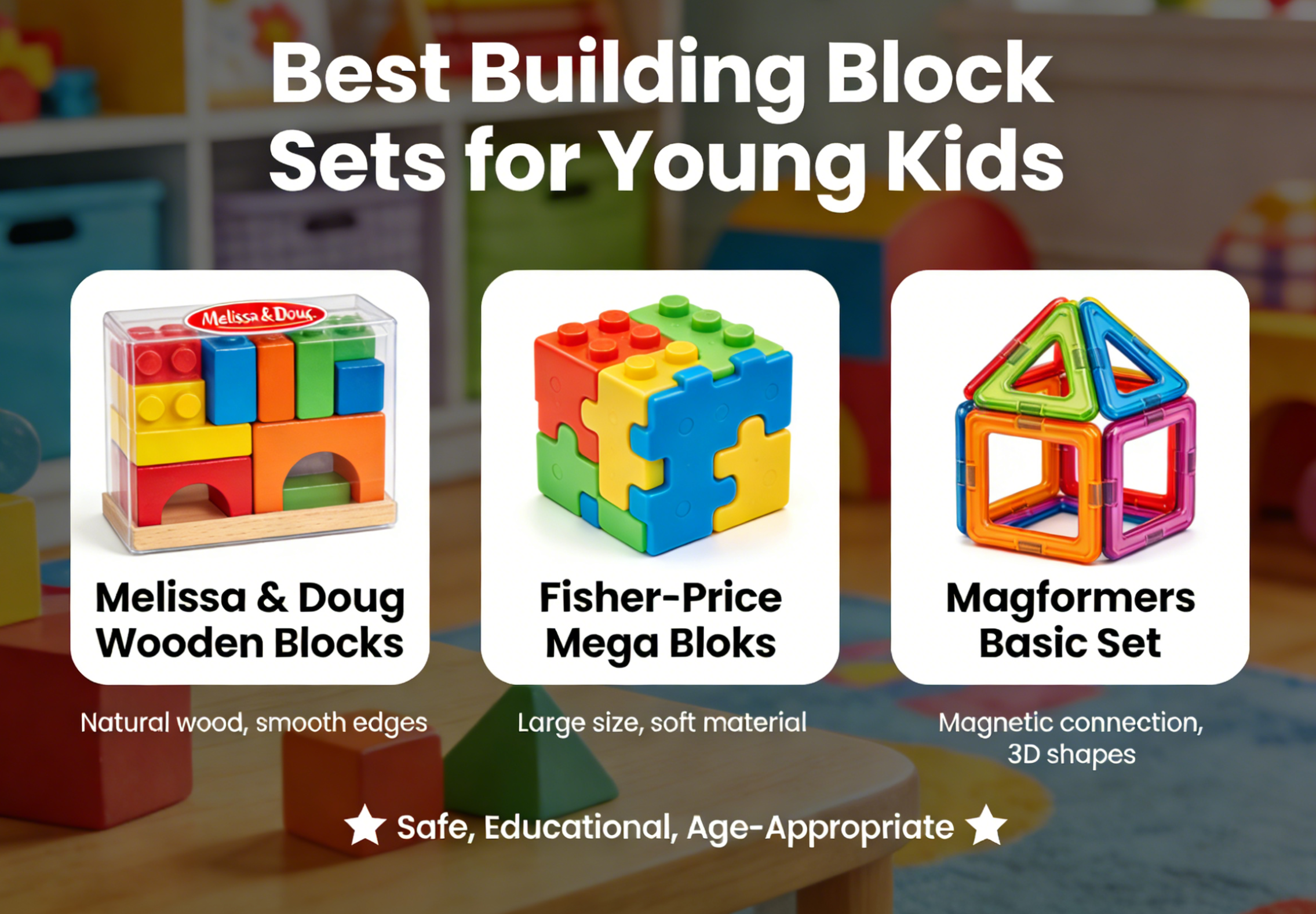

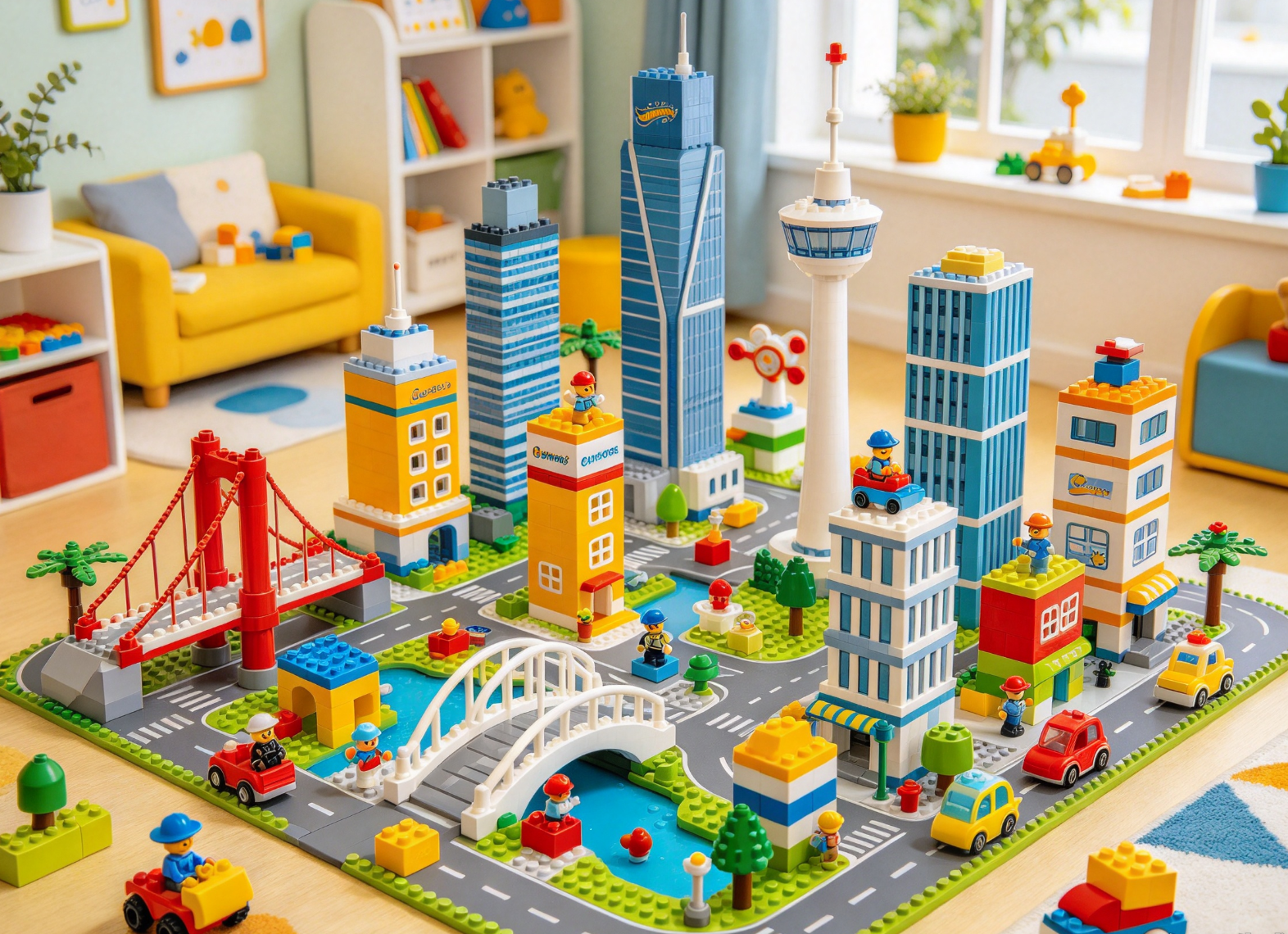
Choosing a toy for a preschooler sounds simple until you start looking at all the options. Some construction sets come with hundreds of tiny pieces, others feature large colorful blocks, and some promise to turn children into little engineers. But what actually makes a building toy suitable for a 4- or 5-year-old?
At this age, children are entering an exciting stage of development. They are becoming more independent, asking increasingly complicated questions, and discovering that the things they imagine can become real objects in their hands. A pile of building bricks can suddenly become a fire station, a dinosaur habitat, a racing car, or an entire city.
The right building toy can support this development without making play feel like another classroom activity.
However, choosing between different construction sets requires more than looking at the recommended age or the number of pieces in a box. Parents should consider how easily children can connect the pieces, whether the building possibilities match their interests, and how much freedom they have to experiment.
In this guide, we’ll explain how to choose building toys for 4 year olds and building toys for 5 year olds, share practical activities you can try at home, and explore how to make construction play more rewarding for growing children.
1. Understand What Children Can Do at Ages 4 and 5
Before purchasing a construction set, it helps to understand what changes between the fourth and fifth birthdays.
Although every child develops at their own pace, these two years often bring noticeable improvements in hand control, imagination, problem-solving, and the ability to follow simple plans.
What to Expect From a 4-Year-Old
Four-year-olds are increasingly interested in making things with a purpose. Instead of simply stacking blocks, they may decide to build a house for a toy animal or create a garage for their favorite miniature vehicle.
They are also becoming more confident with basic construction techniques.
For example, a 4-year-old may be able to:
- Connect and separate interlocking building pieces.
- Recognize basic shapes and use them in simple structures.
- Build short walls, towers, bridges, and small houses.
- Sort pieces by color, size, or shape.
- Follow straightforward visual instructions with adult support.
- Create imaginative structures without needing a finished example.
At this stage, the building process is often more important than the finished result. A child might spend ten minutes constructing a tower, knock it down, and immediately start again with a completely different idea.
That is not wasted effort. Experimenting with different arrangements is part of the learning experience.
What to Expect From a 5-Year-Old
By age five, many children are beginning to approach construction projects more deliberately.
They may think about what they want to build before selecting pieces. They can often remember a simple sequence of steps and become more interested in creating structures that resemble real-world objects.
A 5-year-old may be ready to:
- Follow more detailed building instructions.
- Create recognizable vehicles, buildings, and animals.
- Combine several types of pieces in one structure.
- Compare different ways to make a model stronger.
- Build with another child and share construction tasks.
- Modify an existing design to make it look or work differently.
Some children may even begin creating their own instructions by explaining how another person should reproduce their model.
The important distinction is that a five-year-old may enjoy a greater level of challenge, but that does not mean every child needs a complicated construction kit.
A good toy should offer opportunities to grow without turning every building session into a frustrating puzzle.
2. Choose Building Toys That Match Your Child’s Current Abilities
One of the most common mistakes parents make is buying a building set based entirely on its age recommendation or piece count.
A set with 300 pieces is not automatically better than one with 80. Likewise, a complicated model is not necessarily more educational than a simple collection of versatile building bricks.
Instead, look at the following characteristics.
Start With Easy-to-Handle Pieces
Children between four and five are developing more precise finger movements, but connecting and separating pieces can still require considerable effort.
Look for building toys with:
- Pieces that are comfortable for small hands to hold.
- Connectors that are not excessively tight.
- Clearly recognizable shapes.
- Consistent connections that children can learn quickly.
- Edges and surfaces designed for comfortable handling.
If pieces are too difficult to connect, children may spend most of their time asking adults for help.
On the other hand, connectors that are too loose can make structures collapse before children have a chance to finish them.
The goal is to find a comfortable balance between stability and independence.
Consider the Number of Pieces
The ideal number of building pieces depends on the complexity of the set and the child’s experience.
The US Consumer Product Safety Commission’s age determination guidance discusses building materials suitable for preschool children aged four through five. It identifies a wider range of interlocking construction materials and larger collections of pieces as appropriate for many children in this age group.
However, these figures are developmental guidance, not a universal shopping rule. A child’s attention span, experience, and interests matter just as much.
For a beginner, a smaller set with versatile pieces may be a better starting point.
For a child who already enjoys construction play, a larger collection can provide more opportunities for ambitious projects.
A useful approach is to begin with a manageable selection and gradually introduce additional pieces as the child becomes more confident.
Look for Different Shapes and Building Possibilities
A collection containing only identical bricks can become limiting over time.
Try to find construction toys that include a variety of shapes, such as:
- Standard rectangular bricks.
- Square pieces.
- Flat plates.
- Angled components.
- Window and door elements.
- Wheels and vehicle parts.
- Special decorative pieces.
Different shapes encourage children to explore how individual components work together.
For example, wheels can turn an ordinary brick structure into a vehicle, while flat plates can become roofs, roads, or platforms.
The more ways children can combine the pieces, the longer the toy can remain interesting.
3. Decide Between Open-Ended Building and Instruction-Based Sets
Not all construction toys encourage the same style of play.
Some sets are designed around a specific finished model. Others provide assorted components that children can use to build almost anything.
Both approaches have advantages, and a good toy collection can include both.
Open-Ended Construction Sets
Open-ended building toys allow children to decide what they want to create.
A child might start with a simple tower and turn it into a castle halfway through the activity. Another child might use the same pieces to construct a zoo or an imaginary spaceship.
This type of play is particularly useful for preschoolers who enjoy experimenting and making up stories.
The biggest advantage is flexibility.
There is no single correct answer, so children can change their minds, rebuild unsuccessful structures, and develop their own ideas.
Open-ended sets are especially worth considering when shopping for building toys for 4 year olds, because many children at this age are still exploring different ways to use construction materials.
Instruction-Based Building Sets
Some children enjoy following pictures and discovering how individual components become a recognizable model.
Simple instruction-based sets can introduce useful skills, including:
- Recognizing visual patterns.
- Following a sequence.
- Identifying specific pieces.
- Comparing a model with a reference picture.
- Completing a project from beginning to end.
For five-year-olds who already have some construction experience, these activities can provide a satisfying challenge.
However, the instructions should remain manageable. If a model requires too many complicated steps, children may lose interest or become dependent on adults to finish it.
Why a Combination Often Works Best
Rather than choosing one style exclusively, consider a construction set that offers both guided projects and free-building opportunities.
A child can first follow a simple design to understand how the pieces connect. Later, the same components can be used to create something entirely different.
For example, a child who builds a small house from instructions might later transform it into a shop, a school, or a space station.
This creates a natural transition from copying a model to designing independently.
4. Choose a Theme That Matches Your Child’s Interests
A technically excellent building set may still spend weeks untouched if its theme does not interest the child.
Preschoolers often become deeply engaged when a toy connects with something they already enjoy.
Before choosing a set, observe what your child talks about, draws, watches, or pretends to play.
Here are several themes that can make construction activities more appealing.
Cars, Trucks, and Transportation
<Thematic building activities can be especially appealing to children who love vehicles and movement.>
Vehicles provide an accessible introduction to construction because children can build something familiar and immediately use it in pretend play.
Ideas include:
- Building a simple racing car.
- Creating a parking garage.
- Constructing a fire engine.
- Designing a bridge for toy vehicles.
- Making a train station with platforms.
Parents can introduce simple questions such as, “How can we make the garage taller?” or “What could we change to make the bridge stronger?”
These questions encourage children to experiment without telling them exactly what to do.
Animals and Nature
Animal-themed construction is another excellent option for preschoolers.
Children can create habitats for toy animals, build fences, design a farm, or construct a jungle adventure.
Try activities such as:
- Building a small animal shelter.
- Creating a zoo with different areas.
- Designing a treehouse for imaginary forest animals.
- Making a farm with barns and animal enclosures.
This approach combines construction with storytelling and introduces opportunities to talk about animals and their environments.
Houses, Cities, and Everyday Places
Children often enjoy recreating places they recognize.
A house, supermarket, school, hospital, or restaurant can become the starting point for an imaginative construction project.
Ask your child to build somewhere they visited recently.
You might be surprised by the details they remember, such as the entrance, windows, parking area, or furniture.
These projects can also become collaborative activities in which family members build different parts of an imaginary town.
Space and Adventure
For children who enjoy rockets, astronauts, and imaginary adventures, space-themed building activities can provide a different creative direction.
Try constructing:
- A rocket with a detachable section.
- A space station.
- A moon base.
- A landing platform.
- A small vehicle for exploring an imaginary planet.
The objective is not scientific accuracy. It is to give children a theme that inspires them to create, modify, and tell stories.
5. Use Simple Building Challenges to Make Play More Meaningful
Buying the right construction set is only the beginning.
Parents can make ordinary building sessions more engaging by introducing small challenges that encourage children to think independently.
The best challenges are short, flexible, and open to different solutions.
Here are five activities suitable for children aged four and five.
Challenge 1: Build the Tallest Tower
<Build a tower using a selection of bricks and see how high it can stand.>
Start by giving your child a collection of building pieces.
Ask them to build the tallest tower they can without it falling over.
Once the first tower is complete, introduce a new question:
“What could you change to make it stand more firmly?”
Children may discover that a wider base provides more stability or that placing larger pieces at the bottom helps support the structure.
For younger children, simply experimenting with different arrangements is enough.
For older or more experienced builders, you can introduce a friendly comparison between two different designs.
Challenge 2: Build a Bridge for a Toy Car
This activity introduces the idea of creating a structure that serves a purpose.
Ask your child to build a bridge that a small toy car can travel across.
Encourage them to think about:
- How wide the bridge should be.
- How high the supports need to stand.
- Whether the middle section needs additional support.
- How to prevent the bridge from collapsing.
If the first attempt fails, avoid immediately correcting the design.
Instead, ask, “What do you think happened?”
Allowing children to identify and solve small problems is an important part of construction play.
Challenge 3: Make an Animal Home
Choose a favorite animal and invite your child to build a home for it.
A dog might need a kennel, a bird might need a nest, and a lion might need a shelter inside a zoo.
Ask questions such as:
“What should the entrance look like?”
“Where could the animal sleep?”
“How can we make the walls higher?”
The activity can become a storytelling game once the structure is finished.
Challenge 4: Copy, Then Change
Build a simple model and invite your child to reproduce it.
Once they have finished, give them a new task: change one part of the model.
For example, turn a small house into a two-story building or transform a basic car into a racing vehicle.
This activity combines observation with independent creativity.
It is particularly suitable for children who enjoy following visual instructions but are beginning to experiment with their own designs.
Challenge 5: Build Something Together
Construction does not always have to be an individual activity.
Invite your child to create a shared project with you or another child.
One person might build the walls of a castle while another creates the entrance or towers.
The important part is discussing ideas and deciding how the different sections will fit together.
This introduces opportunities to practice taking turns, sharing pieces, and communicating.
For children who are not yet comfortable working in a group, begin with a small project that can be completed in a few minutes.
6. Make Construction Play Educational Without Making It Feel Like School
Building toys naturally create opportunities to explore early learning concepts.
Parents do not need worksheets, formal lessons, or complicated activities to introduce these ideas.
A few thoughtful questions during ordinary play can be enough.
Introduce Early Mathematics
Construction provides plenty of opportunities to work with numbers, shapes, and comparisons.
For example:
- Count how many bricks are used in a tower.
- Compare which structure is taller.
- Sort pieces according to color or shape.
- Identify squares, rectangles, and triangles.
- Create a repeating pattern using different colored bricks.
These activities help children become more familiar with mathematical ideas through practical experiences.
Encourage Early Engineering Thinking
Even a simple construction project can introduce basic engineering concepts.
Children can discover that a wide base makes a tower more stable, that a bridge needs support, and that certain shapes fit together more effectively than others.
Parents can encourage experimentation with questions such as:
“Why do you think this side keeps falling?”
“What happens if we use a bigger piece underneath?”
“Can you find another way to connect these parts?”
The goal is not to teach advanced engineering principles. It is to encourage curiosity and observation.
Develop Language and Communication
Ask your child to explain what they are building.
They might describe a vehicle, explain how a door works, or tell a story about the people who live in their imaginary house.
You can introduce new vocabulary naturally, including words such as:
- Structure.
- Support.
- Balance.
- Connect.
- Design.
- Pattern.
- Foundation.
Rather than correcting every explanation, give children time to express their ideas.
Practice Patience and Persistence
Not every structure works on the first attempt.
A wall may fall, a roof may not fit, or a vehicle may look completely different from the original idea.
These moments provide opportunities to practice trying again.
Instead of immediately rebuilding the structure for your child, acknowledge the problem and invite another attempt.
A simple response such as “That didn’t work the way we expected. What could we try next?” can help turn disappointment into curiosity.
7. How to Choose Building Toys for 4 Year Olds vs. 5 Year Olds
Although four- and five-year-olds share many interests, their construction needs can differ.
The following comparison can help parents narrow down their choices.
| Selection Factor | Age 4 | Age 5 |
|---|---|---|
| Building style | Simple, open-ended projects | More detailed construction |
| Piece handling | Easy-to-grip components | Greater variety of components |
| Instructions | Basic visual guidance | Simple multi-step instructions |
| Project ideas | Towers, houses, animal homes | Vehicles, bridges, larger buildings |
| Main attraction | Experimenting and imagining | Planning and creating recognizable models |
| Play style | Mostly independent or supported | Increasingly collaborative |
| Ideal challenge | Connecting pieces and building stability | Modifying designs and solving simple problems |
What to Look for in Building Toys for 4-Year-Olds
For a four-year-old, prioritize a construction set that makes it easy to start building without extensive adult assistance.
Useful features include:
- Straightforward connecting mechanisms.
- A variety of basic shapes.
- Pieces that are comfortable to handle.
- Opportunities for imaginative, open-ended play.
- Simple building ideas that can be adapted.
At this age, the freedom to create something different every time can be more valuable than a highly detailed finished model.
What to Look for in Building Toys for 5-Year-Olds
Five-year-olds may be ready for more challenging construction experiences.
Consider sets that include:
- A greater variety of specialized components.
- More opportunities to create recognizable objects.
- Simple instruction-based projects.
- Components that support larger structures.
- Building possibilities that encourage experimentation.
When looking for building toys for 5 year olds, consider whether the set can remain interesting after the first model has been completed.
A toy with several possible building combinations can offer more long-term play value than one designed around a single finished object.
Importantly, age recommendations should be treated as guidance rather than strict developmental deadlines. A child who has just turned five may prefer simpler construction activities, while an experienced four-year-old may already enjoy more detailed projects.
8. Don’t Overlook Safety When Choosing Construction Toys
Safety should always be part of the buying decision, particularly when toys contain multiple detachable components.
Before purchasing a construction set, check the manufacturer’s recommended age range and product safety information.
Pay Attention to Small Parts
Children under three are particularly vulnerable to choking hazards from small objects.
In the United States, the Consumer Product Safety Commission regulates small parts in children’s products and requires applicable warnings for certain toys containing small parts.
Although many construction sets are designed for children aged four and above, parents should still consider the behavior and abilities of the individual child.
If a child still frequently puts objects in their mouth, smaller construction components may not be an appropriate choice.
Keep building pieces away from younger siblings who may have access to the play area.
Check Product Quality
Look for toys with durable construction and components that do not easily crack or break during ordinary use.
Inspect pieces periodically for damage, sharp edges, or loose components.
If a part becomes damaged, remove it rather than allowing children to continue using it.
Understand European and US Safety Requirements
For families purchasing toys in the United States, look for appropriate product safety information and compliance with applicable CPSC requirements, including relevant toy safety standards.
In the European Union, toys must meet applicable toy safety requirements and carry the CE marking.
These regulatory frameworks address different potential hazards, including mechanical, physical, chemical, and other safety risks.
Parents should also follow the manufacturer’s instructions for use, age recommendations, and any applicable warnings.
A useful starting point for checking general requirements is the US Consumer Product Safety Commission and the European Commission’s Toy Safety guidance.
9. How to Get More Value From a Building Toy
A good construction toy should not become boring after the first afternoon.
One way to extend its value is to change how children use the same collection of pieces.
Here are some practical ideas for making construction play part of your family’s regular routine.
Create a Small Building Corner
Set aside a dedicated area where children can access their construction toys.
A low storage container or divided organizer makes it easier to find specific pieces and encourages children to put materials away independently.
You do not need a large playroom.
A small table or clear floor space can be enough for most preschool construction activities.
Rotate Building Challenges
Instead of presenting every activity at once, introduce a different challenge every few days.
For example:
- Monday: Build a house.
- Wednesday: Create a vehicle.
- Friday: Design a bridge.
- Weekend: Build an imaginary town together.
The same pieces can produce very different results depending on the challenge.
Take Photos of Finished Creations
Children often feel proud when they complete something they have designed themselves.
Take photographs of their finished structures and create a small collection of building memories.
After several weeks, look at the pictures together.
Your child may notice how their building ideas have changed and become more detailed.
You can also ask whether they would like to rebuild an earlier design with a new feature.
Let Children Lead
Perhaps the most important tip is to avoid taking over.
Adults sometimes become so focused on making a structure look realistic that they unintentionally remove the creative decisions from the child.
If your child wants to build a purple spaceship with six wheels, let them explore the idea.
Construction toys should provide materials for imagination, not impose a single definition of what a finished model should look like.
10. Why ModelBuilder Is Worth Exploring for Growing Builders
When searching for construction toys, parents often want something that offers more than a one-time building activity.
They want pieces that can be reused, creative possibilities that grow with their children, and projects that encourage independent play.
This is where construction-focused brands such as ModelBuilder can become part of a child’s play experience.
As a brand specializing in building toy alternatives, ModelBuilder provides an option for families exploring different construction play possibilities.
When evaluating any ModelBuilder building set, parents should consider how its components match their child’s current abilities and interests.
For a younger preschooler, prioritize straightforward connections and opportunities for free building.
For a child approaching six, look for more varied construction possibilities and projects that encourage independent thinking.
The aim is to find a set that offers a comfortable starting point while leaving room for new ideas.
You can explore the available collections and product information on the ModelBuilder official website.
Whether a child wants to build a miniature house, an imaginative vehicle, or an entirely original creation, the best construction experience is one that encourages them to keep experimenting.
Final Thoughts: The Best Building Toy Is One That Grows With Your Child
Choosing between different building toys for preschoolers does not have to be complicated.
For four-year-olds, focus on accessible pieces, simple construction experiences, and plenty of opportunities for imaginative play.
For five-year-olds, consider introducing more detailed projects, basic instructions, and challenges that encourage planning and independent problem-solving.
Most importantly, remember that children develop at different speeds. A toy that feels exciting and manageable for one child may be frustrating or too simple for another.
Look beyond the packaging, consider how your child actually plays, and choose construction materials that allow them to experiment, make mistakes, and create something of their own.
Because sometimes the most rewarding part of building isn’t the finished castle, car, or spaceship. It’s the moment a child looks at a collection of ordinary pieces and says, “I have an idea!”
Frequently Asked Questions (FAQs)
1. What are the best building toys for 4 year olds?
The best building toys for 4 year olds generally feature easy-to-handle pieces, simple connecting mechanisms, and a variety of shapes. Open-ended construction sets are particularly useful because children can build towers, houses, vehicles, and imaginative structures without following complicated instructions.
2. Are building toys suitable for 5-year-olds?
Yes. Building toys can be an excellent play option for five-year-olds. At this age, many children are becoming more confident with construction, following simple instructions, and creating recognizable models. Sets with varied components and multiple building possibilities can provide an enjoyable challenge.
3. How many building blocks does a 4- or 5-year-old need?
There is no universal ideal number. A smaller collection of versatile pieces can be sufficient for beginners, while children with more construction experience may enjoy larger sets. The important factors are the variety of components, ease of use, and the number of different structures children can create.
4. Do building toys help develop problem-solving skills?
Building toys provide opportunities to practice problem-solving through hands-on experimentation. Children can discover how to make structures more stable, connect different pieces, and modify designs when something does not work. They also encourage spatial awareness, creativity, and early engineering thinking.
5. Can 4- and 5-year-olds use the same building toys?
Many construction sets can be enjoyed by both age groups, especially open-ended sets with versatile components. Four-year-olds may prefer simpler building activities, while five-year-olds may explore more detailed designs. Always check the manufacturer’s age recommendation and ensure that the pieces are suitable for the individual child’s abilities.